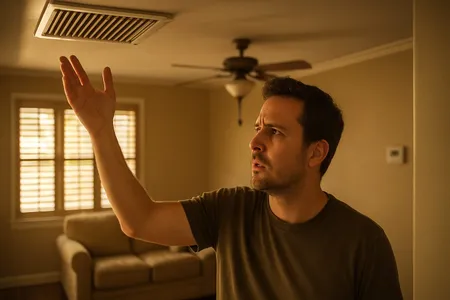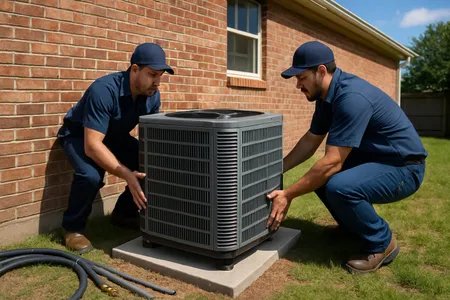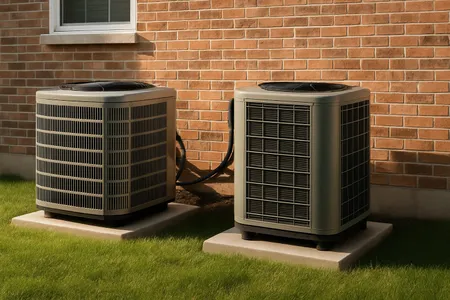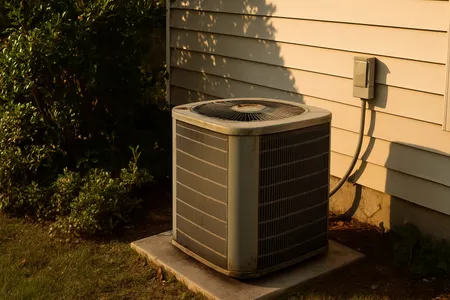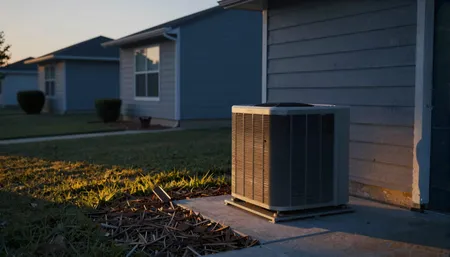
If your AC runs almost nonstop on a 103-degree Central Texas afternoon and the house creeps up a degree or two above the setpoint, that alone is usually normal — residential systems are sized for typical local peak conditions, not record heat. The reliable test is the temperature split: supply-vent air should be roughly 15 to 20 degrees cooler than the air at the return grille. A healthy split with long run times means your AC is fine and the heat is simply extreme. A weak split, warm vent air, ice on the lines, or a house that stays hot after dark means you have a real problem worth a service call.
This is the late-summer question we hear most, so here is the honest breakdown — including when not to spend money.
Why can’t my AC keep up when it’s this hot?
An air conditioner is not a furnace in reverse with unlimited power. When a system is installed, it is sized with a Manual J load calculation against your area’s typical peak conditions. Central Texas heat waves routinely blow past those conditions, and every degree above them shrinks the margin your system was designed with.
Three things stack against your AC in August specifically:
- Heat soak. By late afternoon, your attic, walls, and slab have been absorbing sun for eight hours. Even after the outdoor temperature peaks, that stored heat keeps flowing inward for hours.
- Attic ductwork. Most Central Texas homes run ducts through attics that reach well over 130 degrees in summer. Cooled air picks up heat on the way to your rooms, costing the system a meaningful slice of its capacity (this figure is baked into our own BTU calculator).
- A season of wear. By August your system has run hard for three months straight. A partially clogged filter or a grime-coated outdoor coil that was tolerable in June becomes the difference between keeping up and falling behind now.
What’s normal on an extreme heat day?
| Symptom | Verdict |
|---|---|
| AC runs nearly continuously from mid-afternoon to evening | Normal in triple-digit heat |
| Indoor temp drifts 1–3°F above setpoint at the day’s peak, recovers by night | Normal — load exceeds design capacity for a few hours |
| Vent air feels cold; split measures 15–20°F | Normal — the system is healthy |
| Upstairs runs warmer than downstairs in the afternoon | Common — see why your upstairs is so hot in late summer |
| Vent air feels barely cool or room-temperature | Problem — see below |
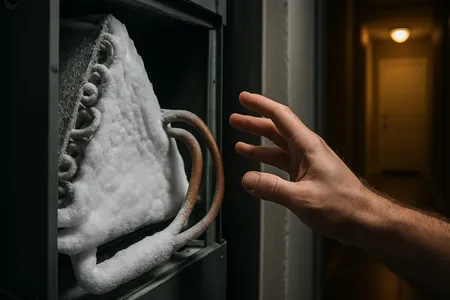
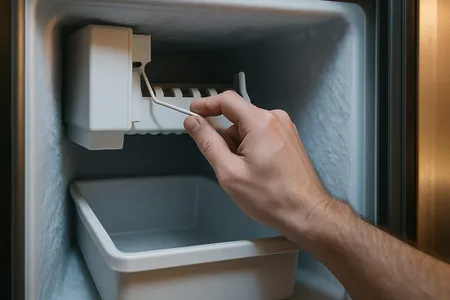
| Ice on the refrigerant lines or indoor coil | Problem — shut the system off (why ice forms) |
| House stays 5°F+ above setpoint even overnight | Problem — capacity is genuinely impaired |
| Breaker trips, outdoor unit silent, or short on/off cycles | Problem — see short cycling in hot weather |
The 10-minute check before you call anyone
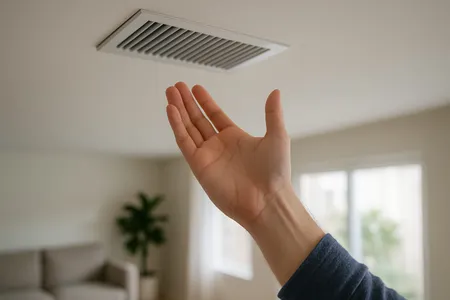
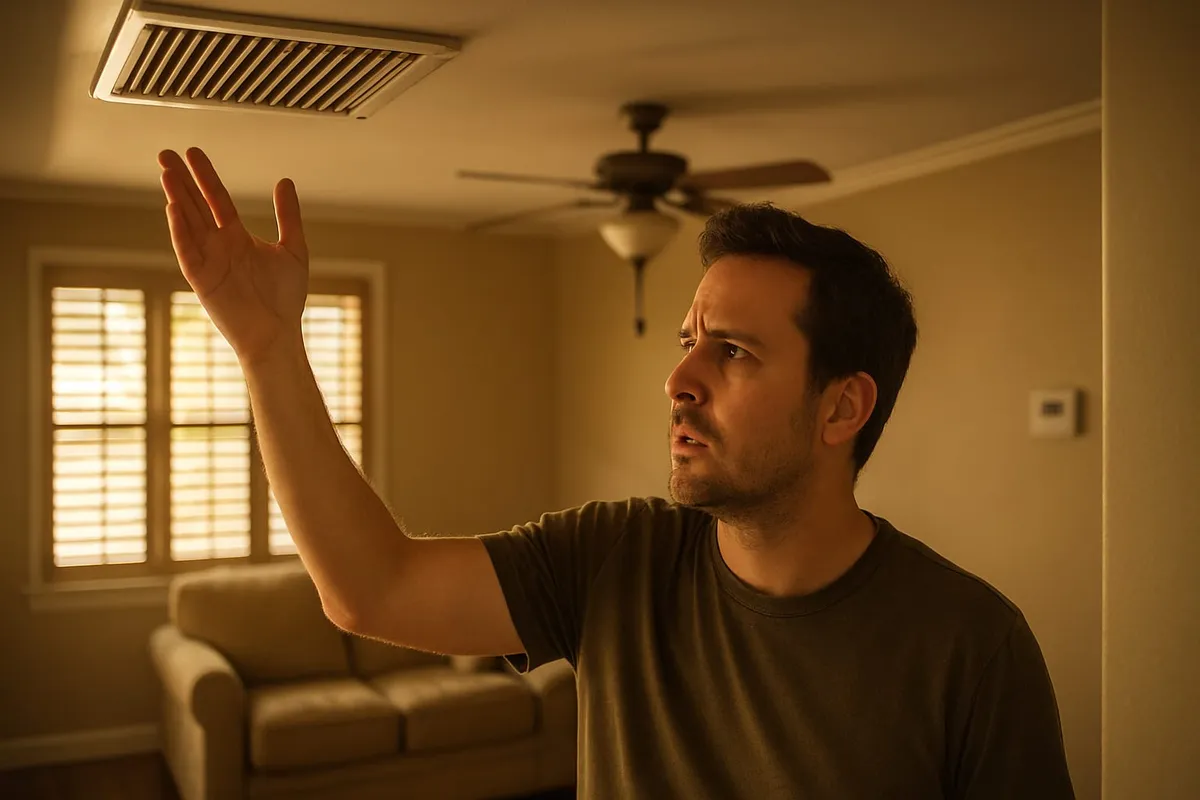
- Measure the split. Kitchen thermometer in a supply vent for two minutes, then at the return grille. Target: air 15–20°F cooler at the vent.
- Check the filter. Hold it to a light. If you can’t see light through it, replace it — a clogged filter can single-handedly cause every symptom on this page.
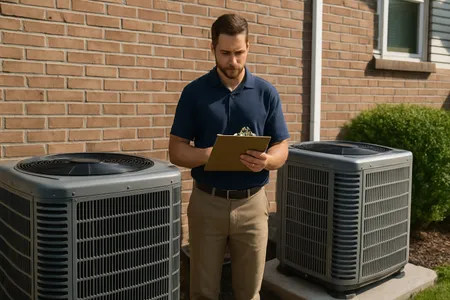
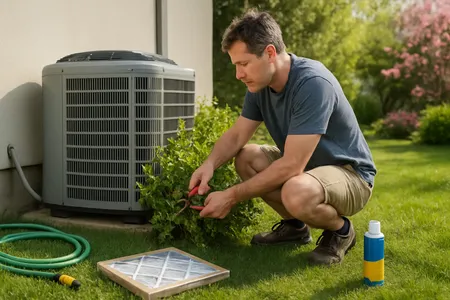
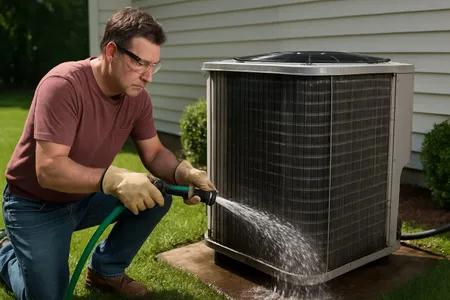
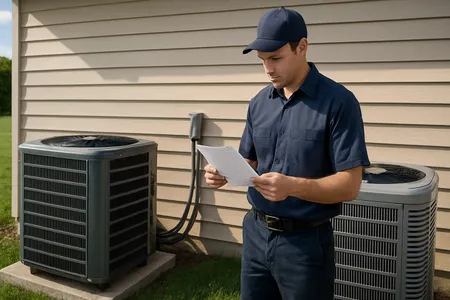
- Look at the outdoor unit. Fan spinning? Fins matted with dust, grass, or cottonwood fluff? A gentle garden-hose rinse (power off at the disconnect first) restores real capacity — here’s the full condenser-cleaning walkthrough.
- Walk the vents. Every supply open, nothing blocking the return.
- Shade the glass. Close blinds and curtains on west- and south-facing windows for the afternoon. It is low-tech and it works.
If the split is weak after the filter and coil check, work through the full warm-air diagnostic — that guide covers refrigerant, capacitors, and the other failure paths in order.
Is my AC undersized, or just old?
If your system has never kept up on hot days — even when new and freshly serviced — it may genuinely be undersized. Homes in the Killeen–Temple–Waco corridor built with builder-grade systems are common offenders. Our AC sizing guide for Texas homes explains how to check.
But do not let a heat wave talk you into a bigger unit by itself. An oversized AC short-cycles, dehumidifies poorly, and wears out faster. If the system is also 12 or more years old and limping, the better question is timing — we cover that honestly in should you replace your AC now or wait until fall.
What actually helps this week
- Give it airflow: fresh filter, rinsed outdoor coil, clear vents. These are free-to-cheap and address the most common capacity thieves.
- Set a realistic target. Cranking the thermostat to 68 doesn’t cool faster. See our thermostat settings guide for the honest tradeoffs.
- Cut the load: blinds closed on sun-facing glass, ceiling fans set to summer direction in occupied rooms, oven and dryer use shifted to evening.
- Book the end-of-summer checkup. August wear is real — capacitors and coils that survived July fail in August. Our end-of-summer AC checkup guide covers what a late-season service catches. If the heat is also showing up on your utility bill, that’s usually the same root causes — see why summer electric bills spike.
When to stop troubleshooting and call
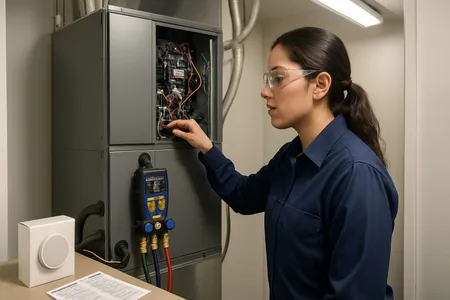
Warm vent air, ice anywhere, repeated breaker trips, a silent outdoor unit, or a house that stays hot after dark — those are fault signs, and August is the worst month to wait on them, because summer repair demand raises both wait times and prices.
If you are in Central Texas, Texas Temp Masters offers same-day air conditioning repair service. Call (817) 704-0706 or contact us online to schedule your appointment.