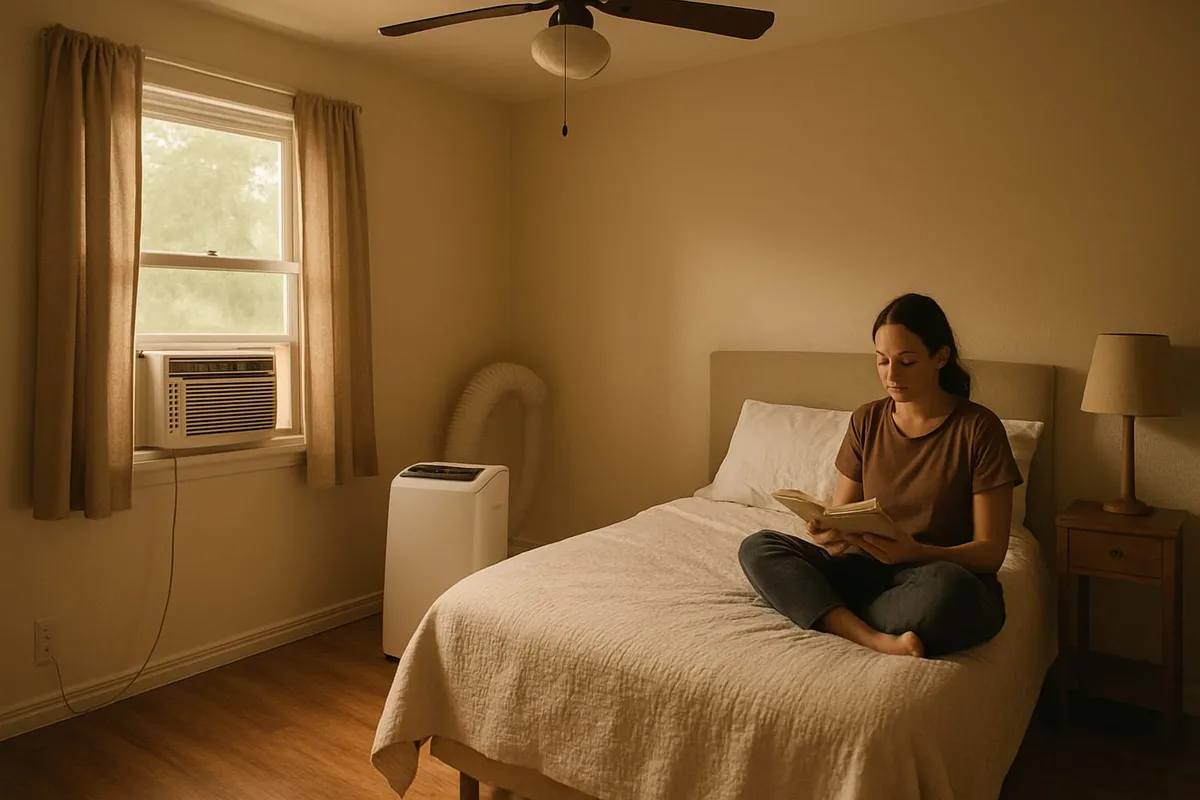
Not every home needs (or can support) central air conditioning, and not every budget allows for it. Window units, portable ACs, and central air each serve different needs. This guide helps you match the right cooling solution to your situation.
Quick Comparison
| Feature | Window AC | Portable AC | Central Air |
|---|---|---|---|
| Cooling capacity | 1 room | 1 room | Whole home |
| Relative upfront cost | Lowest | Low-to-moderate | Highest |
| Energy efficiency | Moderate | Lowest | Highest (per sq ft) |
| Installation | Moderate (window mount) | Easy (plug in) | Professional required |
| Noise level | Moderate to loud | Loud | Quietest (indoor) |
| Aesthetics | Visible in window | Floor unit with hose | Hidden (only vents) |
| Lifespan | 10 - 15 years | 5 - 8 years | 15 - 20 years |
| Best for | Single rooms | Rooms where windows do not work | Whole-home comfort |
How Each Type Works
Window Air Conditioner
A window AC is a self-contained cooling unit that sits in a window opening. The indoor side absorbs heat from the room, and the outdoor side (which extends outside the window) releases that heat to the outside air. The unit seals into the window frame using a mounting kit.
Window ACs are efficient because the hot and cold sides of the system are separated by the window, with heat being expelled directly outside.
Portable Air Conditioner
A portable AC sits on the floor inside your room and uses a flexible hose (usually 4 to 6 inches in diameter) to vent hot air out through a window, sliding door, or wall opening. Most models use a single-hose design, though more efficient dual-hose models are available.
The biggest efficiency drawback: single-hose portable ACs pull conditioned indoor air, use it for cooling, and then vent it outside. This creates negative pressure in the room, pulling in warm unconditioned air through gaps in doors and windows.
Central Air Conditioning
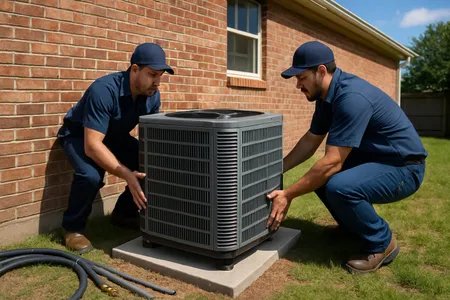
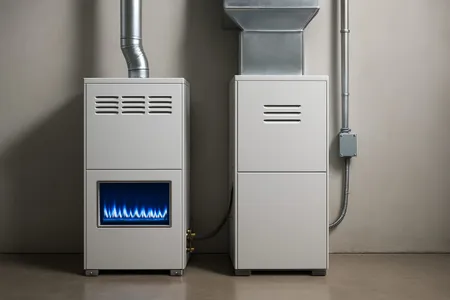
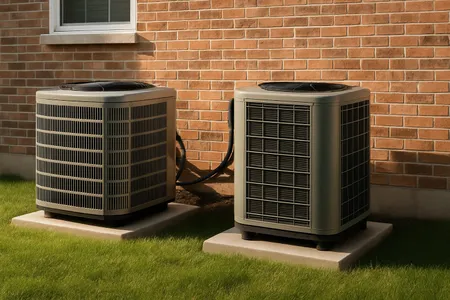
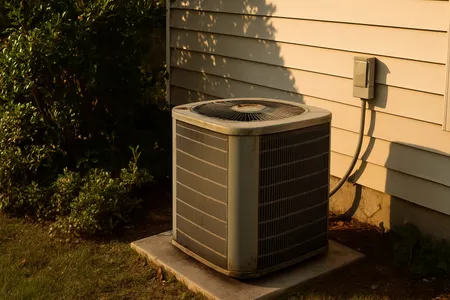
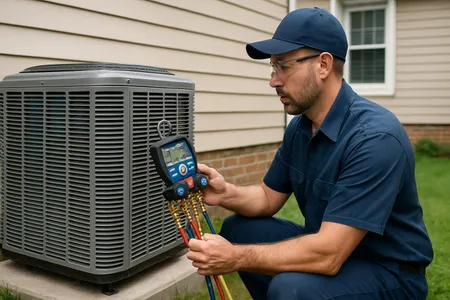
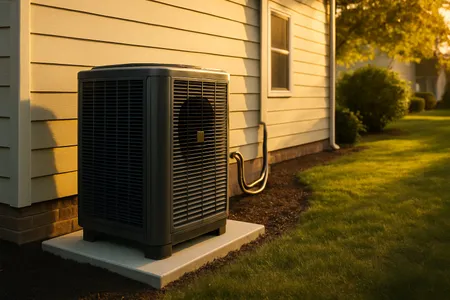
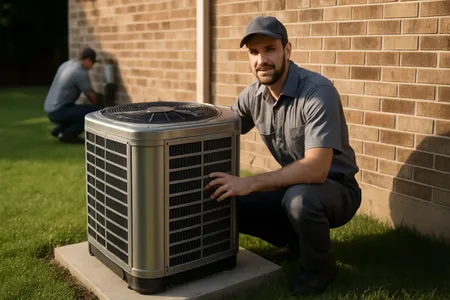
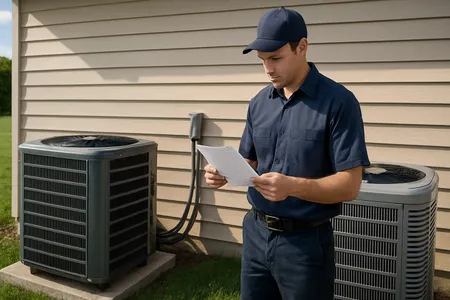
A central air system uses a single outdoor condenser unit connected to an indoor air handler or furnace. Cooled air is distributed throughout the entire home via a network of ducts and supply vents. A return duct system pulls warm air back for recooling.
Central air is the most efficient option for cooling an entire home but requires ductwork and professional installation.
Pros and Cons
Window AC
Pros:
- Affordable relative to portable AC or central air
- More energy-efficient than portable ACs
- No floor space required
- Direct heat exhaust (efficient design)
- Widely available in many sizes (5,000 to 25,000 BTU)
- Easy to install for most homeowners
- Lasts 10 to 15 years with basic maintenance
Cons:
- Blocks the window (cannot fully open it)
- Visible from outside (some HOAs prohibit them)
- Can be noisy (50 to 65 dB)
- Security concern (window must remain partially open)
- Heavy units (40 to 80+ lbs) can be difficult to install
- Only cools one room
- Not practical for casement or slider windows without adapters
Portable AC
Pros:
- No permanent installation needed (plug in and go)
- Easy to move between rooms
- Works with most window types via hose kit
- Good for renters or temporary situations
- No window mounting required
- Available at most home improvement stores
Cons:
- Least energy-efficient option (single-hose models are especially poor)
- Higher operating costs than window units
- Takes up floor space (roughly 2 sq ft)
- Louder than other options (52 to 60+ dB)
- Shorter lifespan (5 to 8 years)
- Exhaust hose limits placement options
- Single-hose models create negative pressure, pulling in warm outside air
- Produces condensate that may need manual draining
Central Air
Pros:
- Cools the entire home evenly
- Most efficient per square foot of cooled space
- Quietest indoor experience (blower noise only)
- Increases home value at resale
- No visible indoor equipment (only vents)
- Can be paired with heating systems
- Best humidity control
- Professional maintenance available through service plans
Cons:
- Highest upfront cost of the three options
- Requires existing ductwork (or a separate, sizable cost to add new ductwork)
- Professional installation required
- Cools the entire home even if you only use a few rooms
- Annual maintenance needed
Cost Comparison
Upfront Costs
Window units cost the least upfront — you’re buying a single self-contained appliance with little to no professional installation. Portable ACs cost somewhat more than a comparable window unit for the convenience of not mounting anything, despite cooling less effectively per BTU rating. Central air costs the most by a wide margin, since you’re buying a full outdoor condenser and indoor air handler plus professional installation — and if your home needs new ductwork added, that raises the number further still. A mini split lands in between: less than central air with new ductwork, more than a window or portable unit. Ask your contractor for a written quote itemizing equipment versus installation for whichever option you’re considering.
Monthly Operating Costs
Running costs scale with both the BTU rating and how much space you’re cooling. A single window AC or mini split cooling one room costs the least to run; a portable AC of similar capacity costs somewhat more due to its lower efficiency; and central air cooling an entire home costs the most in absolute dollar terms, even though it’s the most efficient option per square foot. Plug your own numbers into our Energy Cost Calculator to see what each option would cost at your electricity rate.
Cost to Cool a Few Rooms vs. Whole-Home
If you only need to cool a handful of rooms, multiple window units are typically the cheapest total-cost option — cheaper to buy and cheaper to run than the alternatives for that scope. Portable ACs cost more than window units for the same job, both upfront and to operate. Once you’re cooling a whole home, central air and multi-zone mini splits become the more efficient and more comfortable choice, even though their upfront cost is much higher than a handful of window units.
For cooling just a few rooms, window ACs offer the lowest total cost. For whole-home cooling, central air or mini splits are worth the higher upfront investment.
Which Is Right for Your Situation
Choose a Window AC If:
- You need to cool 1-3 rooms and do not want whole-home cooling
- Budget is limited: a self-contained unit costs less than a full system
- You own your home (or landlord approves window units)
- You have double-hung windows large enough to accommodate the unit
- You want better efficiency than portable but lower cost than central
- You do not mind the appearance in the window
Choose a Portable AC If:
- You are renting and cannot install window units or permanent systems
- Your windows do not accommodate window units (casement, small, or high windows)
- You need temporary cooling (seasonal, specific events, supplemental)
- You want to move the unit between rooms
- You cannot or do not want to modify windows or walls
- No other option works for your specific situation
Choose Central Air If:
- You want to cool your entire home consistently
- Your home has existing ductwork in good condition
- You value comfort and quiet: Central air is the most comfortable option
- You plan to stay in the home: Central AC adds resale value
- You want a permanent, reliable solution: 15-20 year lifespan
- Aesthetics matter: No visible units, just vents
Consider a Mini Split Instead
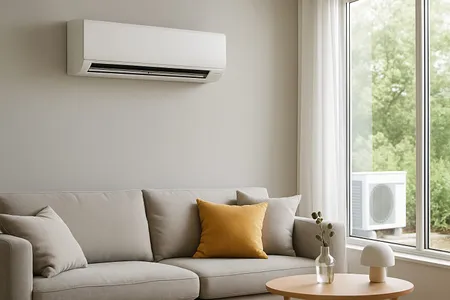
If you want the efficiency of central air but cannot install ductwork, a ductless mini split offers an excellent middle ground. A single-zone mini split costs less than central air with new ductwork, provides cooling (and heating in heat pump models), operates quietly, and is far more efficient than portable or window units.
For mini-split pricing details, see our Mini Split Installation Cost guide.
Expert Recommendation
Here is the practical decision tree:
- Cooling your whole home? Get central AC (with existing ducts) or a multi-zone mini split (without ducts).
- Cooling 1-3 rooms permanently? Window ACs offer the best combination of cost and efficiency. Mini splits are better if budget allows.
- Temporary or rental situation? A portable AC works, but a window AC is a better investment if installation is possible.
- One room, best efficiency? A single-zone mini split is the most efficient single-room option available.
Avoid portable ACs when possible. They are the least efficient option and cost more to operate than window units while providing inferior cooling. The only time a portable AC is the best choice is when no other option will physically work in your space.
Frequently Asked Questions
How many BTUs do I need?
General rule: 20 BTUs per square foot of space. A 300 sq ft room needs approximately 6,000 BTU, a 500 sq ft room needs 10,000 BTU, and a 700 sq ft room needs 14,000 BTU. Add 10% for sunny rooms, kitchens, or high ceilings.
Are portable ACs as effective as window ACs?
No. A portable AC rated at the same BTU as a window unit will cool less effectively because of its inherent design inefficiencies. Single-hose portable ACs are particularly poor because they exhaust conditioned indoor air, creating negative pressure that draws in warm outside air.
Can a window AC cool more than one room?
A window AC is designed for one room. It can partially cool adjacent rooms if doors are left open, but performance drops significantly. For multi-room cooling, you need multiple units, a mini split system, or central air.
Do window ACs use a lot of electricity?
Window ACs use moderate electricity. A typical 8,000 BTU unit uses about 700 watts, which adds a modest amount to your bill if run 8 hours per day — plug your rate into our Energy Cost Calculator for an exact figure. This is significantly less than a portable AC of similar capacity and far less than running central air for one room.
Is it cheaper to run window units or central air?
If you are cooling your entire home, central air is cheaper per square foot because it is more efficient. If you are only cooling 1-2 rooms, window ACs are cheaper because you are not paying to cool unused spaces. The break-even point is typically around 3-4 rooms.
In Central Texas? Texas Temp Masters can help you evaluate whether central air, a mini split, or a room AC is the right choice for your home and budget. We install central AC and ductless systems with expert craftsmanship. Call (817) 704-0706 for a free consultation, or visit our Air Conditioning page.
Next Steps
Now that you know which cooling type fits your situation, take the next step toward the right system:
- Size it correctly — Use our free BTU Calculator to find the exact cooling capacity your space needs so you do not overspend on a unit that is too large or struggle with one that is too small.
- Get a price estimate — Our HVAC Cost Estimator shows Good/Better/Best pricing tiers for central AC and mini split installations with financing options.
- Compare long-term energy costs — Plug your usage into our Energy Cost Calculator to see how monthly operating costs stack up between window units, portable ACs, and central air over time.
- Central AC vs mini split? — If you are leaning toward a permanent system, read our detailed comparison of Central AC vs Mini Split to see which one makes more sense for your home.
- Ready to get a quote? — Contact us for a free in-home evaluation and custom installation estimate with no obligation.