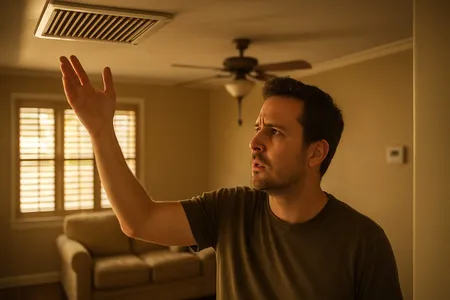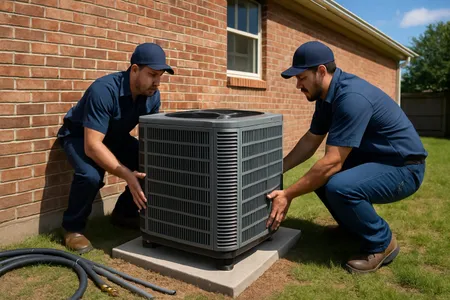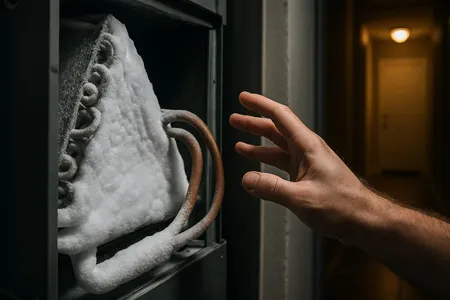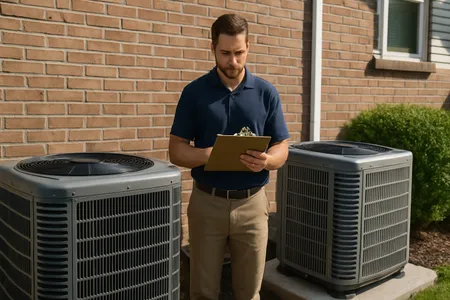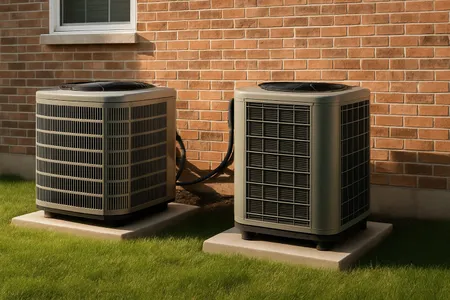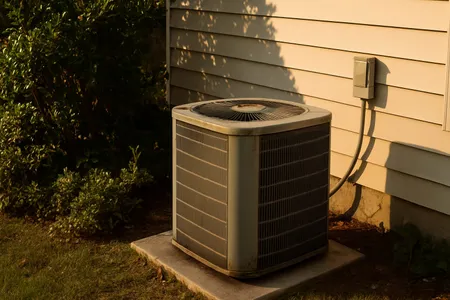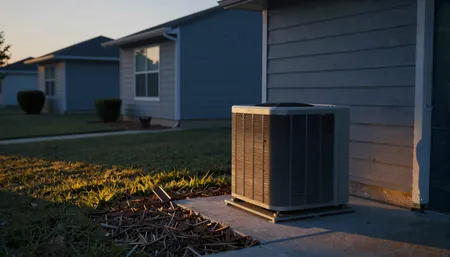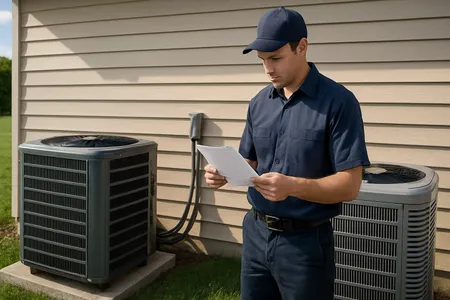
An end-of-summer AC checkup catches what three months of triple-digit runtime actually did to your system — degraded capacitors, fouled coils, clogged drain lines, and refrigerant charge drift — while the weather can still expose the symptoms and before those weakened parts face next summer. In Central Texas it pairs naturally with fall heating prep: one visit, both seasons.
Spring gets all the maintenance attention (we wrote the spring AC prep checklist ourselves). Here’s the case for the other bookend.
Why check the AC at the end of summer?
By late August a Central Texas air conditioner has run nearly every day since May — and it isn’t done: cooling season here regularly stretches into October (see the month-by-month maintenance calendar). A late-season checkup does three things a spring visit can’t:
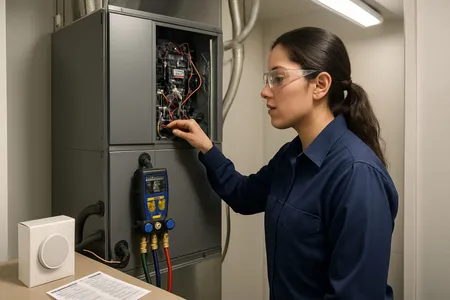
- It inspects the system under real stress. Marginal parts behave normally in mild weather. Under peak load, a weakening capacitor, a dragging fan motor, or a low charge shows measurable symptoms a technician can catch with gauges and a meter.
- It catches wear when it happened, not eight months later. A capacitor cooked by this summer will otherwise sit degraded until it fails during next June’s first heat wave — peak season, when repair demand raises both prices and wait times.
- It closes out the season honestly. If your AC limped through August, the checkup findings tell you whether it needs a minor, inexpensive part or a bigger conversation — and it’s far better to learn that in September than next May. If it’s the bigger conversation, read replace now or wait until fall first.
What does a late-season checkup actually inspect?
| Checkpoint | Why it matters after a hard summer |
|---|---|
| Capacitors (capacitance test) | Sustained heat degrades them; the most common Texas-summer failure. Replacement typically $150–$375 for the part, plus labor, if caught — see our capacitor guide |
| Contactor & electrical connections | Pitted contacts and heat-loosened lugs cause hard starts and no-starts |
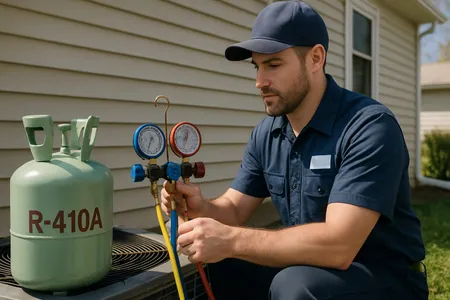
| Refrigerant charge & pressures | A slow leak shows as charge drift after a season of running; a technician can quote the recharge cost based on refrigerant type and amount needed |
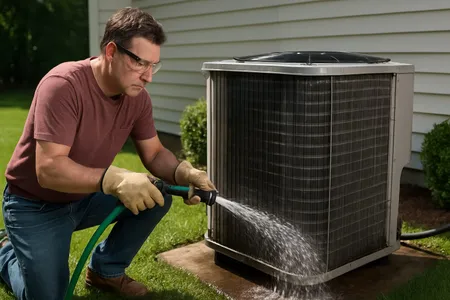
| Condenser coil condition | A summer of dust, grass, and cottonwood robs heat rejection; cleaning restores it |
| Condensate drain line | Algae thrives in a warm, wet summer line; a clog sends water into the house — the subject of our AC leaking water guide |
| Blower & fan motor amp draws | Rising amps predict motor failure before it strands you |
| Temperature split | The 15–20°F supply/return split confirms real delivered capacity |
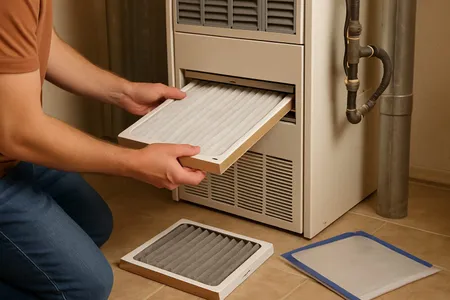
| Filter & airflow path | The cheap fix that prevents half the expensive ones |
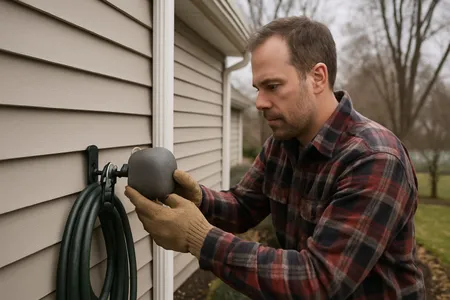
The DIY slice — filter, coil rinse, clearing vegetation, a cup of vinegar down the drain line — is genuinely worth doing and costs almost nothing. Our condenser cleaning guide walks through the safe way. The instrumented half is what the service fee buys. (Prices may vary case by case.)
What does it cost, and what’s the smart timing?
Tune-up and maintenance-plan pricing depends on scope — a single AC tune-up, a combined AC + heating visit, a heat pump tune-up, and an annual maintenance plan are each priced differently. Ask for a quote when you call, and see our maintenance plans page for what’s included at each tier.
The Central Texas rhythm that makes this efficient: heating tune-ups belong in September–October, before the first cold snap — so a late-season AC checkup and fall heating prep combine into one shoulder-season visit, when schedules are open and nobody is in emergency mode. Details on what maintenance includes and whether plans pay off: HVAC maintenance cost guide and our maintenance plans page.
Symptoms that upgrade this from “good idea” to “book it now”
- Cooling that’s gotten slower over the summer, or rooms that fell behind in August — first rule out load vs. fault with AC can’t keep up: normal vs. problem
- New sounds at startup: buzzing, clicking, a hum before the fan catches
- The system starting and stopping in short bursts
- Water around the indoor unit, or a musty smell when the system starts
- An electric bill that rose faster than the heat explains — see why summer bills spike
If you are in Central Texas, Texas Temp Masters offers AC tune-ups and fast air conditioning repair service. Call (817) 704-0706 or contact us online to schedule your end-of-summer checkup.