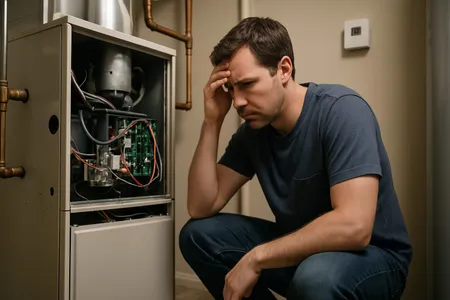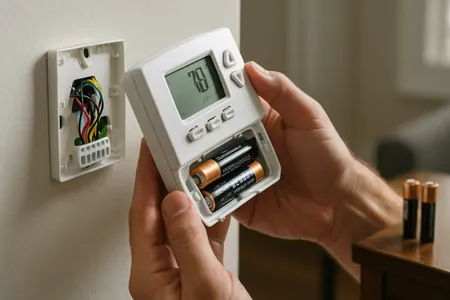
A heater blowing cold air is most often one of four things: the thermostat fan set to “On” instead of “Auto,” a furnace that has not finished warming up yet, a clogged filter causing the burners to overheat and shut off while the blower keeps running, or a failed igniter or pilot light. Check the fan setting first — it is the most common cause and takes five seconds. If you have a heat pump rather than a furnace, also know that mildly-warm air and occasional “cold blow” during defrost cycles are normal heat pump behavior, not failures. The sections below cover gas furnaces in depth; if you have a heat pump, jump to Furnace vs. heat pump first.
Furnace vs. heat pump: the answer differs
Central Texas homes are split between gas furnaces and heat pumps, and “blowing cold air” means different things on each.
If you have a heat pump:
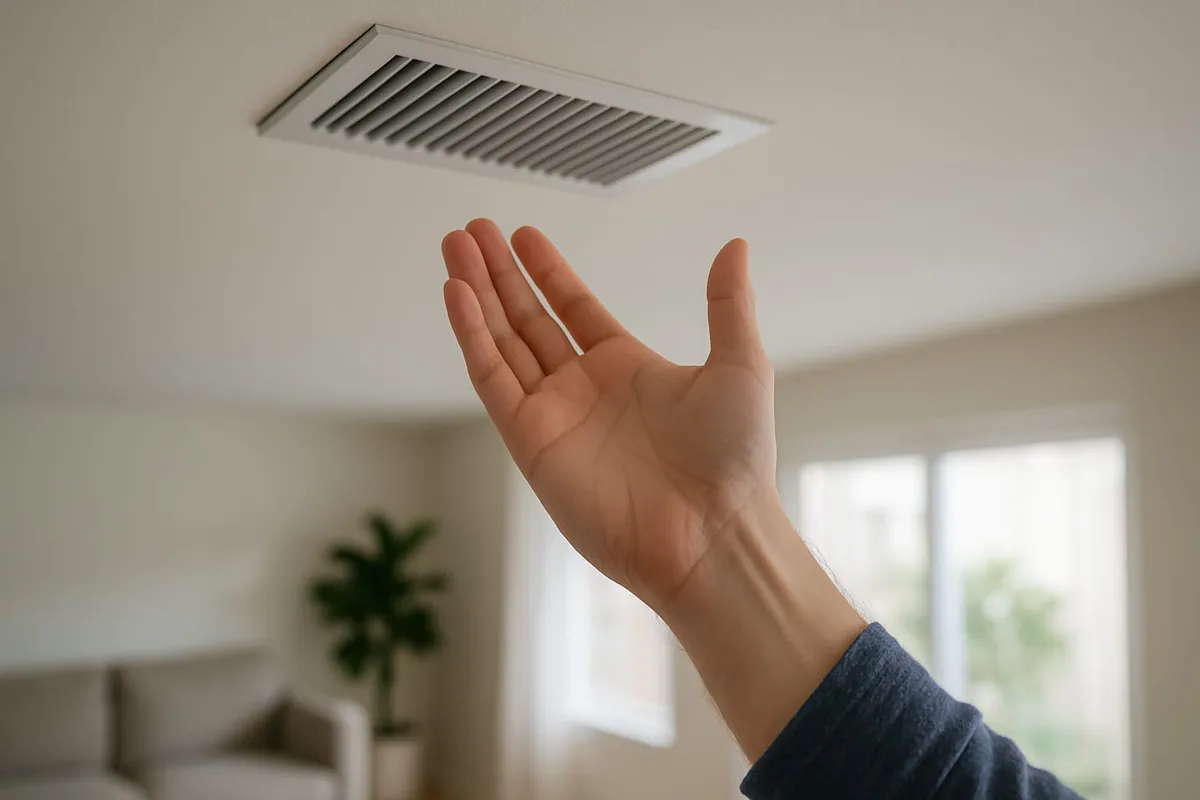
- Air feels “cool” but is actually ~85–92°F. Heat pumps deliver air well above room temperature but below body temperature, so it can feel cool on your hand while still heating the house. If the house is holding the set point, nothing is wrong.
- Cold air for a few minutes in frosty weather. That is the defrost cycle — the system briefly reverses to melt ice off the outdoor coil. Normal.
- Cold air continuously and the house losing ground. Now it is a real fault: low refrigerant, a stuck reversing valve, or a failed outdoor unit. Auxiliary/emergency heat on the thermostat will keep you warm (expensively) while you schedule the repair.
- Thermostat set to “Emergency Heat” by accident with a failed aux element gives cold air too — check the mode.
If you have a gas furnace, the seven causes below (fan setting, filter, ignition, flame sensor, ductwork, overheating, and heat exchanger) cover it — read on.
There is nothing more frustrating than cranking up the heat on a cold day only to feel cold air blowing from the vents. A furnace blowing cold air is a common problem, and the cause ranges from a simple thermostat adjustment you can fix in seconds to a serious mechanical failure that needs professional attention. The important thing is to figure out which situation you are dealing with so you can respond appropriately. This guide covers the seven most common reasons a furnace blows cold air instead of warm, with clear explanations, step-by-step diagnosis, and practical solutions for each. Most homeowners can work through the first several causes on their own and have warm air flowing again within minutes.
Quick Fix Checklist
These are the fastest and most common solutions. Check them before reading further:
- Check the thermostat fan setting — If it is set to “On,” switch it to “Auto.” The “On” setting runs the blower continuously, even between heating cycles, pushing unheated air through the vents.
- Wait 5 to 10 minutes — If you just turned the furnace on, it needs several minutes to warm up before it can deliver heated air. The blower may run briefly with cool air before the burners heat the heat exchanger.
- Check the air filter — A severely clogged filter can cause the furnace to overheat and shut down the burners, leaving only the blower running and pushing cold air.
- Verify the gas valve is open — For gas furnaces, make sure the gas shutoff valve near the furnace is in the open position (handle parallel to the pipe).
- Check the pilot light or igniter — If your furnace has a viewing window, look to see if the burners are lit when the furnace is supposed to be heating.
1. Thermostat Fan Set to “On” Instead of “Auto”
What It Is and Why It Happens
This is the most common reason homeowners report cold air from their furnace, and it is the simplest to fix. Your thermostat has a fan setting with two options: “On” and “Auto.” When set to “Auto,” the blower fan only runs when the furnace is actively heating. When set to “On,” the blower runs continuously — 24 hours a day — regardless of whether the burners are firing. Between heating cycles, the fan pushes room-temperature or cool air through the ducts, which feels cold compared to what you expect from a heater.
How to Check
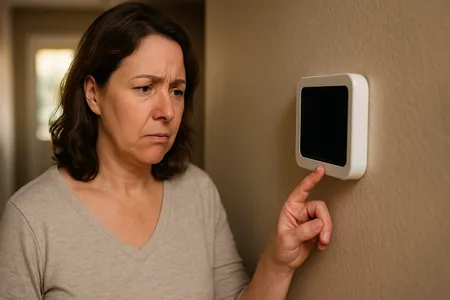
Look at your thermostat display. Find the fan setting (usually labeled “Fan” with options “On” and “Auto”). If it is set to “On,” this is very likely your problem.
How to Fix
Switch the fan setting to “Auto.” The blower will now only run when the burners are actively heating the air. You should feel warm air from the vents within a few minutes. Keep the fan setting on “Auto” during the heating season unless you have a specific reason to run the fan continuously (such as air filtration purposes, in which case the intermittent cool air between cycles is expected).
Estimated cost: Free (DIY fix).
2. Dirty or Clogged Air Filter
What It Is and Why It Happens
A clogged air filter restricts the airflow through your furnace, which causes the heat exchanger to overheat. The furnace has a built-in safety device called the high-limit switch (or limit switch) that monitors the heat exchanger temperature. When the temperature exceeds a safe threshold, the high-limit switch shuts off the gas burners to prevent damage to the heat exchanger and reduce fire risk. However, the blower fan continues to run to cool down the heat exchanger, which means it is pushing unheated air through your ducts. The result is cold air from the vents.
Once the heat exchanger cools down, the burners may reignite, only to overheat and shut off again. This cycle of short bursts of warm air followed by cold air is a telltale sign of a dirty filter causing overheating.
How to Check
Locate the air filter (between the return air duct and the furnace). Remove it and inspect it. If it is visibly dirty, gray, or clogged with dust and debris, it needs to be replaced.
How to Fix
Install a new air filter of the correct size. After replacing the filter, turn the furnace off for 5 minutes to allow the high-limit switch to reset, then turn it back on. The furnace should go through its normal startup cycle and begin producing warm air without tripping the safety switch. If the furnace still overheats with a clean filter, the high-limit switch itself may be failing and needs professional inspection.
Estimated cost: A new filter is inexpensive and this is a simple DIY fix.
3. Pilot Light Out or Ignition Failure
What It Is and Why It Happens
A gas furnace cannot produce heat if the burners are not lit. In older furnaces (generally pre-2000), a standing pilot light provides the ignition source. If the pilot goes out because of a draft, a dirty pilot orifice, or a failing thermocouple, the burners cannot ignite. In modern furnaces, a hot surface igniter or an electronic spark ignition system lights the burners. These igniters wear out over time — hot surface igniters typically last 3 to 7 years — and when they fail, the gas valve stays closed as a safety measure. In either case, the blower fan may still run (depending on the thermostat fan setting), blowing unheated air.
How to Check
For standing pilot lights: Open the furnace access panel and look for a small, steady blue flame near the burners. If there is no flame, the pilot is out.
For electronic ignition: When the thermostat calls for heat, look through the furnace’s inspection window. You should see the igniter glow orange (hot surface igniter) or hear clicking sounds (spark ignition) followed by the burners lighting. If the igniter does not glow or the burners do not light, the ignition system has failed.
How to Fix
To relight a pilot light: Follow the instructions printed on your furnace. Typically, you turn the gas valve to “Pilot,” hold the reset button, use a long lighter to ignite the pilot, hold the button for 30 to 60 seconds, then switch the valve to “On.” If the pilot will not stay lit after releasing the button, the thermocouple needs replacement.
For electronic ignition failure: Call a professional. Hot surface igniters are extremely fragile (they can crack from the oil on bare fingers) and must be replaced with the exact correct part for your furnace model.
Safety Warning: If you smell gas (a rotten egg or sulfur odor), do not attempt to light anything. Leave the house immediately, call your gas company from outside, and do not flip any switches or use electronic devices.
Estimated cost: Thermocouple and hot surface igniter replacement both include parts and labor — ask your technician for a written quote once they’ve identified which part has failed.
4. Dirty Flame Sensor
What It Is and Why It Happens
The flame sensor is a thin metal rod positioned in the path of the burner flame. Its function is to confirm that the gas burners have successfully ignited. If the sensor is coated with carbon buildup or corrosion (which happens naturally over time from exposure to combustion gases), it fails to detect the flame. As a safety precaution, the furnace control board shuts off the gas valve within 3 to 10 seconds. The characteristic symptom is: the burners light, the furnace starts to produce heat, and then everything shuts off a few seconds later. The furnace may try this two or three times before locking out.
How to Check
Watch the furnace through the inspection window when it attempts to fire. If the burners ignite and then go out within a few seconds, the flame sensor is the most likely cause. This is one of the most common furnace repairs.
How to Fix
Turn off the furnace and the gas supply. Locate the flame sensor — a thin metal rod with a single wire, mounted on the burner assembly. Remove the single mounting screw and pull the sensor out. Clean the metal rod with fine-grit (220-grit) sandpaper or a clean dollar bill until it is shiny and free of carbon deposits. Reinstall the sensor, restore gas and power, and test the furnace. The burners should now stay lit.
If cleaning does not solve the problem or the sensor is cracked, it needs to be replaced.
Estimated cost: Free for cleaning (DIY fix). Flame sensor replacement costs more and includes professional installation — ask for a written quote.
5. Leaky Ductwork
What It Is and Why It Happens
Your ductwork carries heated air from the furnace to every room in your home. When ducts have gaps, cracks, or disconnected joints — especially in unconditioned spaces like attics, crawl spaces, and garages — heated air escapes before reaching the living areas. At the same time, cold outside air or unconditioned attic/crawl space air can be pulled into the duct system. The net effect is that the air reaching your vents is lukewarm or cold, even though the furnace is operating correctly. The Department of Energy estimates that 20 to 30 percent of heated air is lost through duct leaks in the average home.
How to Check
While the furnace is running, go to the areas where ductwork is accessible (attic, basement, crawl space). Feel for warm air leaking from duct joints and seams. Look for visible gaps, disconnected sections, or deteriorated duct tape. If you can see daylight through a duct joint, that is a significant leak.
How to Fix
Seal accessible leaks with mastic sealant (a thick, paste-like sealant applied with a brush) or UL-listed metal HVAC foil tape. Do not use standard cloth duct tape — it breaks down within months in hot or cold environments. For disconnected sections, reattach the ducts and secure them with sheet metal screws, then seal the joints with mastic.
For extensive duct leaks, ducts in inaccessible areas, or professionally installed duct sealing (such as Aeroseal), call a professional.
Estimated cost: Mastic sealant for a DIY fix is inexpensive. Professional duct sealing costs more, depending on how much ductwork needs attention — ask your technician for a written quote.
6. Overheating and Safety Shutdown
What It Is and Why It Happens
Beyond a dirty filter, several other conditions can cause the furnace to overheat and trigger the high-limit safety switch. These include a failing blower motor (not moving enough air), a dirty or malfunctioning blower wheel, blocked supply or return vents throughout the house, or a faulty high-limit switch itself. When the safety switch activates, it shuts off the gas burners while leaving the blower running to cool the heat exchanger, resulting in cold air from the vents.
How to Check
If you have already replaced the air filter and the furnace is still short-cycling (running the burners for a few minutes, then shutting them off while the blower continues), overheating is the likely issue. Check that all supply and return vents in your home are open and unobstructed. Listen for the blower fan — if it sounds slower than usual, makes grinding noises, or fluctuates in speed, the motor may be failing.
How to Fix
Open all supply and return vents. If the problem persists with a clean filter and open vents, call a professional. The technician will check the blower motor, blower wheel, and high-limit switch. A failing blower motor or a faulty limit switch requires professional replacement.
Estimated cost: High-limit switch replacement cost varies by furnace model — ask for a written quote. Blower motor: part $300–$450, plus labor at $100–$150/hour for about 1–3 hours — estimated total roughly $400–$900, plus the $100 service call (credited toward the repair only when it’s completed on that same visit). These prices may vary case by case.
7. Cracked Heat Exchanger
What It Is and Why It Happens
The heat exchanger is the metal chamber inside your furnace where combustion gases are contained while heat transfers to the air passing over the outside of the chamber. Over years of heating and cooling cycles (thermal expansion and contraction), the metal can develop cracks. A cracked heat exchanger can cause the furnace to overheat and trigger safety shutdowns, resulting in cold air. More critically, a cracked heat exchanger can leak carbon monoxide into your home’s air supply, which is a life-threatening health hazard.
How to Check
You cannot reliably detect a cracked heat exchanger without professional equipment (combustion analyzers and specialized cameras). However, warning signs include:
- A yellow or flickering burner flame instead of a steady blue flame
- Soot buildup around the furnace
- A chemical or formaldehyde-like smell when the furnace runs
- Family members experiencing headaches, dizziness, or nausea when the furnace operates
- Carbon monoxide detector alarms
How to Fix
Call a professional immediately. A cracked heat exchanger is one of the most serious furnace safety issues. A technician will perform a thorough inspection using combustion analysis and visual inspection. If a crack is confirmed, the heat exchanger must be replaced or, more commonly, the entire furnace should be replaced, as heat exchanger replacement alone often costs nearly as much as a new furnace.
Safety Warning: If your carbon monoxide detector alarms, evacuate the home immediately, call 911 from outside, and do not re-enter until emergency responders have cleared the home. Carbon monoxide is odorless and colorless and can be fatal.
Estimated cost: Heat exchanger replacement is a major repair, and since it often costs nearly as much as a new furnace, most technicians will quote both options side by side so you can compare in writing.
When to Call a Professional
Contact a licensed HVAC technician if:
- The furnace burners light and then shut off within seconds — This is usually a dirty flame sensor but can also indicate a gas valve or control board issue.
- You smell gas — Leave the home immediately and call your gas company. Do not flip switches or use electronics.
- The furnace overheats repeatedly despite a clean filter and open vents — The blower motor, limit switch, or heat exchanger may need attention.
- Your carbon monoxide detector alarms — Evacuate and call 911. This could indicate a cracked heat exchanger.
- The furnace is more than 15 years old and repairs are becoming frequent — Consider whether replacement is more cost-effective than continuing repairs. Use our repair or replace calculator.
For heating emergencies, visit our emergency HVAC repair page or use our troubleshooter tool.
Prevention Tips
Prevent your furnace from blowing cold air with these maintenance steps:
- Replace the air filter every 30 to 90 days — This prevents overheating, the most common non-thermostat cause of a furnace blowing cold air.
- Schedule annual furnace maintenance — A fall tune-up includes cleaning the flame sensor, checking the ignition system, inspecting the heat exchanger, and testing safety controls. See our maintenance plans.
- Keep the thermostat fan on “Auto” — This prevents the confusion of feeling cold air between heating cycles.
- Install carbon monoxide detectors — Place one on every level of your home and near sleeping areas. Test monthly and replace batteries annually.
- Do not close more than 20 percent of supply vents — Closing too many vents restricts airflow and can cause overheating.
Frequently Asked Questions
Why is my furnace blowing cold air instead of hot?
The most common reason is the thermostat fan setting is on “On” instead of “Auto,” which runs the blower continuously and pushes unheated air between heating cycles. Other common causes include a dirty air filter causing overheating and safety shutdown, a failed igniter or pilot light, a dirty flame sensor, or leaky ductwork. Start by checking the fan setting and replacing the air filter.
How long should it take for a furnace to blow warm air?
After the thermostat calls for heat, a furnace typically takes 3 to 5 minutes to begin delivering warm air. During this time, you may feel cool air from the vents as the blower starts before the heat exchanger is fully warmed. If warm air does not arrive within 10 minutes, there is likely a problem with the ignition system, flame sensor, or gas supply.
Can a dirty filter cause a furnace to blow cold air?
Yes. A severely clogged filter restricts airflow, causing the heat exchanger to overheat. When the high-limit safety switch trips, it shuts off the gas burners while the blower fan continues running to cool the system down. The result is the blower pushing cold, unheated air through your vents. Replacing the filter and resetting the furnace (power off for 5 minutes, then back on) typically resolves this.
Is a furnace blowing cold air dangerous?
In most cases, a furnace blowing cold air is not immediately dangerous — it is just uncomfortable. However, if the cause is a cracked heat exchanger, it can lead to carbon monoxide leaking into your home, which is life-threatening. If you notice a chemical smell when the furnace runs, yellow or flickering burner flames, or your carbon monoxide detector alarms, evacuate immediately and call for professional help.
How much does it cost to fix a furnace blowing cold air?
The cost depends on the cause. Switching the thermostat fan to “Auto” or replacing a dirty filter costs little to nothing. A flame sensor cleaning is a simple DIY task, or a professional can do it for you. An igniter replacement, duct sealing, and heat exchanger replacement each cost progressively more — a technician can give you an exact, written quote once they’ve diagnosed the cause.
A furnace blowing cold air usually has a straightforward cause. Start with the thermostat fan setting and the air filter — these two items account for the majority of cases. If those checks do not solve the problem, work through the remaining causes in this guide before calling for professional help.
If you are in Central Texas, Texas Temp Masters provides fast furnace repair service. Call (817) 704-0706 or contact us online to get your heat back fast.
Next Steps
Once you have identified and addressed the issue, take these steps to stay ahead of future problems:
- Find the right replacement filter — Use our Filter Size Finder to match the correct size and MERV rating for your system.
- Check your furnace’s age — Enter your serial number in our HVAC Age Decoder to see if your furnace is nearing end of life.
- Furnace not starting at all? — If your system will not turn on in the first place, our furnace not turning on guide walks through a different set of causes.
- Learn proper filter maintenance — Read our step-by-step guide on how to change your furnace filter to prevent overheating shutdowns.
- Ready to talk? — Contact us for a free evaluation of your heating system.