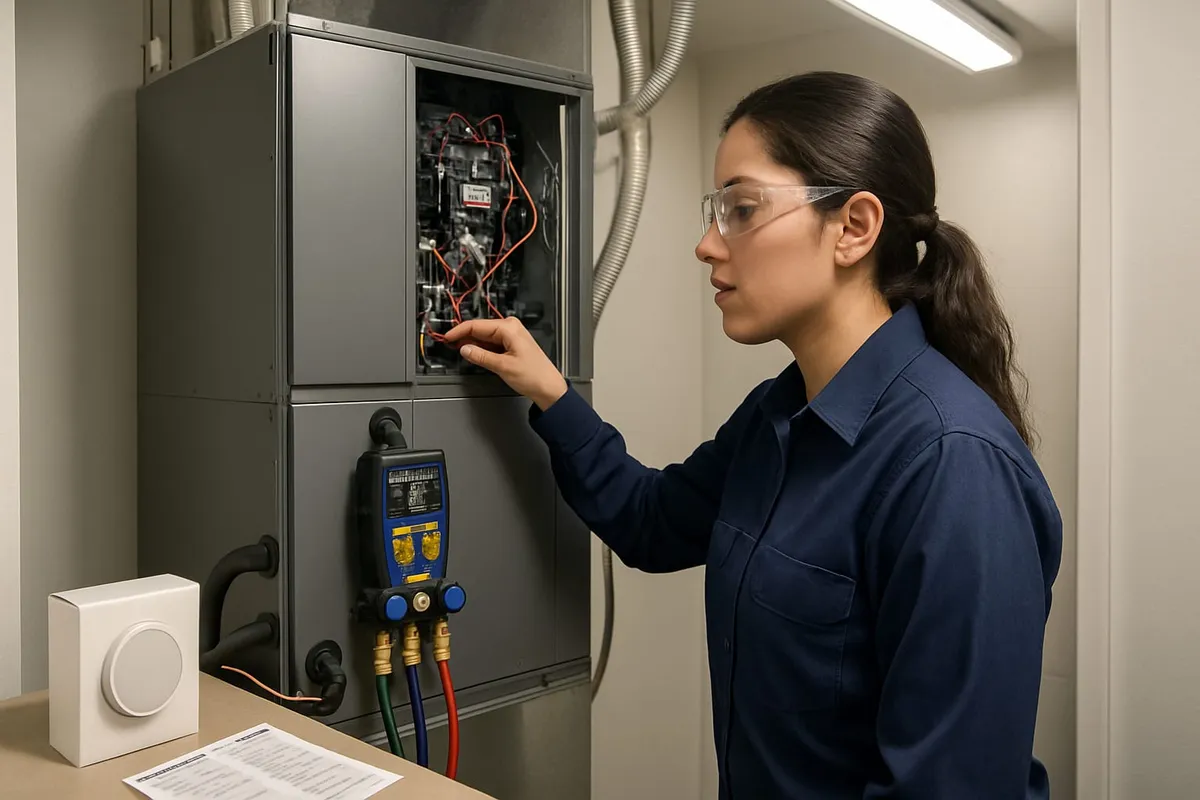
When shopping for a new air conditioner or heat pump, you will encounter three compressor types: single-stage, two-stage, and variable-speed. The compressor type dramatically affects your comfort, energy bills, noise level, and upfront cost. Here is what you need to know about each.
Quick Comparison
| Feature | Single-Stage | Two-Stage | Variable-Speed |
|---|---|---|---|
| Operating modes | 100% on or off | 100% or ~70% | 25% to 100% (hundreds of levels) |
| Efficiency | Lowest | Moderate | Highest |
| Typical SEER2 | 14 - 16 | 16 - 19 | 18 - 26+ |
| Temperature accuracy | +/- 4-6 degrees F | +/- 2-3 degrees F | +/- 0.5 degrees F |
| Humidity control | Poor | Good | Excellent |
| Noise level | Loudest | Moderate | Quietest |
| Lifespan | 12 - 15 years | 15 - 18 years | 15 - 20 years |
| Best for | Budget buyers | Balance of value/comfort | Maximum comfort |
How Each Type Works
Single-Stage (Single-Speed)
A single-stage compressor has one mode: full power or off. When the thermostat calls for cooling, the system runs at 100% capacity. When the temperature reaches the set point, it shuts off completely. It cycles on and off repeatedly throughout the day.
Think of it like a light switch: all the way on or all the way off. There is no middle ground.
Two-Stage (Dual-Stage)
A two-stage compressor has two operating modes: high (100%) and low (approximately 65-70%). Most of the time, it runs on the low stage, which is sufficient for normal cooling needs. It ramps up to high only on the hottest days or when the temperature is far from the set point.
Running on low stage most of the time means the system operates more efficiently, runs more quietly, and maintains more consistent temperatures.
Variable-Speed (Inverter-Driven)
A variable-speed compressor can adjust its output from as low as 25% to 100% capacity, with up to 700 distinct speed settings depending on the brand. It runs continuously at the precise level needed to maintain your set temperature, rarely cycling on and off.
Think of it like a dimmer switch: it adjusts precisely to match the exact cooling load at any given moment.
Detailed Comparison
Energy Efficiency
| Compressor Type | SEER2 Range | Energy Savings vs. Single-Stage |
|---|---|---|
| Single-Stage | 14 - 16 | Baseline |
| Two-Stage | 16 - 19 | 15% - 25% |
| Variable-Speed | 18 - 26+ | 25% - 50% |
Why variable-speed wins: A single-stage system wastes energy every time it starts up. Starting a compressor draws significantly more electricity than running it steadily. Variable-speed systems start slowly and run continuously at low power, avoiding the energy spike of frequent cycling.
Temperature Consistency
| Type | Temperature Swing | How It Feels |
|---|---|---|
| Single-Stage | +/- 4-6 degrees F | Noticeable hot and cold swings |
| Two-Stage | +/- 2-3 degrees F | More even, occasional fluctuations |
| Variable-Speed | +/- 0.5 degrees F | Remarkably consistent |
A single-stage system overshoots the set temperature, then lets the home warm up before kicking back on, creating a “roller coaster” effect. Variable-speed systems maintain a nearly constant temperature by continuously adjusting output.
Humidity Control
This is one of the most underappreciated differences between compressor types.
Single-stage: Short run cycles do not give the evaporator coil enough time to condense moisture effectively. Your home may feel clammy even at the set temperature.
Two-stage: Longer run times on low stage improve dehumidification significantly.
Variable-speed: Continuous operation at low speeds provides the best dehumidification. The system can even run in a dedicated dehumidification mode in some brands, keeping humidity at an ideal 40% to 50% without over-cooling.
In humid climates, this difference alone can justify the upgrade to two-stage or variable-speed.
Noise Level
| Type | Outdoor Unit | Indoor Air Handler | Perceived Difference |
|---|---|---|---|
| Single-Stage | 72 - 76 dB | Noticeable cycling | Loud on, silent off, repeat |
| Two-Stage | 65 - 72 dB (low stage) | Quieter most of time | Moderate, mostly low |
| Variable-Speed | 55 - 65 dB (typical) | Near-silent at low speed | Barely audible background hum |
Variable-speed systems typically operate at 40% to 60% of maximum capacity, which is significantly quieter than running at full blast. The outdoor unit sounds like a quiet conversation rather than a loud appliance.
Lifespan and Reliability
| Type | Expected Lifespan | Cycling Frequency | Wear and Tear |
|---|---|---|---|
| Single-Stage | 12 - 15 years | Frequent (6-10 cycles/hr) | Highest |
| Two-Stage | 15 - 18 years | Moderate (3-5 cycles/hr) | Moderate |
| Variable-Speed | 15 - 20 years | Minimal (runs continuously) | Lowest |
Frequent cycling is hard on HVAC components. Each start-up stresses the compressor, capacitors, and contactors. Variable-speed systems avoid this by running almost continuously at low power, reducing mechanical stress and extending component life.
Cost Comparison
Upfront Cost by System Size
Upfront cost rises with system size and with each step up in compressor technology — variable-speed carries the highest price, two-stage sits in the middle, and single-stage is the least expensive to install. The exact number depends on your home’s tonnage requirement, ductwork condition, and brand; request a written, itemized quote for your specific system size.
Operating Cost and Payback
Because two-stage and variable-speed systems run at lower output more of the time, they typically cost less to operate season over season than single-stage — the size of that savings depends on your local electricity rate and climate. Weighed against the extra upfront cost, the typical payback period is:
| Upgrade | Payback Period |
|---|---|
| Single to Two-Stage | 5 - 15 years |
| Single to Variable | 7 - 18 years |
| Two-Stage to Variable | 8 - 20 years |
Payback periods are shorter in hot climates with high cooling demand and longer in mild climates. Use our Energy Savings Calculator for a personalized estimate.
Which Is Best for Different Situations
Choose Single-Stage If:
- Budget is the top priority and you need the lowest upfront cost
- You live in a mild climate where AC runs only a few months per year
- You are selling the home soon and want to minimize investment
- The space is a rental property or secondary home with minimal comfort requirements
Choose Two-Stage If:
- You want a balance of comfort and cost: Better than single-stage without the premium price of variable-speed
- You live in a moderate to hot climate: The efficiency gain provides meaningful savings
- Humidity is a concern: Two-stage significantly improves dehumidification
- Noise matters: Noticeably quieter than single-stage, especially on low stage
Choose Variable-Speed If:
- Comfort is your top priority: The most consistent temperatures and best humidity control
- You live in a hot, humid climate: The efficiency gains and dehumidification are maximized
- You plan to stay in the home long-term: Longer payback period but greater total savings over the system’s life
- Noise sensitivity is a factor: The quietest option by far
- You have a large or multi-level home: Variable-speed adapts to different cooling needs throughout the day
Expert Recommendation
For most homeowners, two-stage offers the best value. It provides meaningful improvements in comfort, efficiency, and noise for a moderate price premium over single-stage. The payback period is reasonable (5 to 10 years in warm climates), and the comfort improvements are immediately noticeable.
Variable-speed is worth the investment if you live in a hot, humid climate, prioritize comfort and quiet operation, or plan to stay in your home for 10+ years. The comfort difference between variable-speed and even two-stage is substantial.
Single-stage makes sense only when budget is the primary constraint or the system will not run enough to justify the upgrade.
For help choosing the right system, use our Cost Estimator or visit our Air Conditioning page.
Frequently Asked Questions
Is variable-speed worth the extra cost?
In hot climates where AC runs 6+ months per year, variable-speed typically pays for itself through energy savings within 7 to 12 years while providing far superior comfort from day one. In mild climates with short cooling seasons, the payback period may exceed the system’s lifespan, making two-stage a better value.
Can I upgrade from single-stage to variable-speed?
Yes. When replacing your air conditioner or heat pump, you can choose any compressor type regardless of what you had before. The indoor unit (air handler or coil) should also be matched to the new system for optimal performance.
What brands offer the best variable-speed systems?
Carrier (Greenspeed Intelligence), Trane (TruComfort), Lennox (iComfort), and Daikin (inverter systems) are among the top brands for variable-speed technology. Each uses slightly different approaches but all deliver excellent results. See our Carrier vs Trane comparison for more brand insights.
Does compressor type affect the thermostat I need?
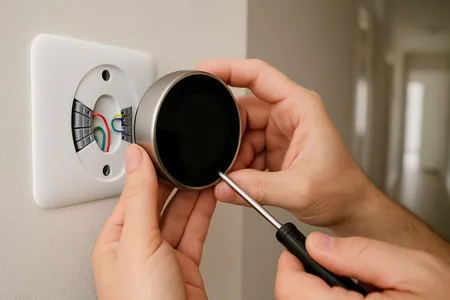
Variable-speed systems perform best with communicating thermostats from the same manufacturer (such as the Carrier Infinity Touch or Trane XL). These smart thermostats communicate directly with the compressor for precise control. Standard smart thermostats (Nest, Ecobee) work but may not unlock all variable-speed features.
How does two-stage differ from variable-speed in real-world comfort?
The difference is noticeable but subtle. Two-stage systems maintain a 2-3 degree range and run on low most of the time. Variable-speed systems maintain a 0.5-degree range and make constant micro-adjustments. If you are sensitive to temperature swings or humidity fluctuations, you will appreciate the variable-speed upgrade.
In Central Texas? With hot summers and moderate winters, the right compressor type makes a real difference in your comfort and energy bills. Texas Temp Masters can help you choose between single-stage, two-stage, and variable-speed systems for your home. Call (817) 704-0706 for a free consultation.
Next Steps
Once you know which compressor type fits your priorities, take these steps:
- See the savings in dollars — Use our Thermostat Savings Calculator to estimate how much a programmable or smart thermostat can save alongside your new system.
- Project your energy costs — The Energy Cost Calculator shows the monthly cost difference between single-stage, two-stage, and variable-speed at real electricity rates.
- Understand the new efficiency ratings — Our SEER vs SEER2 guide explains how to read today’s efficiency labels and avoid comparing apples to oranges.
- Compare top brands — See how Carrier, Trane, and other manufacturers stack up in our Best HVAC Brands for Texas guide, with specific notes on variable-speed offerings.
- Ready to talk? — Contact us for a free evaluation.