Replacing a failed AC compressor typically costs $1,000 to $3,000 installed on a residential system in 2026. The single biggest variable is warranty: if the compressor is still under the manufacturer’s parts warranty (commonly 10 years from installation when registered), you pay labor and refrigerant only — usually $600 to $1,500. Out of warranty on an aging system, the honest answer is often not to replace the compressor at all, but to put that money toward a new system. Here’s how the costs break down and how to make that call without getting talked into either mistake.
AC Compressor Replacement Cost Breakdown
| Scenario | Typical Cost |
|---|---|
| Compressor under parts warranty (pay labor + refrigerant) | $600 – $1,500 |
| Out-of-warranty replacement, standard residential unit | $1,000 – $3,000 |
| Large, premium, or hard-to-source compressor | $2,500 – $4,000+ |
| Alternative: run capacitor (the great compressor impersonator) | $150 – $250 |
| Alternative: new condenser or full system | See AC replacement cost |
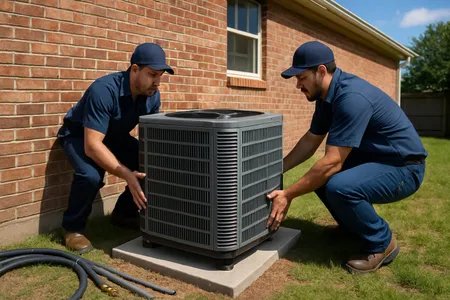
What’s inside that number: the compressor itself (several hundred dollars to well over a thousand by tonnage and type), refrigerant recovery and recharge, a new filter-drier (required practice after a compressor change), brazing, evacuation, and several hours of skilled labor. Single-stage compressors cost less than two-stage; variable-speed inverter compressors cost the most.
The Warranty Check That Should Happen First
Most major brands (Carrier, Trane, Lennox, Goodman, Rheem and their sister brands) ship residential equipment with a 10-year parts warranty when registered — and Goodman’s registered warranty famously covers the compressor for life on select models. The warranty covers the part, not the labor, but that’s the difference between a $2,500 job and a $900 one.
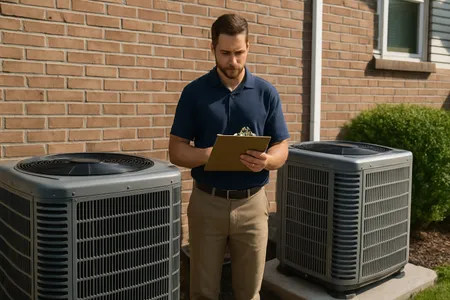
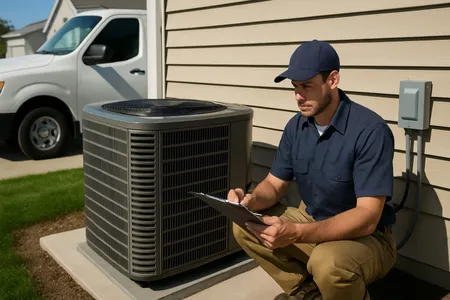
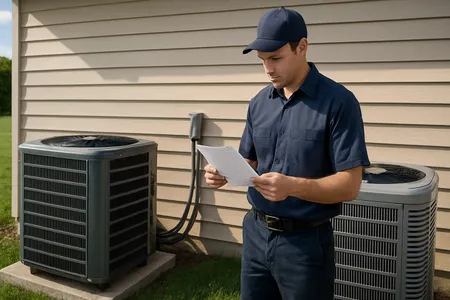
To check: find the unit’s serial number on the outdoor unit’s data plate and decode its age with our free HVAC Age Decoder — we have brand-specific guides for Carrier, Trane, Goodman, Rheem, Lennox, and York. Then confirm registration status with the manufacturer. Do this before authorizing work; a warranty discovered after the invoice doesn’t help.
Repair vs. Replace: The Decision That Actually Matters
A compressor failure is rarely just a compressor question — it’s a system question. The framework we use:
| Situation | Honest Recommendation |
|---|---|
| Under ~10 years old, compressor under warranty | Replace the compressor. Straightforward. |
| Under ~10 years, out of warranty (unregistered) | Usually still repair, but get the failure cause diagnosed — something killed a young compressor. |
| 10–15 years old | Lean replacement. In Central Texas run-hours, this system is in its final stretch — see how long ACs last here. A $2,500 compressor in year 13 buys you the rest of a 15-year system. |
| 15+ years old | Replace the system. Spending compressor money here is the classic good-money-after-bad move. |
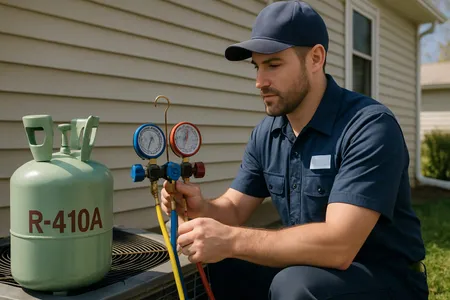
The refrigerant wrinkle: if your system runs R-410A, the ongoing refrigerant transition matters. New equipment has moved to next-generation refrigerants, and R-410A itself is getting more expensive as supply tightens under the phase-down. A major repair that commits you to years more of R-410A service costs is worth weighing against a system that doesn’t have that exposure. (Estimate refrigerant costs with our refrigerant cost tool.)
Make Sure It’s Actually the Compressor
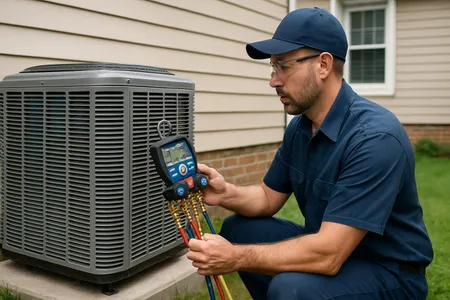
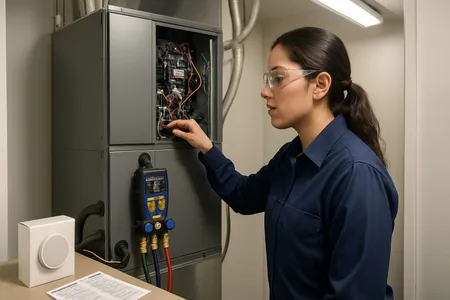
This is the paragraph that saves people real money. The most common misdiagnosis in residential AC is calling a failed run capacitor a failed compressor. Both present the same way: the outdoor unit hums, clicks, or does nothing; the air inside blows but isn’t cold. A capacitor is a $150–$250 repair. A competent diagnosis checks, in order: power and breaker, contactor, capacitor, wiring, and only then the compressor’s windings and internal overload. If a quote jumps straight to “compressor’s dead, $2,800,” asking exactly what was tested is not rude — it’s due diligence, and a fair technician will walk you through it. Our AC not blowing cold air guide covers the broader diagnostic tree.
Signs a Compressor Really Is Failing
- Hard starting: lights dim, the unit strains, stutters, or trips the breaker on startup
- Breaker trips repeatedly on the outdoor unit’s circuit
- Loud mechanical noise — grinding, knocking, or a scream at startup (different from the normal hum)
- Runs but doesn’t cool with correct refrigerant charge and airflow verified — the compressor turns but isn’t building pressure
- Tripped internal overload that resets when cool and fails again hot — classic on triple-digit Texas afternoons, when marginal components meet maximum load
Get a Straight Diagnosis Before You Spend
Texas Temp Masters diagnoses compressor failures honestly across Central Texas — including telling you when it’s a capacitor, when the warranty has you covered, and when replacement beats repair.
Helpful resources:
- AC Repair Cost Guide — the full menu of AC repair pricing
- AC Replacement Cost — what the alternative actually costs
- HVAC Age Decoder — check your unit’s age and warranty window first
Call us at (817) 704-0706 for a real compressor diagnosis — capacitor, contactor, and windings checked before any verdict. Same-day appointments available across Central Texas.