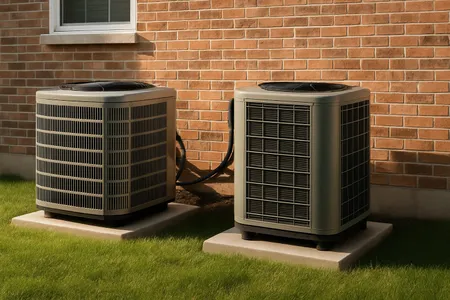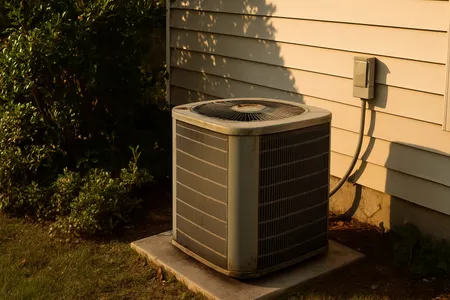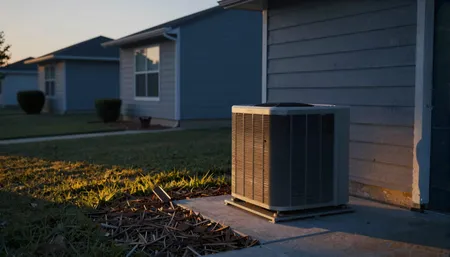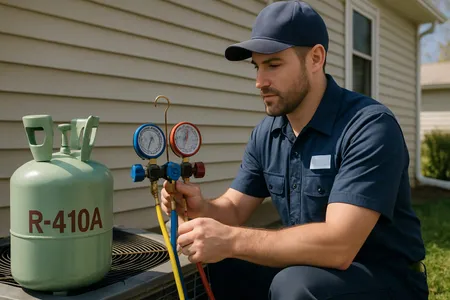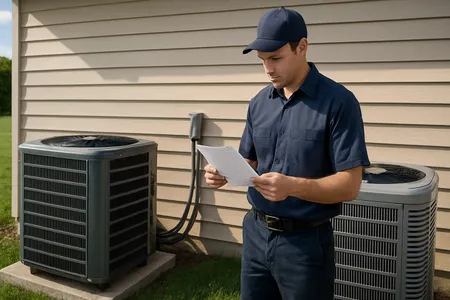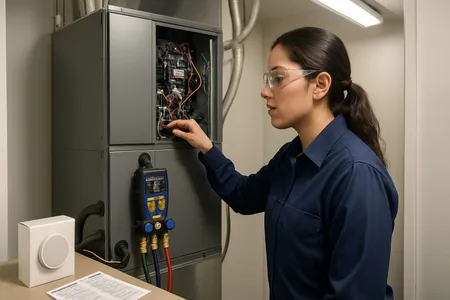
A central air conditioner lasts 15 to 20 years on average nationally — but in Texas, plan on the lower end of that range. The reason is duty cycle: a Central Texas AC runs roughly eight months a year, much of it against 95–105°F afternoons, so a 15-year-old system here has done the working hours of a much older system in a mild climate. Maintenance is the biggest controllable factor: the difference between a neglected system and a maintained one is commonly years of life. (This page localizes the national picture in our general AC lifespan guide — read that one for brand-by-brand lifespan data.)
Why Texas shaves years off the average
- Runtime. Cooling season in Bell and Coryell County stretches from April into October. More hours = more wear on the compressor, motors, and capacitors — the same reason a 200,000-mile highway car outlives a 100,000-mile city car, in reverse.
- Peak-load stress. Every 100°F+ afternoon pushes pressures and current draw toward design limits. Heat is what kills capacitors and cooks motor windings.
- Dust and hard water. Construction dust around Killeen and Temple clogs filters and coats coils; Bell County’s hard water scales evaporator coils and drain lines. Both force the system to work harder for the same cooling.
- Builder-grade starting points. Much of the area’s 2000s housing stock got minimum-spec 13-SEER systems, often undersized. A system that runs continuously because it is too small ages on an accelerated clock.
Lifespan by the numbers
| Situation | Realistic expectation |
|---|---|
| Well-maintained, correctly sized, Central Texas | 12–17 years |
| Neglected (no maintenance, chronic dirty filter) | 8–12 years |
| Well-maintained in a mild climate (for comparison) | 15–20+ years |
| Heat pumps (cooling + heating duty year-round) | typically a few years shorter than AC-only |
These are honest planning ranges, not promises — individual units beat and miss them constantly. What the ranges are for: if your system is inside its window and failing, repair math applies; at or past the window, read Should I Repair or Replace My AC? before spending real money.
How do I find out how old my AC actually is?
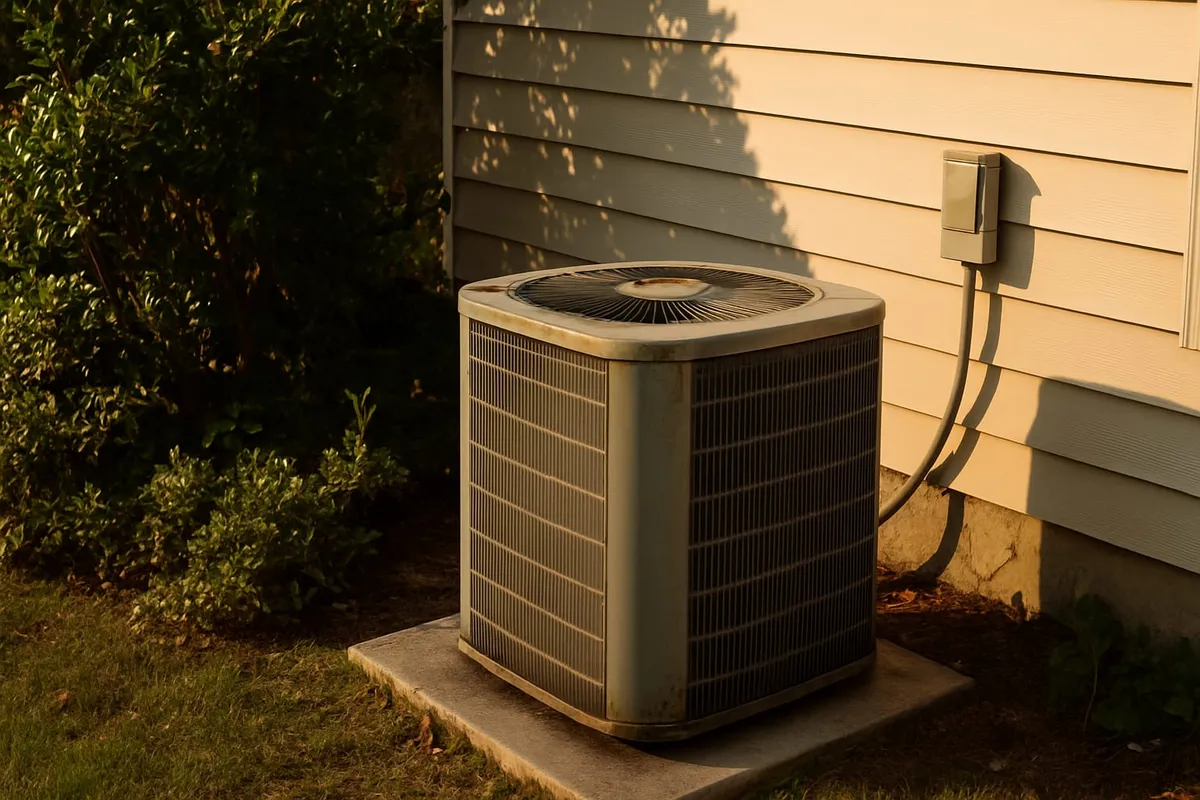
The serial number on the outdoor unit’s data plate encodes the manufacture date — each brand differently. Our free HVAC Age Decoder reads it for you, or use the brand guides (Trane, Carrier, Goodman, Rheem, Lennox, York). Two facts fall out of the date: whether parts are still under warranty, and whether the system predates ~2010 and likely uses phased-out R-22 refrigerant — which changes every repair decision from then on.
What actually extends an AC’s life? (ranked)
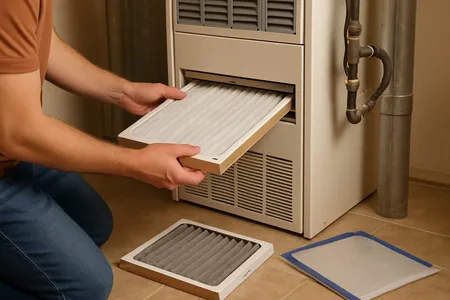
- Filter changes every 30–90 days — every 30 near active construction. The single highest-leverage habit, and it’s under $30 a year. See how often to change your AC filter in Texas.
- Annual professional maintenance. Coil cleaning, refrigerant verification, amp-draw checks on motors, drain clearing. Weak capacitors and dirty coils get caught while they are $100 problems instead of $3,000 ones. Maintenance plans exist for exactly this.
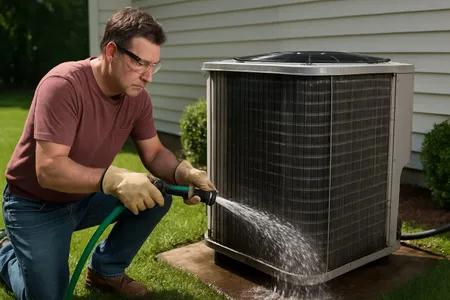
- Keep the outdoor unit clear. Two feet of clearance, gentle fin rinse when dusty. A smothered condenser runs hot, and heat is the enemy.
- Don’t make it fight harder than it must. Reasonable thermostat settings, shade on west windows, decent attic insulation. Every degree of unnecessary demand is runtime.
- Fix small faults promptly. A hard-starting compressor (weak capacitor) or a low charge (small leak) quietly grinds down lifespan while “still working.”
The signs your AC is near the end
- 15+ years old and facing any major repair
- Repairs clustering — two significant failures within two years
- R-22 refrigerant plus a leak
- Cooling costs creeping up annually with no usage change
- Longer and longer run times to hold the same temperature
None of these alone says “today.” Together, they say “plan the replacement on your schedule” — because the alternative is an emergency replacement during a July heat wave, at heat-wave availability. Replacement runs $5,500–$9,000 installed for common sizes (full guide), and a new high-efficiency system typically cuts cooling costs 20–40% versus the tired unit it replaces.
Frequently Asked Questions
How often should an AC be replaced in Texas?
Plan around a 12–17-year service life for a maintained system in Central Texas. Replace when the repair math fails (see the $5,000 rule) rather than on a birthday — age is a risk factor, not a verdict.
Do AC units wear out faster in Texas?
Yes — not because of anything exotic, but hours and heat: longer cooling seasons and higher peak loads mean more accumulated wear per calendar year than in mild climates. Dust and hard water in Central Texas add friction on top.
Can an AC last 25 years in Texas?
Occasionally, with diligent maintenance, favorable sizing, and luck. But a 20+-year-old unit here is running on borrowed time with R-22 refrigerant it can’t affordably refill and efficiency far below modern equipment — surviving is not the same as being worth keeping.
Does maintenance really extend AC lifespan?
Yes, and it is the factor you control. The mechanisms are concrete: clean coils keep pressures and temperatures in design range, verified refrigerant charge keeps the compressor out of damaging conditions, and amp-draw checks catch weakening capacitors before they take out motors. That is why neglected systems cluster at 8–12 years and maintained ones at 12–17.
Want to know exactly where your system stands? Texas Temp Masters serves Killeen, Copperas Cove, Temple, Belton, and Harker Heights — we’ll date your unit, check its warranty status, and give you an honest read on its remaining life. Call (817) 704-0706 or contact us online, or decode the serial yourself with the HVAC Age Decoder.