A washing machine that won’t drain almost always has one of four problems: a clogged pump filter (the number-one cause on front-loaders), a kinked or blocked drain hose, a lid or door lock fault (the machine refuses to spin/drain because it thinks it’s open), or a failed drain pump. The first two cost nothing to fix yourself. This guide walks through each in order, including how to get the water out of a full drum first, and lists the drain error codes each major brand shows.
First: Get the Water Out Safely
Before any diagnosis, deal with the drum full of water:
- Unplug the machine (or flip its breaker).
- Front-loaders: open the small access panel at the bottom front. Most machines hide a little rubber drain hose next to the pump filter — pull it out, remove its plug, and drain into a shallow pan (repeatedly — there’s more water than you think). No drain hose? Cracking the filter cap slowly does the same job, messier.
- Top-loaders: lower the main drain hose from the standpipe into a bucket below drum height and let gravity siphon it out.
- Towels down before you start. Every experienced tech says this and every first-timer skips it once.
Fix 1: Clean the Pump Filter (Front-Loaders’ #1 Cause)
Every front-loader has a pump filter / coin trap behind that lower front access panel. Its whole job is to catch what the drain pump can’t pass — coins, hair ties, bra wires, socks that “disappeared,” bobby pins, gravel from pockets.
- With the water drained and the machine unplugged, twist the filter cap counterclockwise and pull it out.
- Remove the debris — it can be genuinely impressive.
- Look into the opening with a flashlight and spin the pump impeller with a finger. It should turn with slight ratchety resistance. Fish out anything wedged in it.
- Reinstall the filter snugly (a loose filter leaks), run a rinse/spin cycle, and confirm drainage.
If you’ve never cleaned this filter and the machine is years old, this fixes the problem more often than everything else on this page combined. Make it a twice-a-year habit afterward.
Top-loaders mostly lack an accessible filter; their debris traps live at the pump inlet and require tipping the machine and removing a hose clamp — doable, but this is the point where many owners reasonably call for service.
Fix 2: Check the Drain Hose and Standpipe
- Kinks: pull the machine forward and inspect the corrugated drain hose. A machine pushed hard against the wall crushes the hose — the classic “stopped draining after we moved it” cause.
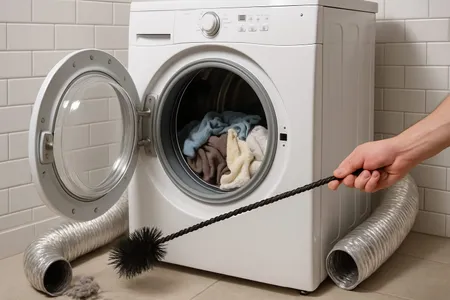
- Blockage: detach the hose at the machine end (water will follow) and check both the hose and the machine’s outlet for a wad of lint or a sock. A straightened coat hanger or plumber’s snake clears the hose.
- Height: the hose must discharge into a standpipe or laundry tub at the height the manufacturer specifies — generally somewhere between roughly waist height and no more than about 8 feet. Too high and the pump can’t lift the water; hose shoved too deep into the standpipe and dirty water can siphon back into the drum.
- The house drain itself: if the standpipe backs up and overflows while the washer drains, the clog is in your home’s plumbing, not the washer. That’s a drain-cleaning job, and no washer part will fix it.
Fix 3: Lid Switch or Door Lock
Washers refuse to drain and spin when they believe the lid or door is open.
- Top-loaders: the lid switch under the lid rim is a frequent failure. Symptom: the machine fills and agitates but goes silent instead of draining/spinning. On many machines you can hear the switch click when pressing the lid down — no click, suspect the switch. Replacement is an inexpensive repair.
- Front-loaders: a failing door lock assembly usually announces itself with a door-lock error code before drain symptoms, and the cycle won’t start at all. See the code table below.
Fix 4: The Drain Pump Itself
If the filter is clean, the hose is clear, and the machine still hums at drain time (or drains at a trickle), the drain pump has likely failed — impeller stripped or motor dead. Two honest notes:
- A pump that runs but sounds like a coffee grinder took debris damage; it may limp along, but it’s on the way out.
- Pump replacement typically runs $150–$400 installed — see our washer and dryer repair cost guide for the full pricing picture and the repair-vs-replace math for older machines.
Drain Error Codes by Brand
| Brand | Drain-Fault Code | Lookup |
|---|---|---|
| LG | OE | LG washer error codes |
| Samsung | 5C (older: SC, 5E) | Samsung washer error codes |
| Whirlpool / Maytag | F9 E1 (long drain) and similar F9-family | Whirlpool washer error codes |
| GE | Drain/spin fault indicators vary by model | GE washer error codes |
A drain code doesn’t tell you which of the four causes you have — it tells you where to start: filter first, hose second.
When to Call It
Call for service when: the pump is confirmed dead, a top-loader needs its pump trap opened, water backed up out of the standpipe (plumbing, not appliance), the machine trips the breaker, or you’ve cleared everything and the code returns. And if the machine is past 8–10 years old (washer lifespan guide), get the repair quote and run it through our Repair or Replace tool before committing — a drain pump on a 12-year-old builder-grade washer is a fair “replace” conversation.
Get It Draining Again
Texas Temp Masters repairs all major washer brands across Central Texas — drain pumps, lid switches, door locks, and the mystery objects living in pump filters.
Helpful resources:
- Washer & Dryer Repair Costs — know a fair quote
- Dishwasher Not Draining — the kitchen-side sibling of this problem
- How Long Do Washers Last? — the replace-instead threshold
Call us at (817) 704-0706 for same-day washer repair across Central Texas.