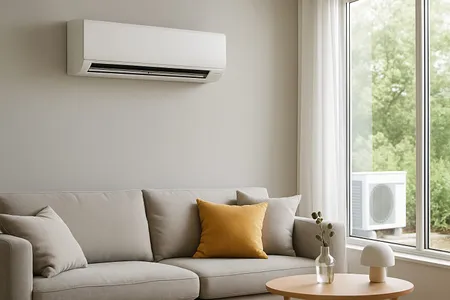
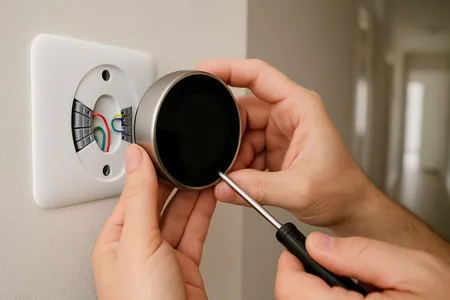
A blinking operation light on a Mitsubishi mini-split means the unit has logged a fault and shut itself down to prevent damage. The most common culprits are simple: a dirty filter or blocked airflow (freeze/overheat protection), a full condensate drain (float switch or drain pump fault), or a communication drop between the indoor head and outdoor unit after a power event. Before anything else, try the universal first step: turn the system off at the breaker, wait one full minute, and power it back on. If the light returns, pull the actual error code as described below and match it in the table.
How to Read the Error Code
Mitsubishi wall units report faults two ways:
- Blinking indicator light on the indoor head — the blink pattern signals a fault family, but not the specific code.
- Check codes via the remote — on most Mitsubishi M-Series remotes you can retrieve the stored code (often by pointing the remote at the unit and using the CHECK function; the unit beeps continuously when the displayed code matches the stored fault). Ducted and ceiling-cassette systems with wired controllers display the code directly on the controller screen.
The exact retrieval steps vary by model — check your indoor unit’s manual or the sticker inside the front panel. The code families below are consistent across most residential Mitsubishi equipment.
Mitsubishi P Codes (Indoor Unit Protection and Sensor Faults)
| Code | Meaning | What to Do |
|---|---|---|
| P1 | Intake (room air) sensor fault | Sensor unplugged or failed. Power-cycle; if it returns, the thermistor needs testing/replacement — technician job. |
| P2 | Pipe (coil) sensor fault | Same class as P1 but on the refrigerant pipe thermistor. Technician job. |
| P4 | Drain sensor / float switch fault | The condensate float switch is tripped or faulty. Check for a clogged condensate drain line — the most common cause. Clear the line; if the pan is dry and the code persists, the sensor itself is suspect. |
| P5 | Drain pump / drain overflow fault | On units with a condensate pump: pump failed or the line is blocked and water backed up. Clear the drain, verify the pump runs. |
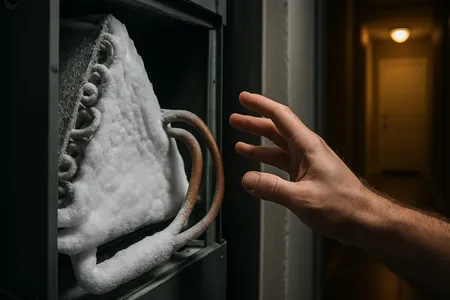
| P6 | Coil freeze or overheat protection triggered | In cooling: usually a dirty filter, blocked coil, or low refrigerant causing the coil to ice. Clean the filters first (our AC freezing up guide applies here). If clean filters don’t fix it, refrigerant charge needs checking. |
| P8 | Abnormal pipe temperature | The outdoor unit isn’t delivering expected refrigerant temperature — possible valve, charge, or sensor issue. Technician job. |
| P9 | Pipe sensor (second circuit) fault | As P2. Technician job. |
Mitsubishi E Codes (Communication and Control Faults)
| Code | Meaning | What to Do |
|---|---|---|
| E0 / E3 | Remote controller transmission error | Wired-controller wiring or interference issue. Check controller cable connections. |
| E1 / E2 | Remote controller board fault | Controller hardware. Try power-cycling; replace controller if persistent. |
| E4 / E5 | Signal error between controller and indoor unit | Check wiring; power-cycle. |
| E6 / E7 | Indoor–outdoor unit communication failure | The most common E-family fault. Causes: power interruption, loose or damaged interconnect wiring, a tripped outdoor breaker/disconnect, or a failed board. Verify the outdoor unit has power, then power-cycle the whole system at the breaker. If it recurs, the interconnect wiring and boards need professional testing. |
| E9 | Indoor unit not receiving from outdoor unit | Same family as E6/E7 — check power and wiring. |
| EA / EB / EC | Miswiring / piping mismatch (typically at installation) | Usually appears on new installs or after wiring work: indoor and outdoor units mismatched or crossed. Installer callback. |
Outdoor Unit (U-Family) Codes
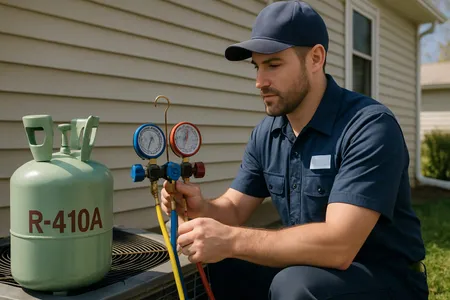
Larger and ducted Mitsubishi systems (and wired controllers) may show U codes for outdoor-side faults — high pressure, compressor, discharge temperature, and voltage protection classes. These are not owner-serviceable: they involve refrigerant pressures and high-voltage components. Note the exact code before calling; it saves diagnostic time.
Important: Mitsubishi code definitions can differ slightly across product families (M-Series wall units, ducted SEZ/PEA units, City Multi). Treat the tables above as the common residential meanings and confirm against your model’s manual before ordering parts.
The 5-Minute Owner Checklist Before Calling for Service
- Power-cycle at the breaker — off, wait 60 seconds, on. Clears transient faults (especially after storms or power blinks — common in Central Texas summer).
- Clean the filters — pop the front panel, rinse the mesh filters, let them dry, reinstall. Behind a huge share of P6-class shutdowns.
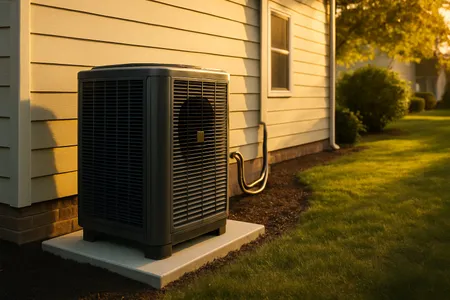
- Check the outdoor unit — is its disconnect on? Is the coil packed with grass clippings, cottonwood fluff, or leaves? Is anything within about 2 feet blocking airflow?
- Check the condensate drain — look where the drain line exits (usually near the outdoor unit). No drip while cooling on a humid day = likely clog → P4/P5 class faults.
- Note the code, then call — if the code returns after the steps above, write it down along with the model number (front panel sticker). A code in hand turns a two-visit repair into one.
When It’s Not a Fault Code
Some behaviors look like errors but aren’t: brief pauses with the vane closed (defrost or oil-return cycles), a gentle gurgle (refrigerant flow), or the unit ignoring the remote’s set temperature briefly after restart (protective startup delay, typically 3 minutes). If there’s no blinking light and no stored code, the unit is likely doing its job.
Frequently Asked Questions
Can I keep running the system with a code showing?
Don’t. The codes exist because the unit detected a condition that risks the compressor, a water leak into your wall, or a frozen coil. Power-cycling once to see if the fault clears is fine; repeatedly clearing the same code and running anyway is how a $300 repair becomes a $2,000 one.
My Mitsubishi is over 10 years old and throwing repeated codes. Repair or replace?
Mini-splits are long-lived, but repeated board or compressor-class faults on an aging system shift the math toward replacement — see our mini-split cost guide for current installed pricing and Daikin vs. Mitsubishi if you’re comparing brands. Decode your unit’s age from its serial number with the HVAC Age Decoder.
Why does the code come back every afternoon in summer?
A fault that appears only at peak heat load points to a marginal condition: slightly low charge, a struggling capacitor, or restricted airflow that only matters when the system is working hardest. Texas triple-digit afternoons are exactly when marginal becomes failing. That pattern is worth a professional look before it strands you in August.
Get Expert Mitsubishi Mini-Split Service
Texas Temp Masters diagnoses and repairs ductless mini-splits across Central Texas — Mitsubishi, Daikin, and other major brands.
Helpful resources:
- Error Code Lookup Hub — codes for other HVAC and appliance brands
- Mini-Split vs. Central AC — if you’re weighing a system change
- AC Unit Freezing Up — the icing problem behind many P6 shutdowns
Call us at (817) 704-0706 with your error code and model number for fast mini-split diagnosis. Same-day appointments available across Central Texas.