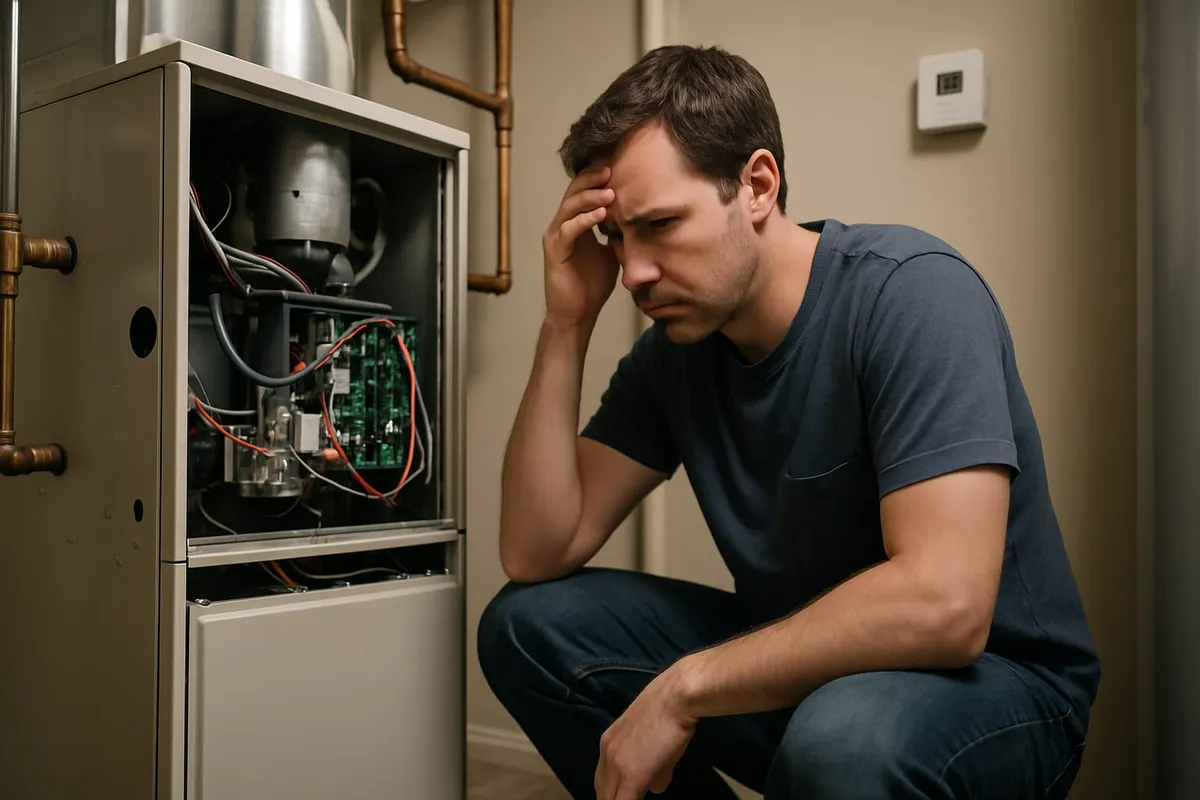
A furnace that will not turn on when temperatures drop is more than an inconvenience — it can be a safety concern, especially for young children, elderly family members, and pets. Before you call for an emergency heating repair, there are several things you can check yourself that may get your furnace running again in minutes. This complete troubleshooting guide walks you through every common reason a furnace will not start, from the simplest fixes (a flipped switch) to issues that require a trained HVAC technician. Whether you have a gas furnace, an electric furnace, or a heat pump system, this guide covers the causes and solutions you need to know.
Quick Fix Checklist
Start here before doing anything else. These quick checks solve the problem in roughly 40 percent of “furnace won’t start” calls:
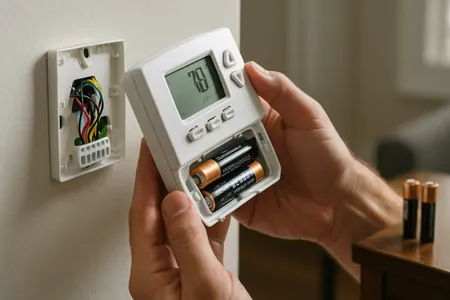
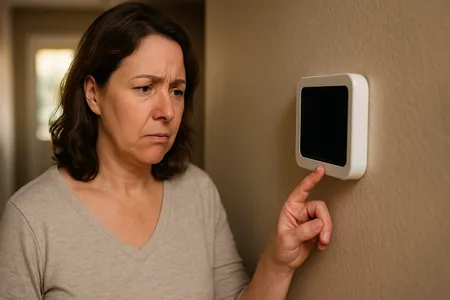
- Check the thermostat — Make sure it is set to “Heat” mode and the temperature is set at least 5 degrees above the current room temperature. Replace batteries if the screen is blank.
- Check the furnace power switch — Look for a standard light switch on or near the furnace. It is easy to bump accidentally and looks like a regular wall switch. Make sure it is in the “On” position.
- Check the circuit breaker — Find the breaker labeled “Furnace” or “HVAC” in your electrical panel. If it has tripped (halfway between On and Off), flip it fully off, then back on.
- Check the gas valve — For gas furnaces, locate the gas shutoff valve on the gas line near the furnace. The valve handle should be parallel to the pipe (open). If it is perpendicular, the gas is off.
- Check your air filter — A severely clogged filter can trigger the high-limit safety switch, shutting down the furnace. Replace it if it looks dirty.
1. Thermostat Issues
What It Is and Why It Happens
The thermostat is the command center for your heating system. If it is not sending the right signal to the furnace, the furnace simply will not fire up. Common thermostat problems include dead batteries, incorrect settings, loose wiring, and programming errors. Even a thermostat that appears to be working can have internal issues that prevent it from communicating with the furnace.
How to Check
- Verify the mode is set to “Heat” (not “Cool,” “Off,” or “Auto” on some models).
- Confirm the set temperature is higher than the current room temperature by at least 5 degrees.
- If the screen is blank, replace the batteries. Most thermostats use AA or AAA batteries.
- Try setting the temperature to 80 degrees or higher to force the furnace to call for heat.
- Listen for a click when you raise the temperature. If you hear no click, the thermostat may not be sending a signal.
How to Fix
Replace the batteries with fresh alkaline batteries (avoid rechargeable batteries, as their lower voltage can cause malfunctions). If the screen is still blank after battery replacement, check the circuit breaker for the HVAC system. For wired thermostats without batteries, a blank screen usually means a power issue at the furnace or in the wiring. If the thermostat has power but the furnace does not respond, the thermostat itself may need replacement. For detailed help, read our thermostat troubleshooting guide.
Estimated cost: A few dollars for batteries. A new thermostat runs $110–$375 for the unit plus labour at $100–$150 an hour, installed. These prices may vary case by case.
2. Tripped Circuit Breaker or Blown Fuse
What It Is and Why It Happens
Even gas furnaces require electricity to operate the control board, ignition system, blower motor, and safety controls. If the circuit breaker trips or a fuse blows, the furnace loses power completely. Breakers can trip due to power surges, an overloaded circuit, a short circuit within the furnace, or a faulty breaker. Some furnaces also have a dedicated fuse on the control board inside the unit.
How to Check
Go to your home’s main electrical panel and locate the breaker for the furnace or HVAC system. If it is in the middle position (tripped), reset it by flipping it fully to “Off” and then back to “On.” Also check the furnace’s power switch, which looks like a regular light switch and is usually located on or near the furnace or on a wall or ceiling joist nearby.
How to Fix
Reset the breaker. If the furnace starts and runs normally, the trip may have been caused by a one-time power surge. However, if the breaker trips again within a short time, do not keep resetting it. A repeatedly tripping breaker indicates an electrical problem such as a short circuit or a failing component, and you should call a professional immediately.
Safety Warning: A repeatedly tripping breaker is a potential fire hazard. Do not bypass or replace the breaker with a higher-amperage breaker. Call a licensed technician.
Estimated cost: Free to reset a breaker (DIY fix). If an electrical repair is needed, a technician can diagnose and quote it on site.
3. Dirty or Clogged Air Filter
What It Is and Why It Happens
A severely clogged air filter restricts airflow through the furnace, causing the heat exchanger to overheat. When this happens, a built-in safety device called the high-limit switch shuts down the burners to prevent the heat exchanger from cracking or causing a fire. In some systems, the high-limit switch will shut down the furnace entirely and lock it out until the issue is resolved.
How to Check
Locate the air filter, which is typically in a slot between the return air duct and the furnace. Remove the filter and inspect it. If it is dark gray, visibly clogged, or you cannot see light through it, it needs to be replaced.
How to Fix
Install a new filter of the correct size (printed on the frame of the old filter). After replacing the filter, you may need to reset the furnace. Turn the power off at the furnace switch for 30 seconds, then turn it back on. The furnace should go through its startup cycle within a few minutes.
Estimated cost: Inexpensive for a new air filter (DIY fix).
4. Pilot Light or Ignition System Failure
What It Is and Why It Happens
Gas furnaces need an ignition source to light the burners. Older furnaces (typically pre-2000) use a standing pilot light, which is a small flame that burns continuously. If the pilot light goes out due to a draft, a dirty pilot orifice, or a faulty thermocouple, the furnace cannot ignite. Modern furnaces use electronic ignition systems, either a hot surface igniter (a glowing element, similar to a glow plug) or an intermittent pilot (an electronic spark). These components wear out over time and eventually fail.
How to Check
For standing pilot lights: Remove the furnace access panel and look for a small, steady blue flame near the burners. If there is no flame, the pilot light is out.
For electronic ignition: Listen for clicking sounds (spark ignition) when the furnace tries to start, or look through the inspection window for a glowing orange igniter. If you see the igniter glow but the burners do not light, gas may not be reaching the burners. If the igniter does not glow at all, it may be broken.
How to Fix
Relighting a pilot light: Follow the instructions printed on the furnace label. Generally, you turn the gas valve to “Pilot,” hold the reset button, and use a long lighter to ignite the pilot. Hold the button for 30 to 60 seconds after the flame lights, then switch the valve to “On.” If the pilot will not stay lit, the thermocouple likely needs replacement.
For electronic ignition failure: This is best handled by a professional. Hot surface igniters are fragile (they crack from oil on fingers or physical impact) and must be replaced with the exact correct part.
Safety Warning: If you smell gas (a rotten egg odor) at any point, do not attempt to light anything. Leave your home immediately, call your gas utility company from outside, and call 911 if the smell is strong.
Estimated cost: A technician can quote the thermocouple or hot surface igniter replacement on site — both are common, inexpensive furnace parts relative to a full repair visit.
5. Dirty Flame Sensor
What It Is and Why It Happens
The flame sensor is a thin metal rod located in the burner assembly. Its job is to detect whether the gas burners have successfully ignited. If the sensor cannot detect a flame (because it is coated with carbon buildup, dust, or corrosion), it triggers a safety shutdown that closes the gas valve within seconds. This is a safety feature designed to prevent unburned gas from filling your home. A dirty flame sensor is one of the most common furnace problems and causes a distinctive symptom: the furnace lights briefly (you may see the burner flames through the inspection window) and then shuts off within 3 to 10 seconds.
How to Check
Watch the furnace go through its ignition sequence. If the burners ignite and then shut off within a few seconds, the flame sensor is the most likely culprit. The furnace may attempt this cycle two or three times before locking out completely.
How to Fix
Cleaning a flame sensor is a relatively simple repair for anyone comfortable working with basic tools. Turn off the furnace and gas supply. Locate the flame sensor (a thin metal rod with a single wire, mounted near the burners). Remove the single screw holding it in place. Gently clean the metal rod with fine-grit sandpaper (220-grit) or a dollar bill until it is shiny. Reinstall the sensor, restore gas and power, and test the furnace.
If cleaning does not resolve the issue or the sensor appears cracked or corroded, it needs to be replaced.
Estimated cost: Free for cleaning (DIY fix). A flame sensor is an inexpensive part if it needs replacing — a technician can quote parts and labour together on site.
6. Clogged Condensate Drain Line
What It Is and Why It Happens
High-efficiency condensing furnaces (90% AFUE or higher) produce water as a byproduct of the combustion process. This water, called condensate, drains through a small PVC drain line. Over time, algae, mineral deposits, and debris can clog this line. When the line is blocked, water backs up and triggers a safety float switch that shuts the furnace down to prevent water damage. If you have a high-efficiency furnace and it will not turn on, this is a very common cause.
How to Check
Look for a small PVC drain line coming from the furnace, usually running to a floor drain, utility sink, or condensate pump. Check for visible water pooling around the furnace base. Look for a small float switch on the drain line — if it is raised, the line is likely clogged.
How to Fix
Disconnect the drain line and flush it with a mixture of warm water and distilled white vinegar. You can also use a wet/dry vacuum to suction out the clog from the end of the drain line. After clearing the blockage, pour a cup of vinegar into the drain to help prevent algae growth. Reset the furnace by turning the power off and back on.
Estimated cost: Free to inexpensive for vinegar (DIY fix). A technician can quote professional drain clearing on site.
7. Furnace Lockout Mode
What It Is and Why It Happens
Modern furnaces have built-in safety controls that will lock out the system after multiple failed ignition attempts. This is a safety feature that prevents the furnace from repeatedly trying to ignite and potentially flooding the combustion chamber with gas. When a furnace enters lockout mode, it will not attempt to restart on its own. The furnace’s LED indicator light on the control board typically blinks a specific pattern or error code that corresponds to the specific issue.
How to Check
Look through the small inspection window on the front of the furnace for a blinking LED light. Count the number of blinks in the repeating pattern. Refer to the code chart on the inside of the furnace access panel or in your owner’s manual. Common codes indicate flame sensor failure, ignition failure, pressure switch errors, or overheating.
How to Fix
To reset a locked-out furnace, turn the power off at the furnace switch for 30 seconds (some models require up to 60 seconds), then turn it back on. The furnace will go through its complete startup sequence. If it starts and runs normally, the lockout may have been triggered by a temporary issue. If the furnace locks out again, the underlying problem (often a dirty flame sensor, faulty igniter, or blocked vent) must be addressed first.
Estimated cost: Free to reset (DIY fix). If the underlying issue requires professional repair, costs vary by the specific problem.
8. Blocked Exhaust Vent or Intake Pipe
What It Is and Why It Happens
High-efficiency furnaces have PVC exhaust and intake pipes that vent through an exterior wall or roof. These pipes can become blocked by ice, snow, bird nests, leaves, or other debris. When the exhaust or intake is blocked, the furnace’s pressure switch detects the restriction and prevents the furnace from igniting as a safety precaution. This is an especially common problem after heavy snowfall or ice storms.
How to Check
Go outside and locate the exhaust and intake pipes (usually two PVC pipes protruding from the side of the house). Check for any visible obstructions including ice buildup, snow, bird nests, insect nests, or debris. Listen for unusual whistling sounds from the furnace, which can indicate a partial blockage.
How to Fix
Carefully remove any visible obstructions from the ends of the pipes. If ice has formed, pour warm (not boiling) water over it to melt the ice. Make sure the pipe openings have proper screens to prevent animal and insect intrusion. After clearing the blockage, reset the furnace by cycling the power.
Estimated cost: Free (DIY fix). If the pipes need repair or extension, a technician can diagnose and quote it on site.
When to Call a Professional
Some furnace problems are beyond safe DIY repair. Call a licensed HVAC technician immediately if:
- You smell gas — Leave the house immediately and call your gas utility from outside. Do not flip any switches or use any electronic devices inside the home.
- The furnace makes loud banging, popping, or screeching sounds — Banging can indicate a cracked heat exchanger or delayed ignition, both of which are safety hazards.
- You see visible cracks or rust on the heat exchanger — A cracked heat exchanger can leak carbon monoxide into your home. This is a life-threatening emergency.
- The circuit breaker trips repeatedly — This indicates an electrical fault within the furnace.
- The furnace cycles on and off every few minutes (short cycling) — This pattern indicates an overheating issue or control board problem.
- Your carbon monoxide detector alarms — Evacuate immediately and call 911. Do not re-enter the home until cleared by emergency responders.
For heating emergencies, visit our emergency HVAC repair page or use our online troubleshooter for guided diagnostics.
Prevention Tips
Keeping your furnace maintained prevents the vast majority of breakdowns. Follow these steps:
- Replace air filters regularly — Check monthly and replace at least every 90 days. This is the single most important maintenance task.
- Schedule annual professional maintenance — A fall tune-up includes cleaning the flame sensor, checking the ignition system, testing safety controls, and inspecting the heat exchanger. See our maintenance plans.
- Keep vents and registers open and unblocked — Closed or blocked vents can restrict airflow and cause overheating.
- Test your furnace before you need it — Run the heat for a few minutes at the beginning of the heating season to verify operation before the first cold snap.
- Install carbon monoxide detectors — Place detectors on every level of your home and near sleeping areas. Test monthly and replace batteries annually.
Frequently Asked Questions
Why is my furnace not turning on but the thermostat is working?
If the thermostat has power and is calling for heat but the furnace does not respond, the most likely causes are a tripped circuit breaker, a flipped furnace power switch, a clogged condensate drain (on high-efficiency furnaces), or a safety lockout from a dirty flame sensor or failed igniter. Check the breaker, the furnace switch, and the air filter first, then look for blinking error codes on the furnace control board.
How do I reset my furnace?
To reset most furnaces, locate the power switch on or near the furnace and turn it off. Wait 30 to 60 seconds, then turn it back on. The furnace should go through its complete startup sequence, which takes 1 to 5 minutes. If the furnace has an LED error code on the control board, note the blinking pattern before resetting so you can reference the code chart if the problem recurs.
Why does my furnace start and then shut off after a few seconds?
This is almost always caused by a dirty flame sensor. The sensor cannot detect the burner flame through the buildup of carbon and soot, so the safety control shuts off the gas valve within 3 to 10 seconds. Cleaning the flame sensor with fine-grit sandpaper usually solves the problem. A failing igniter or a cracked flame sensor can cause the same symptom.
How much does it cost to fix a furnace that won’t turn on?
Costs vary widely depending on the cause. A tripped breaker or clogged filter is a free DIY fix. A flame sensor or igniter is a comparatively inexpensive part; a control board is one of the more expensive furnace parts to replace. A technician can quote the exact repair once they’ve diagnosed it, and these prices may vary case by case.
Can a furnace not turning on be dangerous?
In most cases, a furnace that will not start is simply inconvenient, not dangerous. However, if the reason it will not start involves a gas leak, a cracked heat exchanger, or an electrical fault, these are serious safety concerns. If you smell gas, see visible damage, or hear the furnace repeatedly attempting to ignite and failing, turn off the gas supply and call a professional immediately.
A furnace that will not turn on does not always mean you need an expensive repair. Start with the simple checks in this guide, and you may have your heat running again in minutes. If the problem persists after basic troubleshooting, it is time to call a professional.
If you are in Central Texas, Texas Temp Masters provides fast furnace repair service. Call (817) 704-0706 or contact us online to schedule your repair today.
Next Steps
Now that you have worked through the troubleshooting steps, here is where to go from here:
- Decide whether to repair or replace — Use our Repair or Replace Calculator to see if fixing your furnace still makes financial sense.
- Check your furnace’s age — Enter your serial number in our HVAC Age Decoder to find out how old your system is and whether it is nearing end of life.
- Furnace running but blowing cold air? — If your furnace turns on but is not producing heat, read our guide on furnace blowing cold air for a different set of causes and fixes.
- Plan for the long term — Learn how long furnaces typically last and what factors shorten or extend their lifespan.
- Ready to talk? — Contact us for a free evaluation of your furnace and heating system.