A failed AC capacitor is the single most common reason HVAC technicians get called out during a Texas summer. If your air conditioner stopped working, there is a very good chance the capacitor is to blame. The good news: AC capacitor replacement costs between $150 and $350 in most cases, and a qualified technician can finish the job in under an hour.
This guide covers everything you need to know about AC capacitors — what they do, how to tell when one is failing, what replacement costs, and whether you should attempt a DIY fix or call a professional.
What Is an AC Capacitor?
An AC capacitor is a small, cylindrical component inside your outdoor condensing unit that stores and releases electrical energy. It provides the initial burst of power needed to start motors and then continues supplying a steady stream of energy to keep them running.
Think of it like a slingshot. The rubber band stores energy when you pull it back, then releases it all at once to launch the projectile forward. Your AC capacitor does the same thing with electricity — it stores a charge and then releases it to kick-start the compressor and fan motors.
Types of AC Capacitors
There are three types of capacitors found in residential AC systems:
| Capacitor Type | What It Does | Where It’s Found |
|---|---|---|
| Start capacitor | Provides a large burst of energy to start the compressor motor | Attached to the compressor circuit |
| Run capacitor | Supplies continuous energy to keep the motor running efficiently | Connected to the compressor or fan motor |
| Dual run capacitor | Combines two run capacitors into one unit — one side for the compressor, one for the fan motor | Most common in modern residential AC units |
The dual run capacitor is by far the most common type in residential systems manufactured in the last 15-20 years. It has three terminals on top (labeled C, FAN, and HERM) and handles both the compressor and the condenser fan motor in a single component. When a dual capacitor fails, it can take out both motors at once, which is why the entire unit seems to shut down completely.
Capacitor Ratings: MFD and Voltage
Every capacitor has two key ratings printed on its side:
- MFD (microfarads): Measures the capacitor’s storage capacity. Common residential values range from 5 MFD (fan motor) to 60 MFD (compressor). A dual capacitor might be rated 45/5 MFD — 45 for the compressor side, 5 for the fan side.
- Voltage rating: Indicates the maximum voltage the capacitor can handle. Most residential AC capacitors are rated at 370V or 440V. Always replace with the same voltage rating or higher — never lower.
Signs of a Bad AC Capacitor
Capacitor failure does not always happen all at once. Sometimes it degrades gradually, giving you warning signs before it dies completely. Here are the eight most common symptoms:
1. AC Not Turning On or Hard Starting
When you set your thermostat to cool and nothing happens at the outdoor unit, a dead capacitor is the most likely cause. Without the initial jolt of stored energy, the compressor simply cannot start. You might also notice “hard starting” — the unit struggles, hesitates, or takes several attempts before it finally kicks on.
2. Humming Noise but Unit Does Not Start
This is the classic bad capacitor symptom. You hear a humming or buzzing sound coming from the outdoor unit, but the compressor never actually engages. The motor is receiving power and trying to start, but without the capacitor’s boost, it cannot overcome the initial inertia. If you hear this sound, turn the system off immediately — running a motor that cannot start will overheat the windings and can destroy the compressor.
3. AC Shuts Off on Its Own
A weak capacitor that is losing its storage capacity may have enough charge to start the motor but not enough to keep it running. The system starts up, runs for a few minutes, and then shuts down. It may cycle on and off repeatedly. This puts enormous stress on the compressor and should be addressed quickly.
4. Clicking Sound from the Outdoor Unit
Repeated clicking from the outdoor unit — especially when the system is trying to start — often indicates a failing capacitor. The contactor (the relay that sends power to the compressor) is engaging, but the capacitor cannot provide enough energy for the motor to start. The system tries, fails, and the safety switch trips, producing a click.
5. Warm Air from Vents
If only the indoor blower is running but the outdoor compressor is not, you will feel warm air coming from your vents. The indoor fan is powered by a separate circuit and can operate independently. When the capacitor fails and the compressor cannot start, the system blows air but does not cool it.
6. Higher Than Normal Electric Bills
A degrading capacitor forces motors to work harder to start and run. This inefficiency draws more electricity. If your power bills have crept up without a change in usage or weather patterns, a failing capacitor could be the culprit — though this is usually one of several possible causes.
7. Visibly Swollen or Leaking Capacitor
This is the most definitive visual sign. A healthy capacitor has a flat top. A failed capacitor often has a bulging or domed top, and you may see oily residue leaking from the base or seams. If you open the access panel on your outdoor unit and see a swollen capacitor, it needs to be replaced. Do not touch it — it may still hold a dangerous electrical charge.
8. AC Runs Intermittently
The system works sometimes but not others. It might run fine in the morning when temperatures are cooler but fail in the afternoon heat. This pattern suggests a capacitor that is on its last legs — it can function under low demand but cannot keep up when the system needs to work harder.
AC Capacitor Replacement Cost
Capacitor replacement is one of the most affordable AC repairs. Here is what you can expect to pay in 2026:
| Repair Type | Parts Cost | Labor Cost | Total Cost |
|---|---|---|---|
| Run capacitor replacement | $10 - $30 | $100 - $200 | $150 - $250 |
| Start capacitor replacement | $15 - $40 | $100 - $200 | $150 - $300 |
| Dual run capacitor replacement | $15 - $50 | $150 - $250 | $200 - $350 |
What Affects the Price
- Time of service: Emergency and after-hours calls cost 30-50% more. A capacitor replacement on a Saturday evening might run $400+, while a scheduled weekday appointment stays in the $150-$300 range.
- Brand and size: Higher-end systems from brands like Trane, Lennox, or Carrier sometimes use proprietary or higher-rated capacitors that cost more.
- Service call fee: Most HVAC companies charge a $75-$150 diagnostic fee that gets rolled into the repair cost. Ask before you book.
- Location: Urban areas with more competition tend to have lower prices. Rural service areas may charge more for travel time.
- Markup on parts: A dual capacitor costs $8-$20 wholesale. Most companies mark up parts 100-300%. This is standard practice and covers warranty, inventory, and the expertise to diagnose the problem correctly.
Is It Worth Repairing?
Absolutely. A capacitor replacement is one of the best-value repairs in HVAC. Compared to a compressor replacement ($1,000-$3,000) or a full AC system replacement, spending $150-$350 to get your system running again is a no-brainer — as long as the rest of the system is in reasonable condition.
Can You Replace an AC Capacitor Yourself?
Technically, yes. A capacitor is a single component held in place by a bracket and connected with three or four wires. The swap itself takes about 10 minutes.
However, this is genuinely dangerous work, and we do not recommend it for most homeowners.
Why AC Capacitors Are Dangerous
An AC capacitor stores a significant electrical charge — typically 370 to 440 volts — and it retains that charge even after the power is turned off. Touching the terminals of a charged capacitor can deliver a severe electrical shock that can cause burns, cardiac arrest, or death. This is not a theoretical risk. HVAC technicians are trained to discharge capacitors safely before handling them, and they still treat them with extreme caution.
Key dangers include:
- Stored voltage does not dissipate on its own quickly enough to be safe. A capacitor can hold a lethal charge for hours or even days after the system is powered down.
- Accidental contact with terminals while removing or installing the capacitor can complete a circuit through your body.
- Incorrect wiring can damage the compressor, fan motor, or control board — turning a $200 repair into a $2,000+ repair.
- Mismatched capacitor ratings (wrong MFD or voltage) can cause immediate failure or shortened motor life.
If You Have Electrical Experience
If you are a licensed electrician or have verified experience working with high-voltage components, here are the basic steps:
- Turn off power at the disconnect box near the outdoor unit AND at the breaker panel.
- Verify power is off with a multimeter or non-contact voltage tester.
- Remove the access panel on the outdoor unit.
- Discharge the capacitor by placing an insulated screwdriver across the terminals (C to HERM, then C to FAN on a dual capacitor). Use a screwdriver with a rated insulated handle.
- Photograph the wiring before disconnecting anything so you know exactly where each wire goes.
- Remove the old capacitor and note its MFD and voltage ratings.
- Install the new capacitor with the same ratings (same MFD, same or higher voltage).
- Reconnect the wires exactly as they were.
- Replace the access panel, restore power, and test the system.
If any part of this process is unclear, stop and call a professional. A $200 service call is vastly preferable to an emergency room visit.
How Long Do AC Capacitors Last?
Under normal conditions, AC capacitors are rated to last 10 to 20 years. In moderate climates, many capacitors last the entire lifespan of the AC unit.
In Central Texas, expect 5 to 10 years. Our extreme heat puts significantly more stress on capacitors than the national average. Systems here run 10-14 hours per day during peak summer, and outdoor unit temperatures can exceed 150 degrees Fahrenheit inside the cabinet. That constant thermal stress degrades the capacitor’s internal dielectric material faster.
| Climate | Expected Capacitor Lifespan |
|---|---|
| Mild (Pacific Northwest, Northeast) | 15 - 20 years |
| Moderate (Mid-Atlantic, Midwest) | 10 - 15 years |
| Hot (Central Texas, Southwest, Southeast) | 5 - 10 years |
| Extreme (Phoenix, Death Valley) | 3 - 7 years |
If your AC system is more than 8 years old and you live in Central Texas, having your capacitor tested during annual maintenance is a smart move.
Why Capacitors Fail More in Texas
Texas is particularly hard on AC capacitors for several reasons:
Extreme Heat Stress
The inside of an outdoor AC cabinet can reach 140-160 degrees Fahrenheit on a 100-degree day. Capacitors are rated for maximum operating temperatures, and sustained heat at or near those limits accelerates the breakdown of the dielectric material inside the capacitor. Each summer effectively ages the component faster than the calendar would suggest.
Voltage Fluctuations
Texas summers bring rolling brownouts, storm-related power surges, and voltage drops when the grid is under heavy load. Every voltage spike or dip stresses the capacitor. A single significant power surge can kill a capacitor instantly, and repeated minor fluctuations weaken it over time.
Overworked Systems
In cities like Austin, Killeen, Temple, and Waco, AC systems routinely run 12 or more hours per day from June through September. Some days, the system barely cycles off at all. Every start cycle draws heavily from the capacitor, and continuous run time keeps it under constant load. A capacitor that might last 15 years in Oregon gets half that life here because it is doing twice the work.
Outdoor Exposure
Condensing units sit outside year-round, exposed to rain, hail, dust, and temperature swings from freezing winter nights to scorching summer afternoons. Moisture intrusion and thermal cycling contribute to corrosion and seal degradation on the capacitor housing.
What to Do When Your AC Capacitor Fails
If you suspect a capacitor failure, follow these steps:
-
Turn off the AC system immediately. Use your thermostat to switch the system off, then flip the breaker for the outdoor unit. Running a motor that cannot start properly will overheat the compressor windings and can cause catastrophic (and expensive) compressor failure.
-
Do not try to “jump-start” the compressor. Some online guides suggest using a stick to spin the fan blade to get the motor going. While this can technically work with a failed fan-side capacitor, it is dangerous, temporary, and does not fix the underlying problem.
-
Call an HVAC technician. Capacitor replacement is a straightforward repair for a licensed tech. Most can diagnose and replace the part within 30-60 minutes. If you are in our service area, call us at (817) 704-0706 for same-day service.
-
Keep the system off until it is repaired. Running an AC with a failed capacitor risks damaging the compressor — which costs 10 times more to replace.
-
Use fans, close blinds, and stay hydrated while you wait for the repair. If temperatures are dangerously high and you have vulnerable family members (elderly, infants, or those with medical conditions), consider going to a cooled public space until the repair is complete.
How to Prevent Capacitor Failure
While capacitors are wear items that will eventually fail, you can extend their lifespan with a few preventive measures:
Schedule Annual AC Maintenance
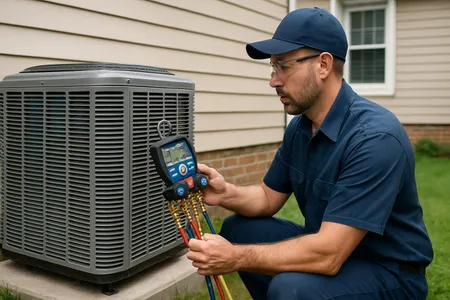
During a professional tune-up, the technician will test your capacitor with a multimeter and compare the reading to the rated MFD. A capacitor that has lost more than 10% of its rated capacitance is on its way out and should be replaced proactively — during a scheduled visit, not an emergency call at 2 AM.
Install a Surge Protector
A whole-home surge protector or a dedicated HVAC surge protector (installed at the disconnect box) shields your system from voltage spikes caused by lightning, grid fluctuations, and power restoration after outages. These cost $100-$300 installed and can save you from repeated capacitor (and control board) failures.
Provide Shade for the Outdoor Unit
If your condenser sits in direct afternoon sun, the cabinet temperature climbs even higher. Planting shade trees or installing a shade structure (while maintaining at least 2-3 feet of clearance on all sides for airflow) can reduce the operating temperature and extend component life.
Keep the Unit Clean
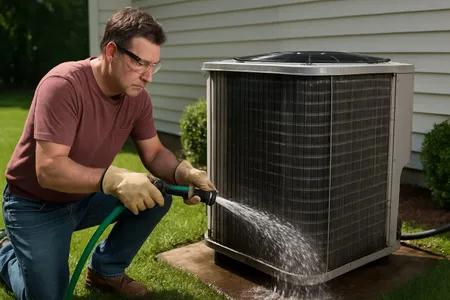
Wash down the condenser coils with a garden hose once or twice per season. Dirty coils force the system to work harder, which means more heat, longer run times, and faster capacitor degradation.
Replace Proactively After 8-10 Years
In Central Texas, if your capacitor is approaching the 8-10 year mark, consider replacing it during a maintenance visit before it fails on the hottest day of the year. A proactive replacement costs the same as an emergency one — minus the emergency service charge and the hours spent sweating in a hot house.
Frequently Asked Questions
How do I know if my AC capacitor is bad?
The most common signs are a humming outdoor unit that will not start, the AC shutting off randomly, warm air from vents, or a visibly swollen capacitor. A definitive test requires a multimeter to measure the capacitor’s microfarad (MFD) rating and compare it to the number printed on the side. If it has dropped more than 10% from its rated value, it needs to be replaced.
How much does it cost to replace an AC capacitor?
Most homeowners pay $150 to $350 for a capacitor replacement, including parts and labor. Run capacitors are on the lower end ($150-$250), while dual run capacitors cost a bit more ($200-$350). Emergency or after-hours service can push the total above $400.
Can a bad capacitor damage my compressor?
Yes. A weak or failed capacitor forces the compressor motor to draw excessive amperage trying to start. This overheats the motor windings and can cause the compressor to burn out. Compressor replacement costs $1,000 to $3,000, so addressing a $200 capacitor problem quickly protects your most expensive component.
How long does it take to replace a capacitor?
For a licensed HVAC technician, the actual replacement takes 15 to 30 minutes. Including the diagnostic process and testing afterward, plan for a total service visit of about 45 minutes to an hour.
Should I replace my AC capacitor myself?
For most homeowners, no. AC capacitors store 370-440 volts of electrical charge that persists even after the power is turned off. Improper handling can cause severe electrical shock, burns, or death. Unless you have verified experience working with high-voltage electrical components and know how to safely discharge a capacitor, this is a job for a licensed professional.
Does my home warranty cover capacitor replacement?
Most home warranty plans cover AC capacitor replacement since it is a mechanical failure of a covered component. However, you will typically pay a $75-$125 service call fee, and the warranty company will send their own contractor. Response times can be slow during peak summer — sometimes 24-48 hours or more. If you cannot wait, paying out of pocket for same-day service and seeking reimbursement from your warranty company is sometimes the faster option.
Need a Capacitor Replaced?
If your AC is not starting, making a humming noise, or cycling on and off, there is a good chance you need a new capacitor. Call Texas Temp Masters at (817) 704-0706 for fast, same-day capacitor replacement across Central Texas.
- Emergency HVAC Repair — 24/7 emergency service when your AC goes down
- AC Not Blowing Cold Air? — Troubleshoot other common causes
- Repair or Replace Calculator — Figure out if your system is worth fixing
- AC Repair Cost Guide — Full breakdown of every common AC repair cost