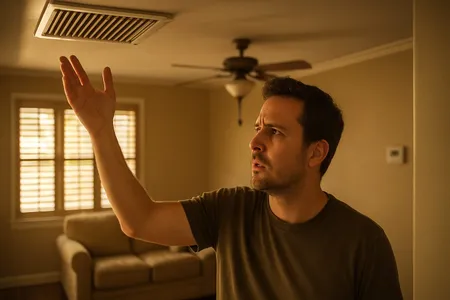
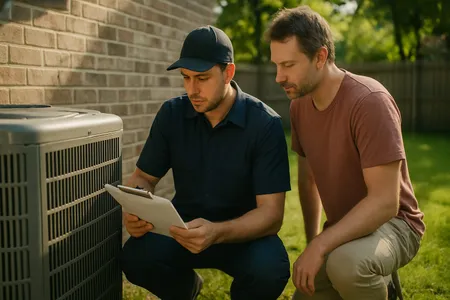
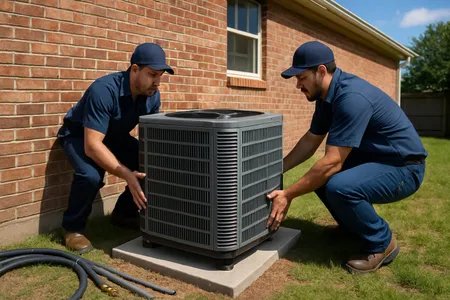
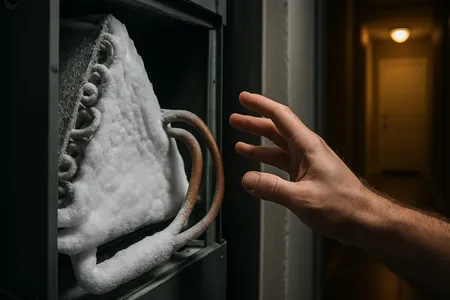
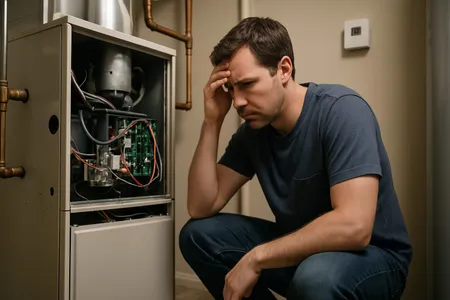
An AC that keeps tripping its breaker is pulling more electrical current than the circuit allows, and the usual causes are — from cheapest to most expensive — dirty condenser coils, a failing capacitor, a shorted fan motor, a seizing compressor, or a fault in the wiring or the breaker itself. The safety rule is simple: reset the breaker once. If it trips again, leave it off and call a professional — repeatedly resetting a tripping breaker feeds current into a fault, which is how motors burn out and how electrical fires start.
Why “reset once, then stop” matters
A breaker trips because something downstream is drawing too much current. One trip on a brutal afternoon can be a fluke — a voltage sag, a hard compressor start after a brief outage. Twice is a pattern, and the breaker is doing its job: protecting the wiring and (secondarily) the most expensive parts of your AC. Every additional reset while a component is shorting shortens the distance to a $1,000–$3,000 compressor replacement.
What makes an AC draw too much current?
Dirty condenser coils — the cheap one to rule out first
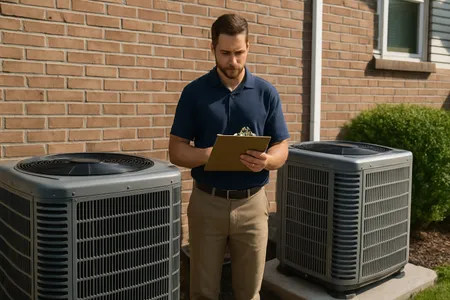
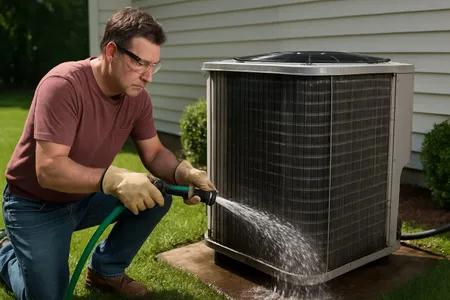
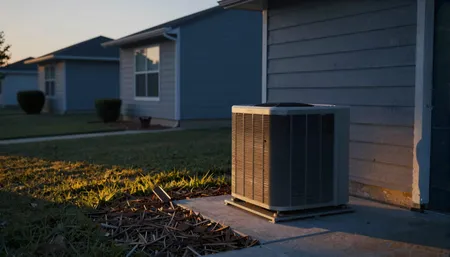
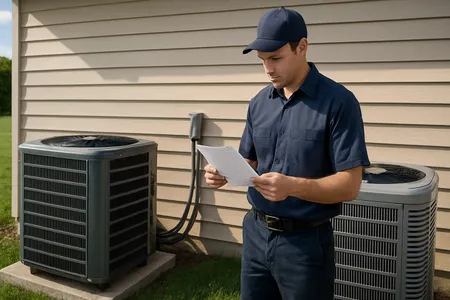
When the outdoor coil is caked in dust, grass clippings, or cottonwood fluff, the system cannot shed heat, pressures climb, and the compressor works harder and draws more amps until the breaker lets go — classically on the hottest afternoon of the week. Shut off power at the disconnect and rinse the fins gently with a garden hose. Free, and in dusty Central Texas growth corridors it is a genuinely common cause.
Failing capacitor — the most common paid repair
The capacitor gives the compressor and fan motors their starting kick. As it weakens (and Texas heat is what kills capacitors), motors strain to start and draw heavy current — hard starting, humming, clicking, and breaker trips. $150–$350 fixed. Caught early, it is a minor repair; ignored, the extra strain takes the compressor with it.
Shorted fan motor or blower motor
A motor with failing windings or seized bearings draws heavily until the breaker cuts it. Outdoor fan motor: $250–$700. Indoor blower motor: $350–$900. A screech, grind, or a fan that hums without spinning points here.
Compressor problems — grounded or seizing
A compressor with shorted windings (“grounded compressor”) or one that is mechanically seizing will trip the breaker instantly or within seconds of starting. This is the expensive diagnosis — $1,000–$3,000 to replace — and on a system 10+ years old it usually triggers the repair-or-replace decision instead.
Refrigerant problems raising the load
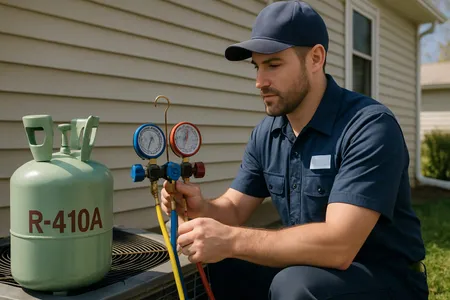
Both low refrigerant (from a leak) and an overcharged system make the compressor work outside its design range, raising current draw. If trips started after someone “topped off” your refrigerant, say so when you book — it matters. $200–$1,500 depending on what the gauges show.
The electrical side: wiring, connections, or the breaker itself
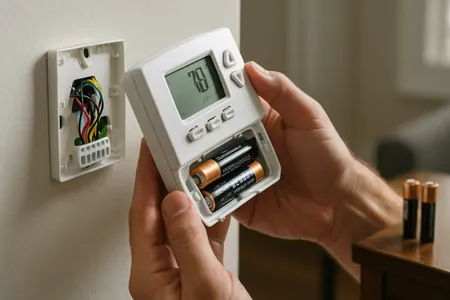
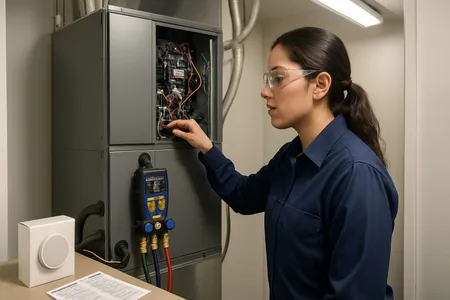
Loose lugs, heat-brittled wire insulation, a corroded disconnect, or an old breaker that has weakened from years of trips can all cause nuisance or genuine trips. An HVAC technician can diagnose faults within the AC circuit; if the problem traces to your panel or house wiring, it becomes an electrician’s job — a good HVAC tech will tell you exactly that rather than guessing. Breaker replacement itself is a modest electrician visit; the point is that someone qualified must determine which side of the line the fault is on.
Is it dangerous to keep resetting the breaker?
Yes. A breaker is a safety device, not an on/off switch for a misbehaving appliance. Repeated resets into a short circuit overheat wiring and components — that is the textbook path to burned motor windings and, in the worst case, an electrical fire. It also converts cheap repairs into expensive ones: a $150 capacitor call becomes a $3,000 compressor call. Reset once. If it holds, monitor. If it trips again, power stays off until it is diagnosed.
Frequently Asked Questions
Why does my AC trip the breaker only on hot afternoons?
Peak heat means peak load: pressures and current draw are highest exactly then, so a marginal capacitor, dirty coil, or weak breaker fails at 4 p.m. in August first. It is the earliest warning you get — book the repair while it is still intermittent.
Why does the AC breaker trip immediately when I turn it on?
An instant trip usually means a dead short — a grounded compressor, a shorted motor, or a wiring fault. Do not keep trying. This one needs a professional with a meter, and running it even briefly can finish off the compressor.
How much does it cost to fix an AC that trips the breaker?
From free (rinse the condenser coils) through $150–$350 (capacitor), $250–$900 (fan/blower motor), up to $1,000–$3,000 (compressor). Electrical-panel-side fixes are separate electrician work. Most calls resolve in the normal $150–$650 repair range.
Can a breaker itself just be bad?
Yes — breakers weaken with age and repeated trips, and a tired breaker can trip below its rating. But “it’s probably just the breaker” is the diagnosis people want, and swapping the breaker without testing the AC’s current draw just removes the safety net over a real fault. Test first, replace second.
Who do I call — an electrician or an AC company?
Start with the AC company: statistically the fault is inside the AC system (capacitor, motor, compressor). If the tech’s measurements clear the equipment and point at the panel or house wiring, they hand it to an electrician. See Who Should I Call for AC Repair Near Me?
AC tripping the breaker in Killeen, Copperas Cove, Temple, Belton, or Harker Heights? Texas Temp Masters diagnoses electrical AC faults with proper amp-draw testing and upfront pricing — same-day AC service, (817) 704-0706, or contact us online.