A smart thermostat is one of the most cost-effective upgrades you can make to your HVAC system. For a relatively modest investment, you get better comfort, lower energy bills, and remote control of your home’s climate. Here is what installation costs and which models offer the best value.
Quick Answer: Smart Thermostat Installation Costs
The unit itself is the main cost driver — a basic model costs less than a premium one with room sensors and built-in smart-home hubs. Professional installation adds labor on top, and any wiring work (like adding a C-wire) adds more. Installing it yourself cuts the labor portion of the bill entirely, though it is not the right call for every home or every system (see DIY vs. Professional Installation below). Texas Temp Masters prices the thermostat itself at $110–$375 for the part, plus labor at $100–$150 an hour — see the full breakdown below. These prices may vary case by case.
Smart Thermostat Cost by Brand and Model
Top Smart Thermostats in 2026
| Thermostat | Key Features |
|---|---|
| Google Nest Learning (4th gen) | AI learning, sleek design, energy history |
| Google Nest Thermostat | Budget-friendly, simple setup, Savings Finder |
| Ecobee Smart Premium | Built-in Alexa, SmartSensor included, air quality |
| Ecobee Smart Enhanced | Room sensors, good efficiency features |
| Ecobee3 Lite | Budget Ecobee, sensor-compatible |
| Honeywell Home T9 | Room sensors, smart alerts, geofencing |
| Honeywell Home T6 Pro | Pro-grade, flexible scheduling |
| Amazon Smart Thermostat | Ultra budget, Alexa-powered |
| Emerson Sensi Touch 2 | Easy install, works with all smart assistants |
Retail prices change often — check the manufacturer’s current listing for the unit price. Texas Temp Masters prices the thermostat itself at $110–$375 for the part, plus labor separately (see below); these prices may vary case by case.
Thermostat Cost by Type (Non-Smart Options for Reference)
Basic manual and simple programmable thermostats cost less than smart models, both for the unit and to install. Smart thermostats with premium features (room sensors, built-in voice assistants, air-quality monitoring) cost more. For the units Texas Temp Masters installs, see the price breakdown below.
Installation Cost Breakdown
Professional Installation
| Cost Component | TTM’s Price |
|---|---|
| Thermostat unit (part) | $110 – $375 |
| Labor | $100 – $150 per hour |
| Materials (wire, mounting hardware) | Quoted with your job |
| C-wire installation (if needed) | A labor job — ask for a quote when you call |
We give you the full written price before starting, and it may vary case by case.
When You Need a C-Wire
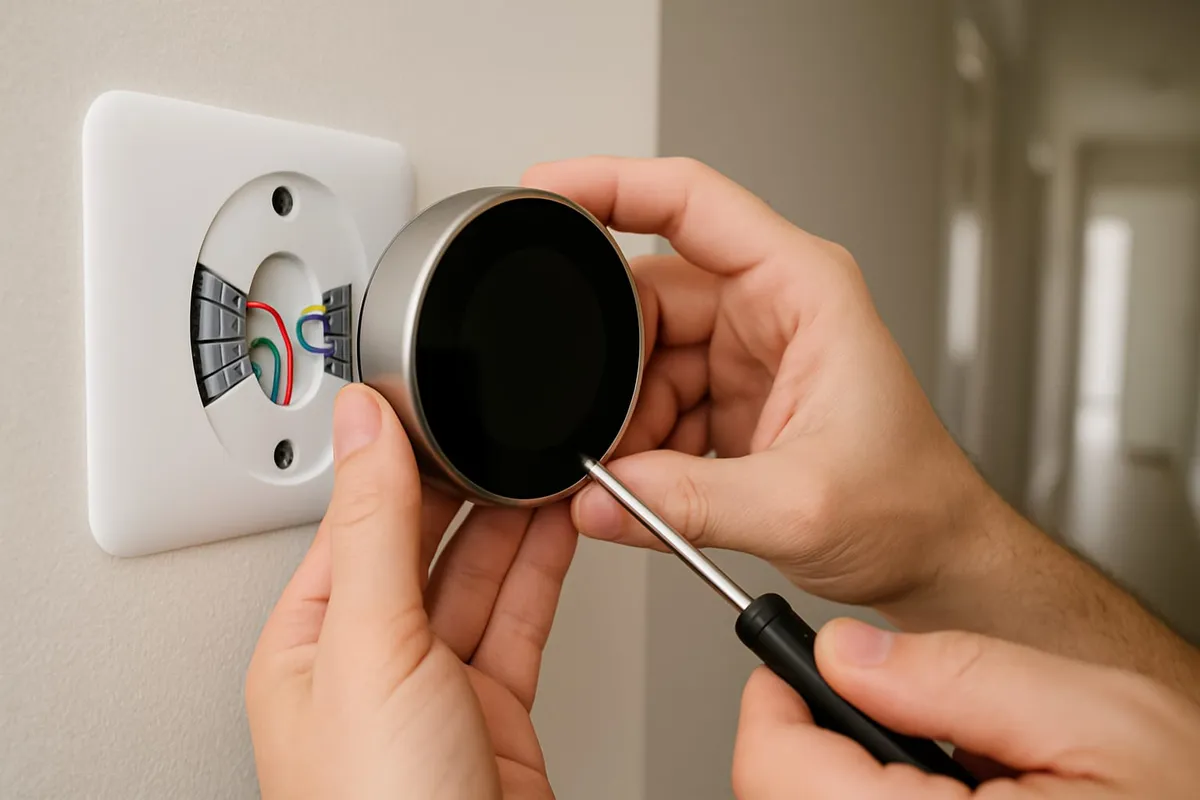
Many smart thermostats require a “C-wire” (common wire) for continuous power. If your existing wiring does not include one, your options are:
| Solution | Cost | Difficulty |
|---|---|---|
| Use existing unused wire | Free | Easy (if wire exists) |
| C-wire adapter/add-a-wire kit | Inexpensive | Moderate DIY |
| Run new thermostat wire | Ask for a quote | Professional recommended |
| Plug-in transformer | Inexpensive | Easy DIY |
| Choose a thermostat that doesn’t need one | None needed | N/A (Nest, some Ecobee models) |
Factors That Affect Installation Cost
1. Existing Wiring Compatibility
If your home has compatible wiring (including a C-wire), installation is straightforward. Missing wires add labor and material cost for running new wiring — ask for a quote.
2. HVAC System Compatibility
Most smart thermostats work with standard central HVAC systems. However, some systems require special thermostats:
- Multi-zone systems: May need a thermostat per zone, which adds up per unit — see the multi-thermostat note below
- Heat pump systems: Ensure the thermostat supports heat pump operation
- Millivolt systems (some gas fireplaces, old wall heaters): Most smart thermostats are not compatible
- High-voltage systems (baseboard heaters): Require specialized thermostats like the Mysa or Sinope, priced higher than standard smart thermostats — ask when you call
3. Number of Thermostats
Homes with multiple HVAC zones need a thermostat for each zone. Cost increases roughly in proportion to the number of thermostats, though labor per unit often drops a bit when installing several at once — ask for a multi-unit quote.
4. Smart Home Integration
If you want to integrate with an existing smart home system (Google Home, Amazon Alexa, Apple HomeKit), ensure compatibility before purchasing. This does not add cost but affects which models you should consider.
5. Labor Rates
Texas Temp Masters charges $100 to $150 per hour for thermostat installation; your technician can give you a time estimate once they see the job.
Best Smart Thermostat for Different Needs
Best Overall: Ecobee Smart Premium
- Built-in Amazon Alexa speaker
- Included SmartSensor for room-level comfort
- Air quality monitoring
- Works with Google Home, Apple HomeKit, and Alexa
- Proven energy savings of up to 23%
Best for Learning: Google Nest Learning Thermostat
- Learns your schedule and preferences automatically
- Sleek, iconic design
- Energy usage history and reports
- Does not require a C-wire in most installations
- Works with Google Home and Amazon Alexa
Best Value: Google Nest Thermostat
- Savings Finder feature suggests energy-saving adjustments
- Simple, modern design
- No C-wire required
- Quick DIY installation
- Works with Google Home and Amazon Alexa
Best for Room Sensors: Honeywell Home T9
- Included room sensor with option to add more
- Smart alerts for maintenance reminders
- Geofencing for automatic away mode
- Works with all major smart home platforms
Best Budget Option: Amazon Smart Thermostat
- Ultra-affordable entry into smart thermostats
- Powered by Honeywell Home technology
- Alexa integration for voice control
- Energy Star certified
- C-wire required (or adapter)
Energy Savings: Do Smart Thermostats Actually Save Money?
Average Savings by Brand
| Thermostat | Claimed Annual Savings | Source |
|---|---|---|
| Nest | Meaningful savings claimed; exact figure depends on your home and rates | Google/Nest studies |
| Ecobee | Up to 23% on heating/cooling | Ecobee studies |
| Honeywell | Meaningful savings claimed; exact figure depends on your home and rates | Honeywell estimates |
| Generic smart | 10-15% on heating/cooling | EPA/Energy Star |
Real-World Savings
The EPA estimates that properly using a programmable or smart thermostat can save 10% to 15% on heating and cooling costs. Translating that percentage into a dollar figure depends on what you currently spend on energy — check your own utility bill to estimate your savings.
At those savings rates, a smart thermostat pays for itself in 1 to 2 years, making it one of the best ROI home improvements available.
How Smart Thermostats Save Energy
- Learning algorithms: Adjust temperature based on your habits
- Geofencing: Detect when you leave and arrive home
- Remote control: Adjust settings from your phone when plans change
- Scheduling: Precise temperature programs for every day of the week
- Room sensors: Heat or cool based on occupied rooms, not just the thermostat location
- Utility programs: Some utilities offer demand response programs with rebates
DIY vs. Professional Installation
DIY Installation (Saves on Labor Cost)
Smart thermostat installation is one of the more DIY-friendly HVAC tasks. Most smart thermostats include step-by-step instructions and mobile app guidance.
DIY is appropriate when:
- Your existing thermostat has 4+ wires including a C-wire
- You are comfortable turning off power at the breaker
- Your HVAC system is a standard central system
- You can follow app-guided instructions
DIY is NOT recommended when:
- You have a multi-stage or heat pump system and are unsure about wiring
- New wires need to be run through walls
- You have a high-voltage or millivolt system
- You are uncomfortable working with electrical connections
Professional Installation
Professional installation is often worth the added labor cost for:
- Peace of mind that wiring is correct
- System testing to verify proper operation
- Help configuring settings for your specific system
- C-wire installation if needed
- Warranty protection
How to Save Money on Smart Thermostat Installation
- Utility rebates: Many utilities offer rebates for Energy Star smart thermostats — check with yours
- DIY installation: If your wiring is compatible, doing it yourself saves the professional labor cost entirely
- Buy during sales: Black Friday, Prime Day, and seasonal promotions often bring meaningful discounts
- Choose the right model: Do not overpay for features you will not use — a base-model smart thermostat works great for most homes
- Check employer benefits: Some employers and insurance companies offer smart home discounts
- Energy Star models: Always choose Energy Star certified for maximum savings
Frequently Asked Questions
Can I install a smart thermostat myself?
Yes, most smart thermostats are designed for DIY installation and include step-by-step app guidance. The process takes 20 to 45 minutes if your wiring is compatible. However, if you need new wiring or have a complex HVAC system, professional installation is recommended.
Do smart thermostats work with all HVAC systems?
Most smart thermostats work with standard central heating and cooling systems, including furnaces, air conditioners, heat pumps, and dual-fuel systems. They typically do not work with high-voltage systems (baseboard heaters) or millivolt systems without special adapters or models.
Which smart thermostat is best for a heat pump?
The Ecobee Smart Premium and Google Nest Learning Thermostat both work excellently with heat pumps, supporting features like auxiliary heat lockout and balance point settings. Heat pump compatibility is now standard on most smart thermostats.
How much does a smart thermostat save on electricity?
On average, a smart thermostat saves 10% to 15% on heating and cooling bills. Actual dollar savings depend on your habits, climate, current energy spending, and how actively you were managing your previous thermostat — check your own utility bill to translate that percentage into a figure for your home.
Can I have multiple smart thermostats in one home?
Yes. Homes with multiple HVAC zones need a thermostat per zone. Most smart thermostat apps support managing multiple devices from a single account, and room sensors (Ecobee, Honeywell T9) can extend coverage without adding thermostats.
In Central Texas? Texas Temp Masters installs and configures smart thermostats optimized for your HVAC system. We ensure everything works perfectly the first time. Call (817) 704-0706 for installation, or visit our Maintenance page to learn about our HVAC service plans that include thermostat optimization.
Next Steps
You know what a smart thermostat costs — now make sure you get the most out of it:
- See your potential savings — Plug in your details with our Thermostat Savings Calculator to estimate how much a smart thermostat will save you.
- Lower your overall energy bill — Use our Energy Savings Calculator to find additional ways to cut heating and cooling costs.
- Dial in the right settings — Our guide to the Best Thermostat Settings to Save Money shows you exactly what temperatures to program.
- Cut your electric bill further — Check out How to Lower Your Electric Bill for more tips beyond the thermostat.
- Ready to talk? — Contact us for a free evaluation.