Heat pumps have become one of the fastest-growing HVAC choices in the United States, thanks to their ability to heat and cool your home with a single system. But what do they actually cost to buy, install, and run? This guide covers every cost you need to know.
Quick Answer: Heat Pump Costs in 2026
Heat pump installation costs vary widely based on system type, size, efficiency, and whether ductwork is needed. Air-source systems are generally the most affordable, geothermal systems the most expensive, and ductless mini-splits fall in between depending on how many zones you need. A technician can give you an exact number after seeing your home.
Heat Pump Cost by Type
Air-Source Heat Pumps (Most Common)
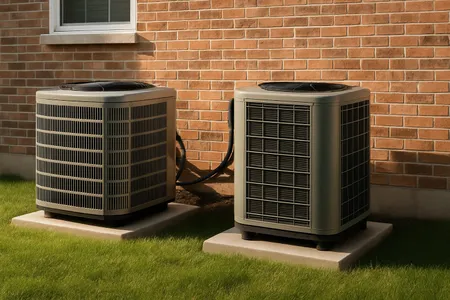
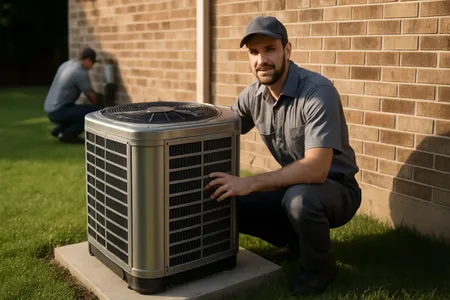
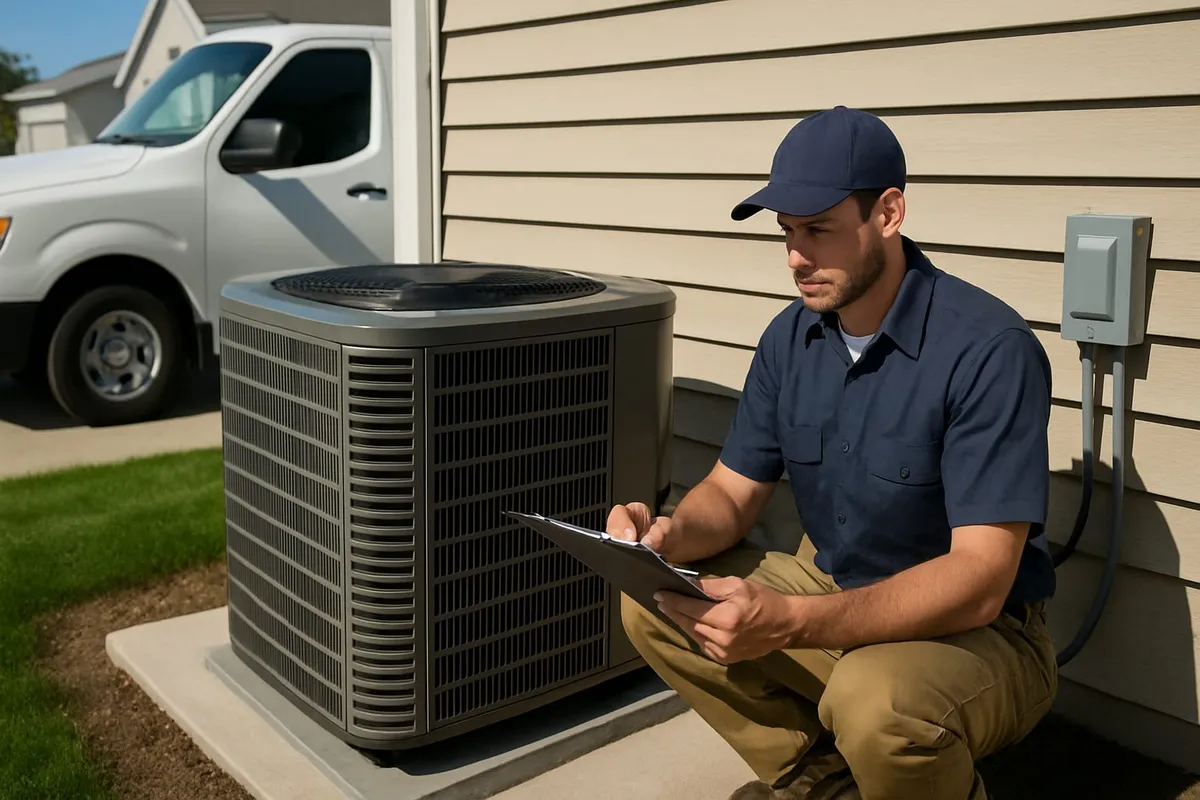
Air-source heat pumps are the most popular and affordable option, transferring heat between indoor and outdoor air. Cost rises with efficiency tier — moving from a standard-efficiency unit toward a mid-range or high-efficiency (20+ SEER2) model raises the installed price but lowers what you’ll pay to run it. A technician can quote the installed cost for your specific home and efficiency target.
Ductless Mini-Split Heat Pumps
Mini-split heat pumps are ideal for homes without ductwork or for adding climate control to specific rooms. Installed cost scales with the number of zones — a single-zone system costs the least, and each additional zone adds to the total. For complete pricing details, see our Mini Split Installation Cost guide.
Geothermal (Ground-Source) Heat Pumps
Geothermal systems are the most efficient option available but also the most expensive to install, largely because of the underground loop installation — that loop work is often the single biggest line item in the project. A geothermal specialist can quote the equipment and loop installation separately for your property.
Dual-Fuel Systems (Heat Pump + Gas Furnace)
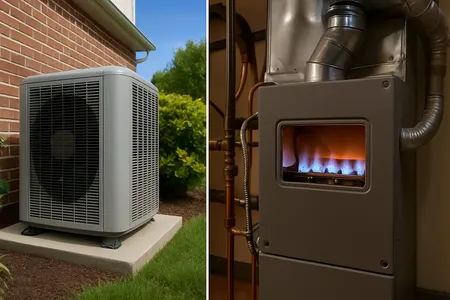
A dual-fuel system pairs a heat pump with a gas furnace backup for extreme cold. The heat pump handles moderate temperatures while the furnace kicks in during the coldest days. Because you’re installing two systems instead of one, a dual-fuel setup costs more upfront than a standalone heat pump — ask your contractor for the added cost over a standard heat pump alone.
Cost by Home Size
Installed cost rises with system size (tonnage), which in turn depends on your home’s square footage, insulation, and climate — a larger home generally needs a larger system and a bigger installed price tag. Rather than estimating from square footage alone, ask your technician to run a proper load calculation (a Manual J) and quote the tonnage and price together.
Running Costs: How Much Does a Heat Pump Cost to Operate?
Monthly Operating Costs
Operating cost varies by climate zone and season: heating costs more relative to cooling in colder regions, while mild and moderate climates see a more even split between heating and cooling costs across the year. Our Energy Savings Calculator can estimate a monthly and annual figure using your actual rate and climate.
Heat Pump vs. Other Systems: Annual Operating Cost
Compared to a gas, electric, or oil furnace paired with central AC, a heat pump’s higher efficiency generally means a lower combined annual operating cost — the gap is widest against oil and electric-resistance systems, and narrower against an efficient gas furnace. According to the U.S. Department of Energy, the average household can save $300 to $1,500 per year by switching to a heat pump, depending on the climate and the system being replaced.
Energy Savings and Payback Period
How Heat Pumps Save Money
Heat pumps do not generate heat. They move it. For every unit of electricity a heat pump consumes, it delivers 2 to 4 units of heating energy. This makes them 200% to 400% efficient, compared to a gas furnace at 80% to 98.5% efficient or electric resistance heating at 100% efficient.
Estimated Payback Period
How quickly a heat pump pays for itself against its extra upfront cost depends on what you’re replacing: payback tends to be fastest against electric-resistance or oil heat, both expensive to run, and slowest against an efficient gas furnace, where the annual savings are smaller. Replacing an older, inefficient heat pump with a modern one tends to pay back the fastest of all. Use our Energy Savings Calculator to estimate a payback period for your specific situation.
Tax Credits and Rebates (2026)
Federal Tax Credits
The Inflation Reduction Act’s Section 25C credit offered 30% (up to $2,000) for qualifying air-source heat pump installations placed in service through December 31, 2025 — but the One Big Beautiful Bill Act (OBBBA) accelerated that sunset, and the credit is no longer available for systems installed in 2026. If you installed before the cutoff, you can still claim it on that year’s return; see our HVAC Tax Credits guide for the current 2026 picture and what still applies.
Geothermal heat pumps fell under a separate credit (Section 25D, 30% of cost with no cap) that ended on the same schedule.
State and Local Incentives
Many states and utilities offer additional incentives:
- Utility rebates: Amounts vary by provider — check your utility’s current rebate program
- State tax credits: Vary by state — check your state’s energy office for what’s currently offered
- Low-income programs: Some programs cover 50% to 100% of costs for qualifying households
Manufacturer Rebates
HVAC manufacturers frequently offer seasonal rebates on qualifying systems, particularly during spring and fall promotional periods — ask your contractor which current promotions apply to your equipment choice.
Factors That Affect Heat Pump Cost
1. System Type and Technology
Cold-climate heat pumps with enhanced low-temperature performance cost 15% to 30% more than standard models but operate efficiently down to -15 to -20 degrees Fahrenheit.
2. Efficiency Rating
Higher SEER2 (cooling) and HSPF2 (heating) ratings increase upfront cost but reduce operating expenses. A higher-rated system (say, 20 SEER2 / 10 HSPF2) costs more upfront than an entry-level model (15 SEER2 / 8 HSPF2) — ask your contractor for the price gap between the tiers you’re considering.
3. Compressor Type
Variable-speed compressors deliver the best comfort and efficiency but cost meaningfully more than single-stage models. See our guide on Single-Stage vs Two-Stage vs Variable-Speed systems.
4. Ductwork
If your home lacks ductwork, you will either need to install ducts — a separate, sizable cost a ductwork contractor can quote — or opt for a ductless mini-split system instead.
5. Backup Heat
In cold climates, a heat pump may need supplemental heat. Electric resistance backup strips add a modest cost, while a dual-fuel gas furnace backup — effectively installing a second full system — adds considerably more.
6. Refrigerant Type
New systems manufactured after January 2025 use low-GWP refrigerants like R-454B. These systems may cost slightly more but comply with current regulations. Learn more in our R-410A Phase Out Guide.
DIY vs. Professional Installation
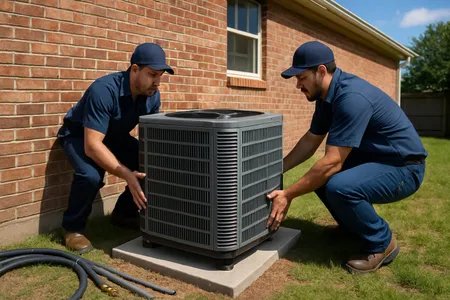
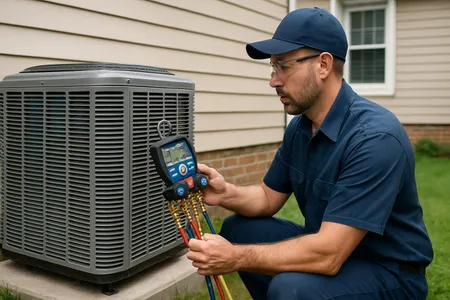
Heat pump installation requires professional HVAC technicians for several critical reasons:
- Refrigerant handling requires EPA Section 608 certification
- Electrical connections involve 240-volt circuits
- System charging must be precise for proper operation
- Manufacturer warranties require professional installation
- Permits and inspections are required in most jurisdictions
You can save money by: getting multiple quotes, clearing the installation area yourself, and scheduling during the off-season.
How to Save Money on Heat Pump Installation
- Stack incentives: The federal tax credit expired December 31, 2025 (see above), but combine utility rebates and manufacturer promotions for maximum savings
- Right-size your system: Do not oversize. A proper load calculation ensures you pay for only the capacity you need
- Consider a ductless system: If you only need to heat and cool certain areas, a mini-split avoids the cost of ductwork
- Get multiple quotes: At least three, from licensed and insured contractors
- Time your purchase: Off-season installations (spring/fall) and end-of-year promotions can lower costs
- Invest in insulation first: Improving insulation before installing a heat pump may allow you to downsize the system
When to Repair vs. Replace Your Heat Pump
Replace when:
- Your heat pump is 12 to 15+ years old
- Repair costs exceed 40% to 50% of replacement cost
- It uses R-22 refrigerant
- Efficiency has noticeably declined
- It runs constantly without maintaining temperature
Repair when:
- The system is less than 8 years old
- The repair is a common component failure (capacitor, contactor, reversing valve)
- Repair cost is modest relative to the system’s remaining life — your technician’s quote makes repair the clear choice
- The system still performs well overall
Check our Repair or Replace Calculator for a personalized recommendation.
Frequently Asked Questions
Are heat pumps worth it in 2026?
For most homeowners, yes. Heat pumps offer lower operating costs, year-round comfort from a single system, and reduced carbon emissions. The economics are strongest when replacing electric resistance heating, oil furnaces, or aging AC-plus-furnace combos. See our Heat Pump vs Furnace comparison.
Do heat pumps work in cold climates?
Modern cold-climate heat pumps operate efficiently down to -15 to -20 degrees Fahrenheit. Brands like Mitsubishi (Hyper-Heat), Carrier (Greenspeed), and Daikin (Aurora) are designed specifically for cold climates. In extremely cold areas, a dual-fuel system provides added peace of mind.
How long do heat pumps last?
Air-source heat pumps typically last 12 to 15 years, while geothermal systems can last 20 to 25+ years. Regular maintenance (two tune-ups per year) is key to maximizing lifespan. See our HVAC Maintenance Cost guide.
Will a heat pump increase my electric bill?
A heat pump will increase your electricity usage, but it eliminates gas, oil, or propane heating costs. For most households, the net effect is lower total energy costs. The U.S. DOE estimates average savings of $370 per year.
What size heat pump do I need?
General rule: 1 ton per 400 to 600 square feet, depending on climate and insulation. However, a professional Manual J load calculation is essential for accurate sizing.
In Central Texas? Heat pumps are an excellent choice for the Central Texas climate. Texas Temp Masters can help you select and install the right heat pump for year-round comfort. Call (817) 704-0706 for a free consultation, or visit our Heat Pumps page to learn more.
Next Steps
Use these tools and guides to zero in on the right heat pump for your budget:
- Get a personalized estimate — Our Cost Estimator generates Good/Better/Best pricing with financing options based on your home size and preferences.
- Size your system correctly — Run a BTU Calculator estimate before shopping so you know exactly what capacity you need.
- Compare heat pumps to traditional AC — Our Heat Pump vs AC guide explains when a heat pump makes sense and when a standard air conditioner is the better value.
- See which brands hold up in Texas — The Best HVAC Brands for Texas guide ranks manufacturers by reliability and value for hot-climate performance.
- Understand efficiency ratings — Read our SEER vs SEER2 guide so you can compare new systems accurately and avoid overpaying for marginal gains.
- Ready to talk? — Contact us for a free evaluation.