Quick answer: on Trane serial numbers made 2010 or later, the first two digits are the manufacture year and the next two are the week — serial 2415836472 = week 15 of 2024. Nine-digit serials (2002–2009): the first digit is the year. Letter-first serials (1983–2001): the letter is the year (W = 1983 … S = 2001). Full decode tables for all three formats are below, or use our free HVAC Age Decoder for an instant answer.
Your Trane serial number tells you exactly when your AC, furnace, or heat pump was manufactured. You can find it on the data plate attached to your unit — a silver or white sticker showing the model number, serial number, and electrical specifications. Once you have the serial number, you can decode it to determine the manufacture year, month, and even the week your unit was built.
This guide walks you through finding your serial number, decoding it by hand, extracting the tonnage from your model number, and using our free online decoder to get instant results.
Where to Find Your Trane Serial Number
Every Trane unit has a data plate (also called a nameplate or rating plate) that lists the serial number, model number, refrigerant type, and electrical specs. The exact location depends on the type of equipment.
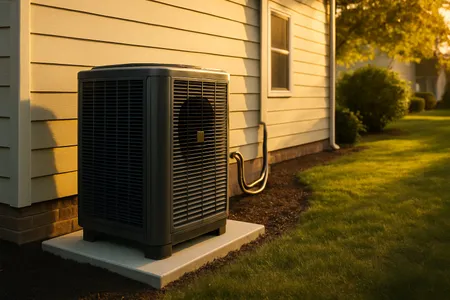
Air Conditioners (Outdoor Condenser)
- Look on the side panel of the outdoor unit, typically near the refrigerant line connections
- The data plate is usually a silver or white sticker with black text
- On newer Trane units, the plate is often on the upper-right side of the cabinet when facing the unit
- If the sticker is faded or damaged, check behind the access panel — some units have a second label inside
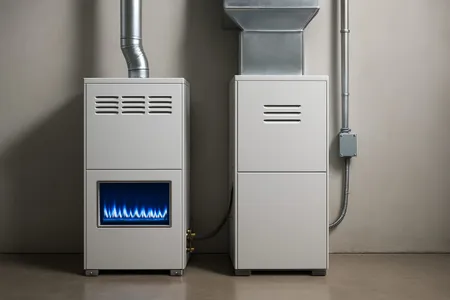
Furnaces (Indoor Unit)
- Open the front panel or blower door of the furnace
- The data plate is typically on the inside of the cabinet, mounted to the left or right wall
- You may need to remove the lower panel to see it on some models
- On Trane furnaces, the serial number plate is often near the gas valve or burner assembly
Heat Pumps
- The outdoor unit has the data plate in the same location as an AC condenser — side panel near the service valves
- The indoor air handler has its own separate serial number, usually inside the cabinet behind the access panel
- Note that the outdoor and indoor units may have different serial numbers and manufacture dates if they were not installed as a matched set
Air Handlers
- Open the front access panel of the air handler
- The data plate is typically on the inside wall of the cabinet
- Some Trane air handlers place the label on the exterior side panel near the electrical connections
Tip: Take a clear photo of the entire data plate with your phone. Serial numbers can be long and easy to misread, especially on older units where the sticker may be worn.
How to Decode a Trane Serial Number
Trane has used three different serial number formats over the years. The format depends on when your unit was manufactured. Here is how each system works.
2010 to Present: All-Numeric Format (YYWW + Digits)
Modern Trane serial numbers are 10 or more digits, all numeric. The first four digits encode the manufacture date:
- Positions 1-2 = Year of manufacture (last two digits)
- Positions 3-4 = Week of manufacture (01-52)
- Remaining digits = Unique production sequence number
Example: Serial number 2415836472
| Position | Digits | Meaning |
|---|---|---|
| 1-2 | 24 | Year 2024 |
| 3-4 | 15 | Week 15 (mid-April) |
| 5-10 | 836472 | Production sequence |
Result: This unit was manufactured in April 2024.
2002 to 2009: Nine-Digit Numeric Format
Serial numbers from this era are exactly 9 digits, all numeric:
- Position 1 = Year of manufacture (single digit: 2 = 2002, 3 = 2003, … 9 = 2009)
- Positions 2-3 = Week of manufacture (01-52)
- Remaining digits = Production sequence number
Example: Serial number 723456789
| Position | Digits | Meaning |
|---|---|---|
| 1 | 7 | Year 2007 |
| 2-3 | 23 | Week 23 (early June) |
| 4-9 | 456789 | Production sequence |
Result: This unit was manufactured in June 2007.
1983 to 2001: Letter-Based Format
Older Trane serial numbers start with a single letter followed by 8 digits. The letter indicates the year of manufacture, and the next two digits indicate the week:
- Position 1 = Letter code for the year
- Positions 2-3 = Week of manufacture (01-52)
- Remaining digits = Production sequence number
Here is the full letter-to-year mapping:
| Letter | Year | Letter | Year | Letter | Year |
|---|---|---|---|---|---|
| W | 1983 | E | 1990 | M | 1997 |
| X | 1984 | F | 1991 | N | 1998 |
| Y | 1985 | G | 1992 | P | 1999 |
| Z | 1986 | H | 1993 | R | 2000 |
| B | 1987 | J | 1994 | S | 2001 |
| C | 1988 | K | 1995 | ||
| D | 1989 | L | 1996 |
Note that the letters A, I, O, Q, T, U, and V are skipped to avoid confusion with numbers.
Example: Serial number L2387654
| Position | Value | Meaning |
|---|---|---|
| 1 | L | Year 1996 |
| 2-3 | 23 | Week 23 (early June) |
| 4-9 | 87654 | Production sequence |
Result: This unit was manufactured in June 1996.
Quick Reference: Which Format Do I Have?
| Serial Number Pattern | Era | How to Read It |
|---|---|---|
| 10+ digits, all numbers | 2010 - present | First 2 digits = year, next 2 = week |
| Exactly 9 digits, all numbers | 2002 - 2009 | First digit = year (2-9), next 2 = week |
| Letter + 8 digits | 1983 - 2001 | Letter = year (see table), next 2 = week |
How to Find Your Trane Unit’s Tonnage
The tonnage (cooling capacity) of your Trane system is encoded in the model number, not the serial number. Look for a two-digit number in the model string that corresponds to thousands of BTU per hour. Divide that number by 12 to get the tonnage.
Here is what to look for:
| Digits in Model Number | BTU/hr | Tonnage |
|---|---|---|
| 18 | 18,000 | 1.5 tons |
| 24 | 24,000 | 2 tons |
| 30 | 30,000 | 2.5 tons |
| 36 | 36,000 | 3 tons |
| 42 | 42,000 | 3.5 tons |
| 48 | 48,000 | 4 tons |
| 60 | 60,000 | 5 tons |
Example: A model number like 4TTR6036J1000A contains 36, which means 36,000 BTU/hr or 3 tons of cooling capacity.
Most Texas homes need between 3 and 5 tons depending on the square footage and insulation. If you are unsure whether your unit is properly sized, a Manual J load calculation can tell you the right capacity.
How to Find Your Trane Model Number
The model number is printed on the same data plate as the serial number. On Trane equipment, the model number typically follows a structured format that tells you a lot about the unit:
Example model number: 4TTR6048J1000A
Breaking that down:
- 4 = Residential product
- TTR = Product line code (Trane Two-stage Residential, in this case the XR series)
- 60 = SEER or efficiency rating indicator
- 48 = Capacity in thousands of BTU (48,000 BTU = 4 tons)
- J = Design revision
- 1000A = Minor revision and voltage/configuration code
The first three to four characters of the model number identify the product line. Some common Trane model prefixes include:
- 4TTR = XR series air conditioner
- 4TWR = XR series heat pump
- 4TTX = XL or XV series air conditioner
- 4TWX = XL or XV series heat pump
- TUH / TUD = Upflow furnace
- TDH / TDD = Downflow furnace
If your model number label is damaged or unreadable, a licensed HVAC technician can identify the equipment using the serial number and physical characteristics of the unit.
Common Trane Product Lines
Trane organizes its residential equipment into tiered product lines. Each tier offers different efficiency ratings, features, and price points.
| Product Line | Tier | Key Features | SEER2 Range |
|---|---|---|---|
| XR Series | Good (entry-level) | Single-stage compressor, reliable and affordable | 14.3 - 17 |
| XL Series | Better (mid-range) | Two-stage compressor, quieter operation, better humidity control | 17 - 20 |
| XV Series | Best (premium) | Variable-speed compressor, ultra-quiet, precise temperature control | 20 - 22+ |
XR Series — The most popular Trane product line. These are single-stage systems that deliver solid performance and reliability at a competitive price. The XR series is a great fit for budget-conscious homeowners who want a dependable brand.
XL Series — Mid-range systems with two-stage compressors. The two-stage operation means the unit can run at a lower capacity on mild days and ramp up when it is hot. This results in quieter operation, better humidity removal, and lower energy bills compared to single-stage models.
XV Series — Trane’s top-of-the-line systems with variable-speed inverter compressors. These units can adjust output in fine increments to maintain precise temperatures with minimal energy waste. The XV series is the quietest and most efficient option Trane offers.
All three lines are backed by Trane’s standard 10-year parts warranty and 12-year compressor warranty when registered within 60 days of installation.
Use Our Free Trane Serial Number Decoder
Instead of decoding your serial number by hand, you can use our HVAC Age Decoder to get instant results. Here is how it works:
- Go to our HVAC Age Decoder
- Select Trane from the brand dropdown
- Enter your serial number
- Get instant results: manufacture year, month, system age, estimated remaining lifespan, and refrigerant type
The decoder supports all three Trane serial number formats (2010+, 2002-2009, and 1983-2001), plus American Standard units that use the same format. It covers 22+ HVAC brands in total, so you can decode any other equipment you have as well.
The tool is completely free, requires no sign-up, and works on any device.
Decoded your serial and found a 12+ year-old system? Texas Temp Masters services all Trane models across Central Texas. Call (817) 704-0706 or contact us for a free evaluation — no pressure, just an honest read on whether repair or replacement makes sense.
When to Consider Replacing Your Trane Unit
Trane systems are known for their durability, but every unit has a finite lifespan. Here are the key factors to consider:
Age Guidelines
- Air conditioners: 15-20 years average lifespan
- Heat pumps: 10-15 years (they work harder because they run year-round)
- Furnaces: 15-20 years, though efficiency drops significantly after 15 years
If your Trane unit is 15 years or older, it is worth evaluating whether repair or replacement makes more financial sense. Our Repair or Replace Calculator can help you make that decision based on your unit’s age, repair cost, and efficiency.
R-22 Refrigerant Phase-Out
If your Trane system was manufactured before 2010, it likely uses R-22 (Freon) refrigerant, which has been fully phased out. R-22 is no longer manufactured, and the remaining supply is extremely expensive — often $150-$250 per pound. If your older Trane unit develops a refrigerant leak, replacing the entire system is almost always more cost-effective than recharging with R-22.
Declining Efficiency
Older Trane units may have been efficient when they were new, but efficiency degrades over time due to wear on the compressor, dirty coils, and aging components. A Trane system from 2005 with a 10 SEER rating uses roughly 40-50% more electricity than a new Trane XR unit rated at 16 SEER2. In Texas, where AC accounts for a large share of your electric bill, upgrading can save $500-$1,000 or more per year.
Warning Signs It Is Time to Replace
- Frequent repairs — More than two repair calls per year
- Rising energy bills — Steady increases that are not explained by rate changes
- Uneven temperatures — Rooms that are too hot or too cold despite adequate ductwork
- Excessive noise — Grinding, rattling, or banging from the outdoor unit
- R-22 refrigerant — Any unit that uses R-22 is a candidate for replacement
Frequently Asked Questions
How old is my Trane unit?
Find the serial number on the data plate and decode it using the formats above. For units made in 2010 or later, the first two digits of the serial number are the year. For 2002-2009 units, the first single digit is the year. For 1983-2001 units, the first letter maps to a specific year. You can also use our free HVAC Age Decoder for instant results.
Where is the serial number on a Trane air conditioner?
The serial number is on the data plate — a silver or white sticker on the side panel of the outdoor condensing unit. Look near the refrigerant line connections or the electrical disconnect. If the sticker is not visible on the outside, check behind the access panel.
How do I read a Trane model number?
Trane model numbers follow a structured format. The first few characters identify the product line (XR, XL, XV), the middle digits indicate efficiency and capacity (tonnage), and the trailing characters identify the design revision and configuration. For example, in 4TTR6048J1000A, the 48 means 48,000 BTU or 4 tons.
What does the serial number tell me about my warranty?
The serial number establishes the manufacture date, which is the starting point for Trane’s warranty coverage. Trane offers a 10-year registered limited parts warranty and a 12-year compressor warranty from the date of manufacture (or the date of installation with proof of purchase). If you did not register your unit within 60 days, the warranty may be reduced to 5 years for parts. Contact Trane directly or visit their warranty lookup page with your serial and model number to check your specific coverage.
Can a technician help decode my Trane serial number?
Yes. Any licensed HVAC technician can look up your Trane serial number to determine the manufacture date, warranty status, and equipment specifications. If your data plate is damaged or unreadable, a technician can also identify the unit using physical characteristics and the equipment’s location in Trane’s registration database. If you are in Central Texas, Texas Temp Masters can help — call us or use our free HVAC Age Decoder.
Need Help With Your Trane System?
Whether you need to decode your serial number, schedule maintenance, or get a quote on a replacement, Texas Temp Masters is here to help. We service all Trane models — from older XR units to the latest XV variable-speed systems.
Call us at (817) 704-0706 to speak with a technician, or use our free online tools:
- HVAC Age Decoder — Instantly decode any Trane serial number
- How to Read HVAC Serial Numbers — Covers 22+ brands including Carrier, Lennox, Goodman, and more
- Carrier vs Trane — Side-by-side brand comparison to help you decide on your next system