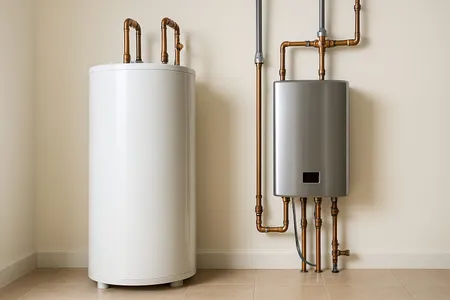
A tank water heater costs less installed than a tankless unit, though tankless typically costs less to run over its longer lifespan. It is money worth spending carefully: the U.S. Department of Energy estimates water heating is roughly 18% of a home’s energy costs, the second-largest energy expense after heating and cooling, so the type you choose keeps costing (or saving) you money every month for a decade or more.
What Drives Water Heater Replacement Cost
Type, size, fuel source, and installation complexity all significantly affect your final cost — see the factors below, then get a written, itemized quote from a licensed plumber for your specific home.
Tank Water Heater Costs
Traditional tank water heaters store and continuously heat 30 to 80 gallons of water. They are the most common and affordable option.
Sizing by Household
| Tank Size | Best For |
|---|---|
| 30 gallons | 1-2 people |
| 40 gallons | 2-3 people |
| 50 gallons | 3-4 people |
| 60 gallons | 4-5 people |
| 75-80 gallons | 5+ people |
Larger tanks cost more, both to buy and to install, so oversizing isn’t free — a plumber can help you match tank size to your household’s actual hot water use.
Cost by Fuel Type
Natural gas and propane units are generally less expensive to buy than electric heat pump models, but installation cost depends heavily on whether venting and gas lines already exist. Heat pump water heaters cost more upfront but have the lowest operating cost of the four; standard electric tank units usually cost the most to run. A plumber can quote installed cost and estimated operating cost for your specific fuel type and home.
Tankless Water Heater Costs
Tankless (on-demand) water heaters heat water only when you need it, eliminating standby energy loss.
Sizing by Flow Rate
Cost generally rises with flow rate and gas units cost more than point-of-use electric units, since gas condensing models (the highest flow rate) require the most complex venting. A plumber can quote the installed cost for the flow rate your household needs — see the sizing guide below.
Flow Rate Guide
| Simultaneous Uses | GPM Needed | Recommended Type |
|---|---|---|
| 1 sink or shower | 2-3 GPM | Point-of-use electric |
| 1 shower + 1 sink | 4-5 GPM | Whole-house electric or small gas |
| 2 showers | 5-6 GPM | Mid-size gas |
| 2 showers + dishwasher | 7-9 GPM | High-output gas |
| 3+ showers + appliances | 9-12 GPM | Gas condensing or multiple units |
Tank vs. Tankless: Complete Cost Comparison
| Factor | Tank | Tankless |
|---|---|---|
| Upfront cost | Lower | Higher |
| Annual operating cost | Typically higher | Typically lower |
| Lifespan | 10 - 15 years | 20+ years |
| Annual maintenance | Lower | Somewhat higher (requires descaling) |
| Space required | 16 - 24 sq ft | 2 - 4 sq ft |
| Energy savings | Baseline | 25 - 35% less energy |
| Hot water supply | Limited by tank size | Unlimited (flow-limited) |
Over a 20-year period, tankless water heaters often cost less despite higher upfront prices, thanks to lower operating costs and longer lifespans. For a deeper comparison, see our Tankless vs Tank Water Heater guide.
Factors That Affect Water Heater Replacement Cost
1. Fuel Type Conversion
Switching fuel types (electric to gas or vice versa) adds significant cost on top of the unit itself, since it can require:
- Running a new gas line
- Installing new venting
- Electrical upgrades
Ask your plumber for an itemized quote covering each of these before committing to a fuel switch.
2. Location and Accessibility
Water heaters in closets, attics, or tight spaces cost more to replace due to additional labor. Rooftop installations on commercial buildings are the most expensive.
3. Code Compliance Updates
Many jurisdictions require updated code compliance during replacement:
- Expansion tank — a modest addition
- Earthquake straps (in seismic zones) — a modest addition
- Drain pan — a modest addition
- Code-compliant venting upgrade — adds more, depending on scope
- Permit — varies by jurisdiction
Ask your installer to itemize which of these your job actually needs before you compare quotes.
4. Removal and Disposal
Removing the old water heater and disposing of it properly adds a modest amount to most jobs. Most contractors include this in their quote — confirm it’s included before you compare bids.
5. Tankless-Specific Installation Costs
Switching from tank to tankless often requires:
- Gas line upgrade (larger diameter for gas models) — adds to the cost
- Venting changes (stainless steel for condensing models) — adds to the cost
- Electrical upgrade (for electric models, may need 200-amp service) — can add substantially, depending on your panel
- Water line modifications — a smaller addition
None of these are optional if your home needs them, so ask for a walkthrough of exactly which apply to your setup before you compare a tankless quote against a tank quote.
6. Brand and Warranty
Brand and tier also affect price: mid-range brands (Rheem, A.O. Smith) sit at one end, premium tank brands (Bradford White) cost more, and premium tankless brands (Rinnai, Navien) cost the most of the group. Ask your installer which brands they carry and why they recommend a given tier for your household.
DIY vs. Professional Installation
DIY Tank Water Heater Replacement
A handy homeowner can replace a like-for-like tank water heater (same fuel type, same location) for the cost of the unit plus a modest amount in supplies. However:
- Gas units: Working with gas connections and venting carries serious safety risks including carbon monoxide and gas leaks
- Electric units: Requires working with 240-volt circuits
- Permits: Most areas require a plumbing permit even for replacements
- Code compliance: DIY installations often miss required code updates
- Warranty: Some manufacturers require licensed installation
DIY Tankless Installation
Not recommended. Tankless installation typically requires gas line modifications, specialized venting, and precise sizing that should be handled by a licensed professional.
Weighing DIY Against Professional Installation
DIY saves on labor, but you still pay for the unit and materials, plus the risk of a failed permit inspection or a voided warranty. Professional installation costs more but includes labor, code compliance, and a warranty-safe install. Tankless installation — DIY or professional — tends to cost more than a tank swap either way, because of the additional line, venting, and electrical work it usually requires.
How to Save Money on Water Heater Replacement
- Get three quotes: Water heater replacement prices vary widely between plumbers
- Check utility rebates: Many utilities offer rebates for high-efficiency or heat pump water heaters — check with your specific utility for current amounts
- Consider a heat pump water heater: Higher upfront cost but 50% to 65% lower operating costs
- Buy during sales: Holiday sales and end-of-year promotions can meaningfully lower the equipment cost
- Stick with the same fuel type: Fuel conversion adds substantially to the cost
- Bundle with other work: If you are already having plumbing done, adding a water heater replacement saves on the service call
- Federal tax credits: The federal 25C tax credit of up to $2,000 for heat pump water heaters expired December 31, 2025 under the One Big Beautiful Bill Act (OBBBA) and no longer applies to 2026 installations
When to Replace Your Water Heater
Replace immediately if:
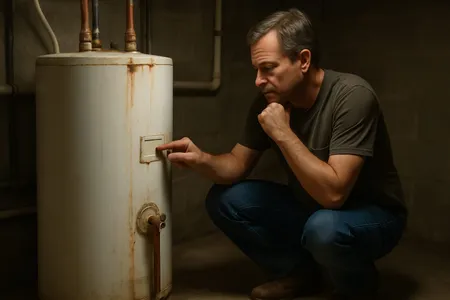
- You see visible rust or corrosion on the tank
- The tank is actively leaking
- The water has a metallic taste or rust color that persists after flushing
Plan a replacement when:
- Your tank water heater is 10 to 12+ years old
- Your tankless unit is 15 to 20+ years old
- Recovery time has increased noticeably
- Repair costs are adding up year over year
- Your energy bills have increased without other explanation
Frequently Asked Questions
How long does water heater installation take?
A like-for-like tank replacement takes 2 to 4 hours. A tankless installation or fuel type conversion can take 4 to 8 hours or more.
Can I replace a tank water heater with a tankless?
Yes, but expect a noticeably higher total than a like-for-like swap, since it usually requires gas line upgrades, venting modifications, and potentially electrical work on top of the unit itself. Ask your installer for a firm quote once they’ve seen your setup.
What size water heater do I need?
For tank water heaters: 30-40 gallons for 1-2 people, 40-50 gallons for 2-3 people, 50-60 gallons for 3-4 people, and 60-80 gallons for 5+ people. For tankless, focus on flow rate (GPM) rather than gallons.
Is a tankless water heater worth the extra cost?
For most homes, yes, if you plan to stay in your home for 5+ years. The energy savings and longer lifespan offset the higher upfront cost. They are especially worthwhile for large families that frequently run out of hot water.
How much does it cost to run a water heater per month?
Tank water heaters generally cost the most per month to operate, tankless models less, and heat pump water heaters are usually the most efficient of the three — check your own utility bill for the number that matters, since it depends on your household’s usage and local rates.
Planning a water heater replacement? Use what drives the cost, above, to ask sharper questions and compare quotes from a licensed technician in your area.
Next Steps
Now that you know what drives water heater replacement cost, here are a few ways to narrow down your decision:
- Check your current unit’s age — Use our Appliance Age Decoder to find out how old your water heater is by its serial number.
- Repair or replace? — Not sure if your water heater needs replacing yet? Run the numbers with our Repair or Replace Calculator.
- Estimate your energy costs — See how different water heater types affect your monthly bill with our Energy Cost Calculator.
- Tank vs. tankless deep dive — Read our full Tankless vs Tank Water Heater comparison to decide which type fits your household.
- Check what’s still available — The federal 25C tax credit for heat pump water heaters expired December 31, 2025; see the 2026 HVAC Tax Credits guide for the state and utility incentives that remain.
- Ready to talk? — Contact us for a free evaluation.