Your Carrier serial number contains the exact week and year your unit was manufactured. The first four digits tell you everything: the first two are the week of production (01-52), and the next two are the year (e.g., 1210 = week 12 of 2010). This format has been used on Carrier units since the mid-1990s and applies to all Carrier residential AC, furnace, and heat pump equipment.
If you want the fastest answer, enter your serial number into our free Carrier Serial Number Age Decoder and get the manufacture date, unit age, and estimated remaining lifespan instantly.
Where to Find Your Carrier Serial Number
Every Carrier unit has a data plate (sometimes called a nameplate or rating plate) that lists the model number and serial number. The location depends on the type of equipment.
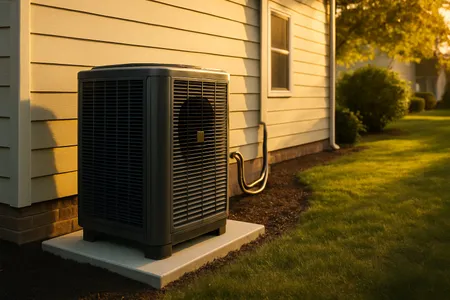
Central Air Conditioners and Heat Pumps (Outdoor Unit)
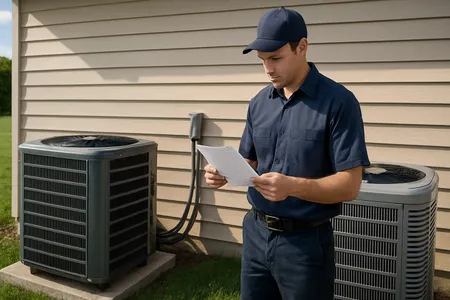
Look on the outside of the unit, typically on the side panel near the refrigerant line connections or the electrical disconnect. The data plate is a metal tag or weatherproof sticker. On most Carrier condensers, it is on the right side of the unit when facing the service valves. You should not need to remove any panels to see it, though dirt, paint, or weathering can make it hard to read.
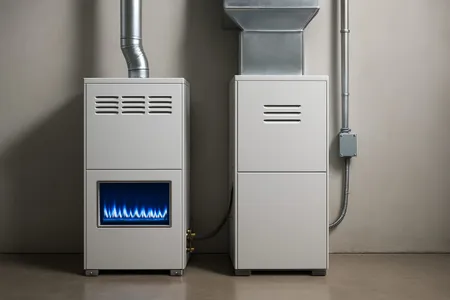
Furnaces and Air Handlers (Indoor Unit)
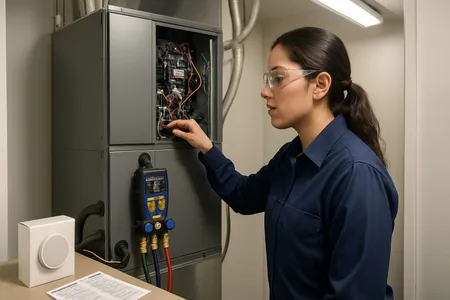
Open the front access panel or blower compartment door. The data plate is usually attached to the inside of the cabinet wall, visible once the panel is removed. On most Carrier furnaces, it is on the left interior wall near the top of the unit. Some air handlers have the plate on the outside of the unit near the bottom.
Package Units (Rooftop or Side-Yard)
The data plate is on the exterior of the cabinet, usually near the electrical connection panel on the side of the unit. Package units are common on commercial buildings and some Texas homes with slab foundations.
Mini-Splits (Ductless Systems)
On the outdoor unit, check the side panel. On the indoor wall unit, the plate is typically behind the front cover — lift or swing open the front panel to find it on the right side of the chassis.
Tip: If the data plate is faded or damaged, you may also find the serial number on the original equipment registration card, on your home inspection report, or in your warranty paperwork.
How to Decode a Carrier Serial Number for Age
Carrier uses a straightforward serial number format. The first four digits encode the manufacture date. Here is how to read them.
The Format
A typical Carrier serial number looks like this:
2714B12345
Breaking it down:
- 27 = Week of manufacture (week 27 = early July)
- 14 = Year of manufacture (2014)
- B12345 = Production sequence identifier
So this unit was manufactured in July 2014.
Step-by-Step Example
Let’s say your Carrier serial number is 0819E67890.
- First two digits: 08 — This is the week number. Week 8 falls in late February.
- Next two digits: 19 — This is the year. In this case, 2019.
- Result: Your Carrier unit was manufactured in February 2019.
- Age calculation: As of March 2026, this unit is approximately 7 years old.
Pre-2000 Carrier Serial Numbers
The same week-year format applies to Carrier units manufactured from approximately 1995 onward. For example:
- 3497A54321 = Week 34, Year 1997 = August 1997
- 0199C11111 = Week 01, Year 1999 = January 1999
For Carrier units manufactured before 1995, the serial number format was different and less standardized. On some older units, the first two digits represent the year directly, or a letter code is used. If you have a very old Carrier unit (30+ years), your best bet is our HVAC Age Decoder, which handles legacy formats, or contact Carrier directly with your serial number.
Bryant, Payne, and Other Related Brands
Carrier owns several HVAC brands that use the same serial number format:
- Bryant
- Payne
- Heil
- Tempstar
- Comfortmaker
- Day & Night
- Arcoaire
- KeepRite
- ICP (International Comfort Products)
If you have any of these brands, decode the serial number the same way — first two digits are the week, next two are the year.
Carrier Model Number Decoder
While the serial number tells you when your unit was made, the model number tells you what it is. Carrier model numbers follow a structured format that reveals the product type, efficiency, and capacity.
Here is what a typical Carrier model number looks like:
24ACC636A003
Breaking it down:
| Position | Example | Meaning |
|---|---|---|
| First 2 digits | 24 | Product family (24 = residential AC) |
| Next 3 letters | ACC | Series and configuration (ACC = Comfort series AC) |
| Next 3 digits | 636 | Nominal capacity (036 = 3 tons, 636 = see tonnage section) |
| Last characters | A003 | Revision and variant codes |
Common Carrier Product Family Codes
| Code | Product Type |
|---|---|
| 24 | Central Air Conditioner |
| 25 | Heat Pump |
| 48 | Package Unit (Gas/Electric) |
| 50 | Package Unit (Heat Pump) |
| 58 | Gas Furnace (Upflow/Horizontal) |
| 59 | Gas Furnace (Variable Speed) |
Series Letter Codes
The letters after the product family number indicate the product line and tier:
- ACC = Comfort Series Air Conditioner
- ACA / ANX = Performance Series Air Conditioner
- ANA = Infinity Series Air Conditioner
- HCC = Comfort Series Heat Pump
- HNR = Performance Series Heat Pump
- HNA = Infinity Series Heat Pump
How to Find Tonnage from the Carrier Model Number
The easiest way to determine your Carrier unit’s cooling capacity is by looking for a two- or three-digit number in the model number that represents the nominal BTU capacity in thousands. Divide that number by 12 to get the tonnage.
Here is the quick conversion:
| Number in Model | BTU/hr | Tonnage |
|---|---|---|
| 018 | 18,000 | 1.5 tons |
| 024 | 24,000 | 2 tons |
| 030 | 30,000 | 2.5 tons |
| 036 | 36,000 | 3 tons |
| 042 | 42,000 | 3.5 tons |
| 048 | 48,000 | 4 tons |
| 060 | 60,000 | 5 tons |
For example, in the model number 24ACC636A003, the digits 636 contain 36, indicating a 3-ton unit. In 25HNR548A003, the 548 contains 48, indicating a 4-ton heat pump.
Most Texas homes need between 3 and 5 tons of cooling capacity. If you are unsure what size your home requires, see our guide on what size AC your house needs.
Carrier Product Lines Compared
Carrier organizes its residential equipment into three tiers. Here is how they compare:
| Feature | Comfort Series | Performance Series | Infinity Series |
|---|---|---|---|
| SEER2 Range | Up to 14.3 | Up to 17 | Up to 24+ |
| Compressor | Single-stage | Two-stage | Variable-speed |
| Sound Level | Standard (72-76 dB) | Quieter (70-73 dB) | Ultra-quiet (51-56 dB) |
| Humidity Control | Basic | Improved | Greenspeed Intelligence |
| Thermostat | Any standard | Performance Edge | Infinity Touch Control |
| Warranty (Compressor) | 10 years | 10 years | Lifetime (limited) |
| Typical Installed Cost | $3,500 - $5,500 | $5,000 - $7,500 | $7,500 - $12,000+ |
| Best For | Budget-conscious, rentals | Most homeowners | Maximum comfort and efficiency |
The Infinity series is Carrier’s flagship line and includes Greenspeed Intelligence, which uses a variable-speed compressor to precisely match cooling output to demand. This results in lower energy bills, better humidity control, and extremely quiet operation. The Performance series offers a solid middle ground with two-stage operation. The Comfort series is a reliable, no-frills option that still meets current efficiency standards.
For a deeper brand comparison, see our Carrier vs Trane, Lennox vs Carrier, or Rheem vs Carrier guides.
Use Our Free Carrier Age Decoder Tool
Instead of doing the math yourself, use our Free HVAC Age Decoder. It supports Carrier plus 22 other HVAC brands, and it works instantly:
- Select Carrier from the brand dropdown (also works for Bryant, Payne, and all ICP brands)
- Enter your serial number
- Get the manufacture date, unit age, and estimated remaining lifespan
The tool also handles older serial number formats that do not follow the standard week-year pattern.
When to Replace Your Carrier Unit
Knowing your Carrier unit’s age helps you decide whether to repair or replace. Here are the key guidelines.
Average Lifespan by Equipment Type
| Equipment | Average Lifespan | Consider Replacing At |
|---|---|---|
| Central Air Conditioner | 15-20 years | 15+ years |
| Heat Pump | 10-15 years | 12+ years |
| Gas Furnace | 15-20 years | 15+ years |
| Air Handler | 15-20 years | 15+ years |
R-22 Refrigerant Phase-Out
If your Carrier unit uses R-22 (Freon), it was manufactured before 2010. R-22 production was fully banned in 2020, so the remaining supply is extremely expensive — often $100-$200 per pound. If your R-22 system develops a refrigerant leak, replacement is almost always more cost-effective than repair. Learn more in our R-410A phase-out guide.
You can identify R-22 units by checking the data plate. It will list the refrigerant type as “R-22” or “HCFC-22.”
Warranty Considerations
Carrier offers a 10-year limited parts warranty on most residential equipment when registered within 90 days of installation. The Infinity series includes a lifetime limited compressor warranty for the original owner. After the warranty period, major repairs like compressor or heat exchanger replacement can cost $2,000-$4,000 in parts alone, making replacement the better value.
The 50% Rule
A practical rule of thumb: if a repair costs more than 50% of the price of a new unit, and your system is past the halfway point of its expected lifespan, replacement is usually the smarter investment.
Frequently Asked Questions
How do I tell how old my Carrier AC unit is?
Look at the first four digits of the serial number on the data plate. The first two digits are the week of manufacture (01-52) and the next two digits are the year. For example, 2714 means week 27 of 2014. Use our free HVAC Age Decoder for an instant lookup.
Where is the serial number on a Carrier air conditioner?
The serial number is on the data plate located on the side panel of the outdoor unit, usually near the refrigerant service valve connections. You should not need to remove any panels to see it. For furnaces, open the front access panel and look on the inside wall of the cabinet.
Do Bryant and Carrier use the same serial number format?
Yes. Bryant is manufactured by Carrier (both are part of Carrier Global Corporation), and they use the identical serial number format. The same is true for Payne, Heil, Tempstar, Comfortmaker, Day & Night, Arcoaire, and KeepRite.
How many tons is my Carrier AC?
Find the two- or three-digit number in your model number that represents BTU capacity in thousands. Common values are 024 (2 tons), 036 (3 tons), 048 (4 tons), and 060 (5 tons). Divide the number by 12 to get tonnage.
What is the average life of a Carrier air conditioner?
Carrier central air conditioners typically last 15-20 years with proper maintenance. Heat pumps average 10-15 years, and gas furnaces can last 15-20 years. Regular filter changes, annual tune-ups, and keeping the outdoor unit clean are the biggest factors in reaching the upper end of that range.
Need Help With Your Carrier System?
If your Carrier unit is aging and you are dealing with frequent repairs, higher energy bills, or uneven cooling, we can help. Texas Temp Masters services all Carrier equipment, from Comfort series to Infinity.
Call us at (817) 704-0706 for a free assessment.
Helpful tools and resources:
- Free HVAC Age Decoder — Supports Carrier + 22 other brands
- Carrier vs Trane Comparison — Side-by-side breakdown
- How to Read Any HVAC Serial Number — Covers all major brands
- AC Replacement Cost Guide — What to expect when upgrading