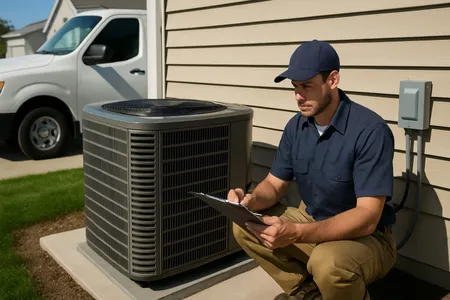
Furnace replacement cost varies widely from home to home — it depends on the type of furnace, efficiency rating, home size, installation complexity, and where you live. There’s no single number that fits every house; the way to know your actual price is a written, itemized quote after a technician has looked at your system and your home.
Whether your current furnace finally gave out after 20 years or you are planning ahead before the next cold snap, this guide covers everything you need to know about what drives furnace replacement pricing in 2026, broken down by furnace type and efficiency level, so you can ask the right questions and avoid overpaying.
Furnace Types at a Glance
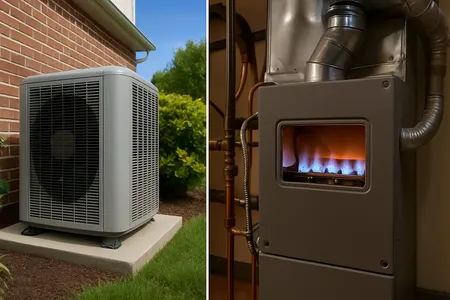
Gas furnaces remain the most popular choice, installed in roughly 47% of American homes. Electric furnaces cost less upfront but typically have higher operating costs. Oil furnaces are the most expensive to install and are concentrated in the Northeast. Dual fuel systems pair a heat pump with a gas furnace for maximum efficiency across all temperature ranges.
Furnace Replacement Cost by Type
Each furnace type has a different price range, operating cost, and set of trade-offs. Here is what to expect for each in 2026.
Gas Furnace Replacement Cost
Gas furnaces are the most commonly installed furnaces in the United States and offer the best balance of upfront cost and long-term operating efficiency. Installation cost varies significantly based on the efficiency rating you choose — higher-AFUE equipment costs more upfront but lowers your monthly bills.
What AFUE means for your wallet: An 80% AFUE furnace converts 80 cents of every dollar of gas into heat, while a 96% AFUE model converts 96 cents. Over a 15-year lifespan, upgrading from 80% to 96% AFUE can meaningfully reduce fuel costs, with the exact savings depending on your climate and local gas prices.
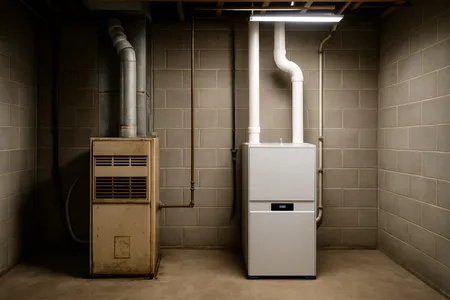
Standard efficiency gas furnaces use a natural draft or induced draft design and vent through a metal flue. High efficiency models use a secondary heat exchanger to extract additional heat from combustion gases, requiring PVC venting but delivering significantly lower utility bills.
Bottom line: For most homeowners, a 90-95% AFUE gas furnace offers the best value. You get meaningful energy savings without the premium price tag of the highest efficiency models. If you plan to stay in your home for 10+ years and live in a cold climate, the 96%+ tier often pays for itself over time — ask for pricing on both tiers when you get your quote.
Electric Furnace Replacement Cost
Electric furnaces are the most affordable option to purchase and install, but they are typically the most expensive to operate in most parts of the country.
Electric furnaces are 100% efficient at converting electricity to heat since there is no combustion or venting loss. However, electricity typically costs more per unit of heat than natural gas in most markets, so annual heating bills tend to run higher with an electric furnace than with a comparable gas system.
When electric furnaces make sense:
- Your home does not have a gas line, and extending one would add meaningfully to the project cost
- You live in a mild climate where heating demand is low
- You are pairing it with solar panels to offset electricity costs
- You want the simplest, lowest-maintenance heating system
For a deeper comparison, see our guide on gas vs electric furnaces.
Oil Furnace Replacement Cost
Oil furnaces are most common in the Northeast, where natural gas infrastructure is limited, and they carry higher equipment, installation, and maintenance costs than gas or electric models.
Oil furnaces typically rate between 80% and 87% AFUE. Heating oil prices fluctuate significantly, so annual fuel costs can vary a lot year to year. Many homeowners in the Northeast are switching to heat pumps or dual fuel systems to reduce their dependence on oil pricing volatility.
Important: If your oil tank is underground and more than 15-20 years old, your municipality may require you to decommission it and install an above-ground tank, which adds to the project — ask your installer to price this separately if it applies to you.
Dual Fuel / Hybrid System Cost
A dual fuel system combines a heat pump with a gas furnace. This setup uses the heat pump for efficient heating in mild weather and automatically switches to the gas furnace when temperatures drop below the heat pump’s effective range (typically 25-35 degrees F).
Dual fuel systems deliver the lowest annual heating costs in moderate climates where temperatures regularly fluctuate above and below freezing. The heat pump component used to qualify for a federal tax credit under the 25C program, but that credit expired December 31, 2025 and no longer applies to 2026 installations — see our 2026 tax credits guide for what’s still available.
For a detailed comparison, read our guide on heat pump vs furnace.
Cost Breakdown: What You’re Paying For
Understanding where your money goes helps you evaluate quotes and negotiate fairly. Here’s roughly how a typical gas furnace installation breaks down by category — ask your quote to itemize each of these so you can compare apples to apples.
| Cost Component | % of Total |
|---|---|
| Furnace equipment | 40-60% |
| Labor and installation | 30-40% |
| Permits and inspections | 2-5% |
| Ductwork modifications | 0-15% |
| Old furnace removal and disposal | 1-3% |
| Miscellaneous materials | 3-5% |
Equipment (40-60% of total cost): The furnace unit itself is the largest single expense. Prices vary widely based on brand, efficiency, and BTU capacity — budget brands like Goodman and Amana sit at the lower end for an 80% AFUE model, while premium brands like Carrier, Trane, and Lennox cost more for a high-efficiency variable-speed unit.
Labor and installation (30-40%): A standard furnace swap where the new unit matches the old one in size and type takes 4 to 8 hours. Conversions (such as switching from oil to gas) take longer and cost more because they require new venting, gas lines, and sometimes electrical work.
Permits and inspections (2-5%): Most municipalities require a mechanical permit for furnace installation. Some areas also require a post-installation inspection to verify code compliance. Never skip permits since unpermitted work can create problems when selling your home.
Ductwork modifications (0-15%, if needed): If your new furnace is a different size or type than the old one, your ductwork may need modifications. Common adjustments include resizing the plenum, adding or modifying supply runs, or sealing leaky connections. Homes with significantly undersized or deteriorated ductwork may need more extensive work.
Old furnace removal (1-3%): Most installers include basic removal and disposal in their quote. If your old furnace is in a difficult-to-access location like a tight crawl space, expect that to add a bit more.
Factors That Affect Your Furnace Replacement Cost
No two furnace installations are exactly alike. These factors have the biggest impact on your final price.
Furnace Size (BTU Rating)
The right furnace size is determined by your home’s square footage, insulation quality, climate zone, and layout. An oversized furnace wastes energy and cycles on and off too frequently, while an undersized unit runs constantly and struggles to keep up.
| Home Size | Recommended BTU Range |
|---|---|
| 1,000 - 1,200 sq ft | 40,000 - 60,000 BTU |
| 1,200 - 1,800 sq ft | 60,000 - 80,000 BTU |
| 1,800 - 2,500 sq ft | 80,000 - 100,000 BTU |
| 2,500 - 3,500 sq ft | 100,000 - 120,000 BTU |
| 3,500+ sq ft | 120,000 - 150,000 BTU |
A reputable installer will perform a Manual J load calculation to determine the correct size for your home. Be wary of contractors who simply match the size of your old furnace without doing this calculation since the original unit may have been improperly sized.
Efficiency Rating (AFUE)
Annual Fuel Utilization Efficiency (AFUE) measures what percentage of fuel is converted to heat. Higher AFUE costs more upfront but lowers your monthly bills.
- 80% AFUE: Minimum legal efficiency for non-condensing furnaces. Best for mild climates or budget-conscious buyers.
- 90-95% AFUE: The sweet spot for most homeowners. Qualifies as “condensing” technology with secondary heat exchanger.
- 96-98% AFUE: Premium efficiency. Best ROI in cold climates with high heating demand. (The federal tax credit that used to reward 95%+ AFUE equipment expired December 31, 2025.)
Brand Selection
Furnace brands fall into three general pricing tiers.
- Budget brands (Goodman, Amana, Payne): Solid warranties, straightforward designs. Generally the lowest equipment cost of the three tiers, and the best value for cost-conscious buyers.
- Mid-range brands (Rheem, Ruud, York, Heil): Good balance of features and price. Widely available parts and service.
- Premium brands (Carrier, Trane, Lennox, Bryant): Variable-speed blowers, advanced diagnostics, quieter operation. Generally the highest equipment cost of the three tiers, with the best long-term reliability ratings.
For a detailed brand comparison, check out our best HVAC brands guide.
Installation Complexity
A straightforward one-for-one replacement where the new furnace is the same type and similar size as the old one is the least expensive installation. Costs increase when:
- Fuel type conversion (oil to gas, electric to gas): Adds meaningfully to the cost for new gas lines, venting, and electrical modifications
- Relocating the furnace (basement to attic, closet to garage): Adds meaningfully to the cost for new ductwork, venting, and structural modifications
- Difficult access (tight crawl spaces, narrow staircases): Adds to labor time and cost
Ductwork Condition
If your existing ductwork is in good shape and properly sized for your new furnace, no modifications are needed. However, older homes often have ductwork problems that should be addressed during a furnace replacement.
- Minor sealing and repairs: the least expensive tier of duct work
- Partial duct replacement or resizing: a moderate addition to the project
- Complete duct replacement: the most expensive tier — worth pricing separately so it doesn’t get lost inside a furnace quote
Leaky ductwork can waste 20-30% of your heating energy, so investing in duct sealing during a furnace replacement often pays for itself quickly.
Location and Region
Where you live has a major impact on installation costs. Urban areas typically cost more than rural areas due to higher labor rates, permit fees, and overhead costs. States with strict energy codes may require higher-efficiency equipment as well.
Time of Year
Furnace contractors are busiest in fall and early winter when heating demand spikes. Scheduling your replacement in the off-season (late spring through early fall) can save you 5-15% on both equipment and labor. Many manufacturers and distributors also offer seasonal rebates during slower months.
Signs You Need a Furnace Replacement
Knowing when to replace your furnace (rather than repair it again) can save you from emergency breakdowns and wasted repair dollars. Watch for these warning signs.
-
Your furnace is 15-20+ years old. Most furnaces last 15 to 25 years depending on maintenance and usage. Once yours passes the 15-year mark, major component failures become increasingly likely. Use our HVAC age checker to look up your furnace’s exact age.
-
Your heating bills are climbing without explanation. A steady increase in energy bills despite consistent usage patterns often means your furnace is losing efficiency. A furnace that started at 80% AFUE can degrade to 60-70% near end of life.
-
You are calling for repairs more than once per heating season. Frequent breakdowns are the clearest sign that your furnace is on its way out. Once repairs start adding up over a season, replacement usually makes more financial sense — ask your technician to help you weigh cumulative repair spend against a replacement quote.
-
Your furnace makes unusual noises. Banging, popping, rattling, or squealing sounds indicate worn-out components. While individual noises can sometimes be repaired, multiple new sounds in an older furnace suggest widespread wear.
-
Rooms in your home heat unevenly. If some rooms are warm while others stay cold despite open vents, your furnace may be struggling to distribute heat effectively. This can indicate a failing blower motor, cracked heat exchanger, or undersized system.
-
Your furnace cycles on and off frequently. Short cycling (running for a few minutes, shutting off, then starting again) puts excessive wear on components and wastes energy. It can be caused by an oversized furnace, a failing flame sensor, or a cracked heat exchanger.
-
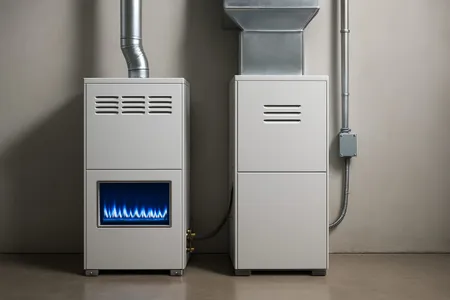
You notice a yellow burner flame instead of blue. A healthy gas furnace produces a steady blue flame. A yellow or flickering flame can indicate incomplete combustion and possible carbon monoxide production. This is a safety concern that warrants immediate professional inspection.
-
Your home feels dusty or the air quality has declined. An aging furnace can circulate more dust, allergens, and dry air. Cracks in the heat exchanger can also introduce combustion byproducts into your home’s air supply.
If you are unsure whether your furnace is worth fixing, read our guide on furnace not turning on for troubleshooting steps before calling for service.
Repair vs Replace: When Each Makes Sense
The decision to repair or replace your furnace comes down to age, repair cost, and overall condition.
Weigh the repair against the replacement. If a single repair would cost a large fraction of what a new furnace installation would run, replacement is almost always the smarter investment. Ask for both numbers — the repair quote and a ballpark on replacement — before authorizing a big-ticket furnace repair.
Repair makes sense when:
- Your furnace is less than 10 years old
- The repair is minor (flame sensor, igniter, blower capacitor) and inexpensive relative to a full replacement
- Your furnace has been well-maintained with annual tune-ups
- You are planning to sell the home within 1-2 years
Replace makes sense when:
- Your furnace is 15+ years old
- You are facing a major repair (heat exchanger, blower motor, control board) that represents a significant fraction of a replacement’s cost
- You have had 2+ repairs in the past year
- Your energy bills are significantly higher than they should be
- Your furnace uses R-22 refrigerant (for dual fuel systems) or has discontinued parts
Use our Repair or Replace Calculator to get a personalized recommendation based on your furnace’s age, repair history, and current condition.
How to Save Money on Furnace Replacement
A furnace replacement is a significant investment, but there are several legitimate ways to reduce what you pay.
Federal Tax Credits
The federal 25C tax credit for high-efficiency heating equipment expired December 31, 2025 under the One Big Beautiful Bill Act (OBBBA) — despite the Inflation Reduction Act’s original 2032 sunset date, Congress repealed it early. It no longer applies to equipment installed in 2026.
- High-efficiency gas furnace (95%+ AFUE): Up to $600 federal tax credit — only for equipment placed in service on or before 12/31/2025
- Heat pump (including dual fuel systems): Up to $2,000 federal tax credit — only for equipment placed in service on or before 12/31/2025
- If you installed before the deadline, these are tax credits, not deductions, meaning they reduce your tax bill dollar-for-dollar on your 2025 return
For 2026 installations, this credit is not available. For complete details on what’s still available, read our guide on HVAC Tax Credits and Rebates in 2026.
State and Utility Rebates
Many states and local utilities offer additional rebates for high-efficiency heating equipment. These can stack with federal tax credits. Check with your utility company and your state’s energy office for current programs and dollar amounts — rebates vary widely by state and utility.
Off-Season Installation
Scheduling your furnace replacement during spring or summer (May through August) can save you 5-15% compared to peak fall and winter pricing. Contractors have more availability, manufacturers offer seasonal promotions, and you avoid the urgency premium that comes with an emergency replacement in January.
Get Multiple Quotes
Always get at least three written quotes from licensed, insured HVAC contractors. Compare not just the total price but also the equipment brand and model, warranty terms, included accessories (thermostat, air filter, etc.), and what is covered versus what might be an add-on charge.
A wide range in quotes is normal. If one quote is dramatically lower than the others, ask what is different since it may indicate a lower-quality unit, less experienced installers, or corners being cut.
Financing Options
Most HVAC contractors offer financing through manufacturers or third-party lenders. Common options include:
- 0% APR promotional financing for 12-24 months (best option if you can pay it off within the promotional period)
- Low-rate loans at 5-10% APR for 5-10 year terms
- PACE financing (Property Assessed Clean Energy) available in some states, repaid through property taxes
If you qualify, 0% financing lets you install a higher-efficiency furnace that saves money on utilities from day one, effectively letting the energy savings help pay for the upgrade.
Frequently Asked Questions
How long does a furnace replacement take?
A standard furnace replacement takes 4 to 8 hours for a one-for-one swap where the new unit is the same fuel type and similar size. More complex installations involving fuel type conversions, ductwork modifications, or difficult access can take 1 to 2 full days.
How long does a new furnace last?
A properly maintained gas furnace lasts 15 to 25 years, with most lasting around 20 years. Electric furnaces can last 20 to 30 years since they have fewer mechanical components. Oil furnaces typically last 15 to 20 years. Regular annual maintenance is the single biggest factor in furnace longevity. Read our complete guide on how long a furnace lasts.
Is a high-efficiency furnace worth the extra cost?
In cold climates where your furnace runs 4+ months per year, a 96% AFUE furnace typically pays back its premium over a standard 80% model in 5-8 years through lower fuel bills. In mild climates with short heating seasons, the payback period stretches to 10-15 years, making a mid-efficiency model the better value.
Should I replace my furnace and AC at the same time?
If both systems are similar in age (15+ years), replacing them together is usually more cost-effective. You save on labor since the contractor is already on-site, and matched systems run more efficiently. Most contractors offer a discount when you bundle furnace and AC replacement together — ask what that looks like on your specific quote.
Can I install a furnace myself to save money?
We strongly advise against DIY furnace installation. Gas furnace installation requires working with natural gas lines, high-voltage electricity, and combustion venting, all of which pose serious safety risks if done incorrectly. Most jurisdictions require a licensed HVAC contractor for furnace installation, and DIY work will void the manufacturer’s warranty.
What is the best time of year to replace a furnace?
Late spring through early fall (May to September) offers the best pricing and widest selection of appointment times. Avoid waiting until your furnace fails in the middle of winter, when emergency replacement premiums, limited contractor availability, and rushed decision-making typically result in paying 10-20% more.
Do I need to replace my ductwork when I replace my furnace?
Not necessarily. If your ductwork is in good condition, properly sized, and reasonably well sealed, it can be reused with a new furnace. However, if your ducts are more than 20-25 years old, severely leaky, or undersized for your new system, addressing them during the furnace replacement is the most cost-effective time to do so.
What brand of furnace is the most reliable?
Based on industry reliability data and consumer reports, Carrier, Trane, and Lennox consistently rank as the most reliable premium brands. Rheem and York offer strong reliability at a lower price point. Goodman and Amana provide the best value for budget-conscious buyers with solid warranty coverage. The quality of the installation matters at least as much as the brand, so choosing an experienced, reputable contractor is critical.
Get Your Furnace Replacement Quote
Texas Temp Masters provides professional furnace installation and replacement services throughout Central Texas. Our licensed technicians help you choose the right furnace for your home and budget, handle all permits and inspections, and back every installation with a workmanship warranty.
Call us at (817) 704-0706 for a free in-home estimate, or visit our furnaces page to learn more about the brands and models we install.
We serve Killeen, Copperas Cove, Harker Heights, Temple, Belton, Gatesville, Lampasas, and surrounding Central Texas communities.
Next Steps
Use our free tools and guides to make an informed furnace replacement decision:
- Cost Estimator - Get a ballpark estimate based on your home size, location, and preferences
- Repair or Replace Calculator - Find out if repairing your current furnace makes more financial sense
- HVAC Age Checker - Look up your current furnace’s age by serial number
- Gas vs Electric Furnace - Detailed comparison to help you choose the right fuel type
- How Long Does a Furnace Last? - Lifespan data by brand and type
- HVAC Tax Credits Guide - Complete breakdown of available federal and state incentives