The furnace debate often comes down to one question: gas or electric? Both heat your home effectively, but they differ in upfront costs, operating expenses, safety, and environmental impact. This guide helps you make an informed decision based on your specific situation.
Quick Comparison: Gas vs Electric Furnace
| Feature | Gas Furnace | Electric Furnace |
|---|---|---|
| Fuel source | Natural gas or propane | Electricity |
| Upfront cost (installed) | Higher (gas lines, venting) | Lower |
| Annual operating cost | Typically lower | Typically higher |
| Efficiency (AFUE) | 80% - 98.5% | 95% - 100% |
| Lifespan | 15 - 20 years | 20 - 30 years |
| Annual maintenance | Higher (required for safety) | Lower |
| Safety concerns | CO risk, gas leaks | Minimal |
| Installation complexity | Higher (gas, venting) | Lower |
| Environmental impact | Direct emissions | Depends on grid source |
| Best climate | Cold winters | Mild winters |
How Each System Works
Gas Furnace
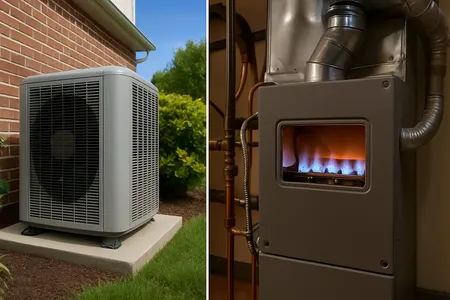
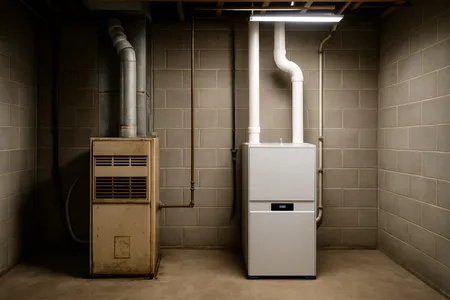
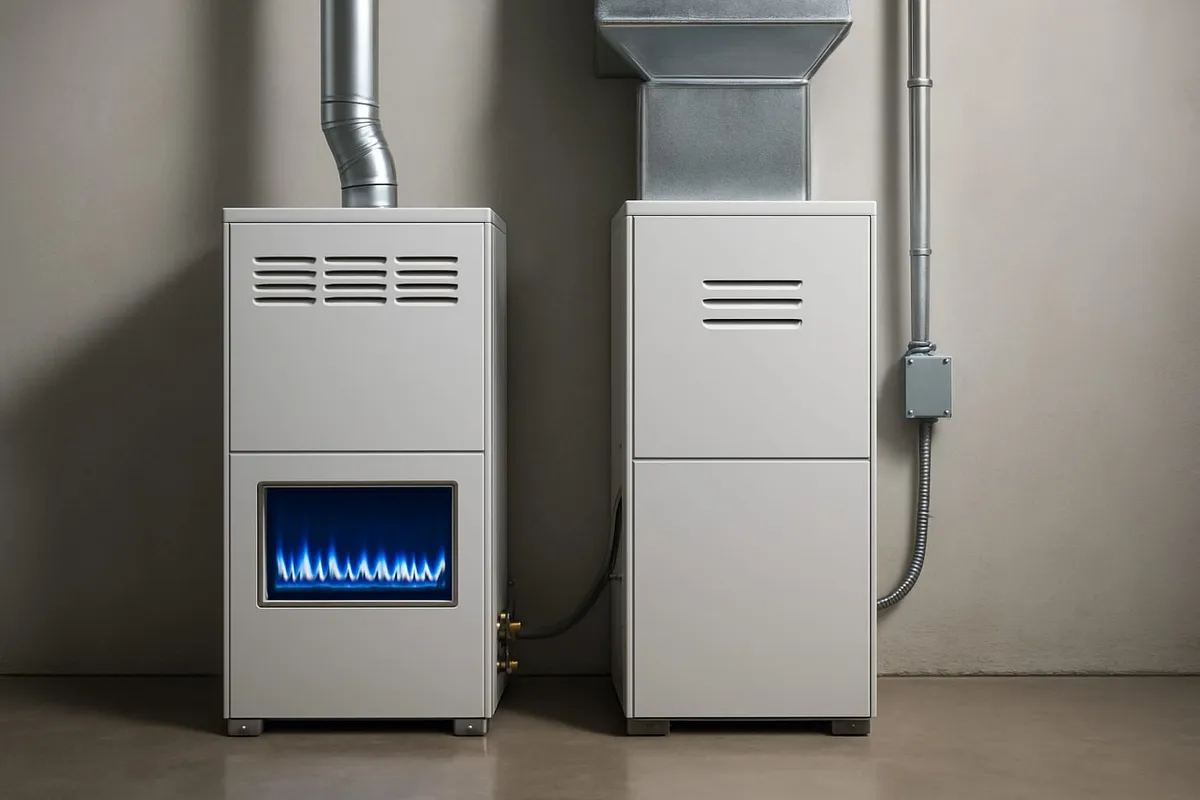
A gas furnace burns natural gas (or propane) in a combustion chamber. The heat from combustion warms a metal heat exchanger, and a blower fan pushes air across the hot exchanger and into your ductwork. Combustion byproducts (carbon dioxide, water vapor, and trace gases) are vented outside through a flue.
Modern gas furnaces come in two venting types:
- Standard efficiency (80% AFUE): Uses a metal flue that vents through the roof
- High efficiency (90%+ AFUE): Uses PVC pipes that vent through a side wall, recovering more heat from combustion gases
Electric Furnace
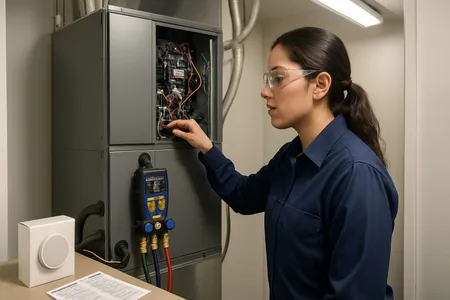
An electric furnace heats air using electric resistance heating elements, similar to a large-scale version of a space heater or toaster. Air passes over the heated coils and is blown into your ductwork. There is no combustion, no flue, and no gas connections needed.
Electric furnaces are nearly 100% efficient at converting electricity to heat. However, because generating electricity itself involves energy losses at the power plant, the overall system efficiency is lower than the 100% figure suggests.
Pros and Cons
Gas Furnace Pros
- Lower operating costs: Natural gas typically costs less per BTU than electricity, which usually keeps heating bills lower than an equivalent electric furnace
- Faster, more intense heat: Delivers air at 120 to 140 degrees Fahrenheit for quick warm-up
- Better for cold climates: Handles heavy heating loads efficiently
- Lower total cost of ownership in most cases: despite higher upfront costs, lower operating costs typically pay back the difference within several years — how many depends on your local utility rates and how much you heat
- Reliable during power fluctuations: Some models work with a battery backup or generator
Gas Furnace Cons
- Higher installation cost: due to gas lines, venting, and combustion air requirements
- Safety concerns: Risk of carbon monoxide leaks (mitigated by proper maintenance and CO detectors)
- Requires gas line: Not available in all areas; propane adds cost
- More maintenance needed: Annual professional tune-ups are critical for safety
- Shorter lifespan: 15 to 20 years vs. 20 to 30 for electric
- Environmental impact: Burns fossil fuel directly
Electric Furnace Pros
- Lower installation cost: no gas line or venting to install, significantly cheaper upfront
- Longer lifespan: 20 to 30 years with simpler, fewer components
- Safer: No combustion, no carbon monoxide risk, no gas leak potential
- Less maintenance: Simpler systems need less frequent service
- Available everywhere: Only requires an electrical connection
- Smaller footprint: Compact units fit in tight spaces
- Potentially cleaner: No direct emissions (grid-dependent)
Electric Furnace Cons
- Higher operating costs: Electricity typically costs 2 to 3 times more per BTU than natural gas
- Slower heat delivery: Air temperature of 90 to 110 degrees Fahrenheit feels less warm than gas
- Less effective in extreme cold: Higher electricity bills during heavy heating periods
- Dependent on electrical grid: No heat during power outages (same for gas furnaces with electronic ignition, though)
- Higher carbon footprint in some areas: If local electricity comes primarily from fossil fuels
Cost Comparison
Installation Costs
A gas furnace installation costs more upfront than an equivalent electric furnace, mainly because of the gas line, venting, and combustion-air work an electric furnace doesn’t need — electrical work adds to the electric furnace’s cost instead, but by less. Equipment, labor, and permit costs both vary by home and by contractor. Request a written, itemized quote from your installer for your specific home.
Annual Operating Costs
Which one costs less to run depends entirely on your local gas and electric rates — natural gas is cheaper than electricity per BTU in most of the country, but not everywhere. Maintenance runs a bit higher for gas (the annual safety tune-up) than for electric.
Total Cost of Ownership Over Time
Add installation, 15-20 years of operating cost, maintenance, and (for gas) a shorter expected lifespan that may mean an earlier replacement, and the two options often land closer together than the upfront price difference suggests — sometimes gas wins on lifetime cost, sometimes electric does, depending on local energy prices. Your local gas and electric rates can shift the answer either way. Use our Energy Savings Calculator for a personalized estimate.
For detailed furnace pricing, see our Furnace Replacement Cost guide.
Which Is Better for Different Situations
Choose a Gas Furnace If:
- You live in a cold climate with harsh, prolonged winters
- Natural gas is available and affordable in your area
- You prioritize low monthly heating bills over upfront savings
- You prefer fast, intense heat that warms your home quickly
- Your home already has a gas line and compatible venting
Choose an Electric Furnace If:
- You live in a mild climate where heating demand is modest
- Natural gas is unavailable or expensive in your area
- Your budget is limited and upfront cost is the priority
- You prioritize safety and want to avoid combustion risks
- You plan to pair with solar panels to offset electricity costs
- Your home lacks gas infrastructure and adding it would be costly
Consider a Heat Pump Instead
Before choosing either furnace type, consider a heat pump. In mild to moderate climates, a heat pump provides both heating and cooling at 200% to 400% efficiency, often making both gas and electric furnaces unnecessary. Read our Heat Pump vs Furnace comparison for details.
Expert Recommendation
For most homeowners, the decision comes down to three factors:
- Climate severity: Cold climates strongly favor gas furnaces for their lower operating costs during heavy use
- Gas availability: If gas is not available, electric furnaces or heat pumps are your options
- Local energy prices: Compare your cost per therm (gas) to cost per kWh (electric) to see which fuel is cheaper per BTU in your area
The general rule: If you have access to affordable natural gas and live in a cold climate, choose a gas furnace. If you live in a mild climate, are in an all-electric home, or gas is expensive in your area, an electric furnace (or better yet, a heat pump) makes more sense.
Frequently Asked Questions
Which is cheaper to run, gas or electric furnace?
Gas furnaces are typically cheaper to run because natural gas costs less per BTU than electricity in most of the United States. However, the exact savings varies by region and local utility rates — compare your own gas and electric rates for an accurate picture.
Which is safer, gas or electric furnace?
Electric furnaces are inherently safer because they have no combustion process, no gas lines, and produce no carbon monoxide. Gas furnaces are safe when properly installed and maintained, but they do carry a small risk of CO leaks and gas line issues. Carbon monoxide detectors are essential with any gas appliance.
How long does each furnace type last?
Gas furnaces last 15 to 20 years, while electric furnaces last 20 to 30 years. The longer electric furnace lifespan is due to fewer moving parts and no combustion-related wear. Both lifespans assume regular professional maintenance.
Can I switch from gas to electric or vice versa?
Yes, but conversions involve additional costs. Switching from electric to gas requires running a gas line and installing venting. Switching from gas to electric may require an electrical panel upgrade. Ask a contractor for a written quote on the conversion before deciding.
Is an electric furnace the same as a heat pump?
No. An electric furnace generates heat using resistance coils (100% efficient). A heat pump transfers heat from outdoor air (200% to 400% efficient). Heat pumps are significantly more efficient for heating and also provide cooling. An electric furnace is essentially a backup or supplemental heating option.
In Central Texas? Texas Temp Masters installs both gas and electric furnaces, as well as heat pumps. We will help you choose the most cost-effective heating solution for your home. Call (817) 704-0706 for a free consultation, or visit our Furnaces page for more information.
Next Steps
Ready to take the next step toward the right furnace for your home? These tools and guides can help:
- Estimate your installation cost — Use our HVAC Cost Estimator to get a ballpark price for the furnace type and efficiency level you are considering.
- Compare energy costs with your local rates — Our Energy Cost Calculator lets you plug in your gas and electric rates to see which fuel type saves you more each year.
- Get detailed pricing — Read our furnace replacement cost guide for a full breakdown of equipment, labor, and additional costs by furnace type and size.
- Check your current furnace’s remaining life — Learn how long furnaces typically last to decide whether it is time to replace now or plan for the future.
- Ready to talk? — Contact us for a free in-home consultation and side-by-side quote for gas and electric options.