Daikin and Mitsubishi Electric are the two benchmark names in ductless mini-splits, and for a Central Texas home you can buy either with confidence — the real decision usually comes down to which brand has the stronger installer near you and which quote makes sense. The honest headline differences: Mitsubishi leads in extreme-cold heating performance (its Hyper-Heating H2i line) and single-zone refinement; Daikin offers broader price flexibility, a wider product catalog, and — since Daikin owns Goodman and builds heavily in Texas — a very deep dealer and distribution network here. This comparison covers what actually differs and what doesn’t.
Quick Comparison: Daikin vs Mitsubishi
| Factor | Daikin | Mitsubishi Electric |
|---|---|---|
| Country of origin | Japan | Japan |
| US manufacturing/presence | Massive Texas campus (Daikin Comfort Technologies; parent of Goodman/Amana) | US operations incl. the METUS joint venture (Mitsubishi Electric Trane HVAC US) |
| Product range | Very broad — budget through premium, mini-splits through VRV | Focused premium ductless and VRF lineup |
| Cold-climate heating | Strong (Daikin Aurora/premium lines) | Class leader (Hyper-Heating H2i) |
| Efficiency ceiling | Among the highest available | Among the highest available |
| Warranty (registered, credentialed installer) | Up to 12-year parts through participating dealers | Up to 12-year parts/compressor through Diamond Contractors |
| Dealer network in Central Texas | Very deep | Strong but more selective |
| Price positioning | More room at the value end | Premium-consistent |
| Best fit | Multi-zone projects on a budget, whole-home ductless, buyers who want options | Single-zone comfort, design-sensitive rooms, maximum heating performance |
Where Mitsubishi Wins
- Heating performance. Mitsubishi’s H2i (Hyper-Heating) systems maintain rated heating capacity far below freezing. In most of Texas that’s insurance rather than necessity — but for an all-electric home riding out a February cold snap, it’s meaningful insurance.
- Quiet, refined single-zone units. Mitsubishi’s wall units are consistently among the quietest in class, and the controls ecosystem (Kumo Cloud) is mature.
- Installer specialization. The Diamond Contractor program is selective, and it shows in workmanship consistency. A Mitsubishi installed by a Diamond Contractor is one of the safest purchases in HVAC.
Where Daikin Wins
- Price flexibility and breadth. Daikin fields everything from value single-zones to premium multi-zone and VRV systems. If the Mitsubishi quote stings, a Daikin dealer usually has a tier that fits without leaving the brand’s quality umbrella.
- The Texas factor. Daikin’s North American headquarters and manufacturing campus sit outside Houston, and its ownership of Goodman means an enormous distribution footprint in this state. Practically: more dealers quoting, and strong parts availability.
- Multi-zone value. For a 3–5 zone whole-home ductless project, Daikin’s pricing is frequently the sharper pencil.
What’s Effectively a Tie
- Reliability. Both are mature inverter platforms with strong field reputations. Either brand’s failure story is dominated by installation quality and maintenance, not design.
- Cooling performance in Texas heat. Both brands’ units carry excellent SEER2/EER ratings and modulate smoothly through 100°F+ afternoons. Nobody buying either brand for cooling in Killeen or Waco is under-served.
- Warranty, in practice. Both offer up to 12-year coverage tied to registration and credentialed installation. Read the terms of the actual quote — the installer’s program status determines what you really get, for both brands.
The Thing That Matters More Than the Brand
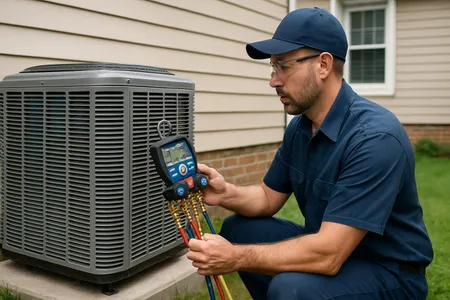
Mini-splits are the most installation-sensitive equipment in residential HVAC. Line-set length and routing, a proper deep vacuum before charging, correct charge adjustment, head placement relative to the room’s load, and condensate management decide whether you get the rated efficiency and a 18-year life — or callbacks. A mid-tier unit installed excellently beats a flagship installed carelessly, every time. Interview the installer: How many of this brand did you install last year? Are you credentialed with them? Who handles warranty service, you or the manufacturer?
For cost expectations before you collect quotes, see our mini-split cost guide; if you’re still deciding between ductless and ducted, start with mini-split vs. central AC.
Already Own One of These Brands?
- Mitsubishi throwing a code? Our Mitsubishi mini-split error code guide decodes the blinking lights and P/E codes.
- Wondering how old the system is? The HVAC Age Decoder reads Daikin and Mitsubishi serial numbers.
- Annual maintenance matters more on inverter equipment, not less — clean coils and filters keep the electronics living in their comfort zone. See HVAC maintenance costs.
Get a Straight Answer on Ductless
Texas Temp Masters services Daikin, Mitsubishi, and other major ductless brands across Central Texas, and we’ll tell you honestly which brand’s local installation and support picture is stronger for your specific project.
Call us at (817) 704-0706 for mini-split repair, maintenance, or a no-pressure conversation about a new installation. Same-day appointments available across Central Texas.