Washers and dryers are essential household appliances that most families use multiple times per week. Knowing how long they should last, which brands are most reliable, and when it is time to repair versus replace helps you budget wisely and avoid the disruption of an unexpected breakdown.
Quick Answer: How Long Do Washers and Dryers Last?
Washing machines last 10 to 14 years on average, while dryers last 10 to 13 years. However, these numbers vary significantly based on the type, brand, usage frequency, and maintenance habits.
| Appliance Type | Average Lifespan |
|---|---|
| Top-Load Washer (agitator) | 12–14 years |
| Top-Load Washer (impeller/HE) | 10–13 years |
| Front-Load Washer | 10–12 years |
| Electric Dryer | 10–13 years |
| Gas Dryer | 11–14 years |
| Washer-Dryer Combo (all-in-one) | 8–12 years |
| Stackable Units | 10–13 years |
Traditional top-load washers with agitators tend to last the longest because they have simpler mechanics and fewer electronic components. Front-load washers offer superior cleaning performance and water efficiency but have more complex parts and are more susceptible to mold and seal issues.
Gas dryers typically outlast electric dryers by one to two years because they operate at lower temperatures and dry clothes faster, reducing total operating time and wear on internal components.
Washer and Dryer Lifespan by Brand
Washing Machine Lifespan by Brand
| Brand | Expected Lifespan | Notable Features |
|---|---|---|
| Speed Queen | 20–25 years | Commercial-grade construction |
| Miele | 15–20 years | Tested for 20 years / 10,000 cycles |
| ASKO | 15–20 years | Scandinavian engineering |
| Bosch | 12–15 years | Compact, efficient design |
| Maytag | 10–14 years | 10-year motor warranty |
| Whirlpool | 10–14 years | Reliable mid-range option |
| GE | 10–13 years | Wide model range |
| LG | 10–13 years | Advanced technology features |
| Samsung | 10–12 years | Feature-rich but mixed reliability |
| Amana | 8–12 years | Budget-friendly basics |
Dryer Lifespan by Brand
| Brand | Expected Lifespan | Notable Features |
|---|---|---|
| Speed Queen | 18–25 years | Commercial-grade construction |
| Miele | 15–20 years | Heat pump drying available |
| Bosch | 12–15 years | Ventless options available |
| Maytag | 10–14 years | Heavy-duty construction |
| Whirlpool | 10–13 years | Reliable workhorse |
| GE | 10–13 years | Broad product line |
| LG | 10–13 years | Steam technology available |
| Samsung | 10–12 years | Smart features |
Speed Queen dominates the longevity category by a wide margin. Their residential machines are built on their commercial laundry platform and are designed to handle 10,400 cycles (25 years at 8 loads per week). Miele is the premium European alternative, testing their machines to 10,000 cycles, which they estimate equals 20 years of typical household use.
7 Factors That Affect Washer and Dryer Lifespan
1. Usage Frequency
A family of five doing 10+ loads per week will wear through components much faster than a couple doing 3 to 4 loads. The average American household does about 300 loads of laundry per year. Units designed for heavier use, like Speed Queen, are built to handle significantly more.
2. Load Size
Consistently overloading your washer or dryer is one of the fastest ways to shorten its lifespan. Overloading strains the motor, suspension system, bearings, and drum in the washer, and the motor, drum rollers, and belt in the dryer. Follow the manufacturer’s capacity guidelines.
3. Water Quality
Hard water leaves mineral deposits on washer components, including the drum, pump, and hoses. These deposits reduce efficiency and can cause premature failure of seals and valves.
4. Maintenance Habits
Regular cleaning of the lint trap, dryer vent, washer drum, and door gasket (on front-loaders) prevents the most common problems that shorten lifespan. Neglected dryer vents are particularly dangerous, as lint buildup is a leading cause of house fires.
5. Installation Quality
Improper leveling causes excessive vibration that damages bearings, suspension springs, and internal components. Both washers and dryers must be level on all four feet to operate properly.
6. Detergent Use
Using too much detergent, or using non-HE detergent in a high-efficiency washer, creates excess suds that strain the pump, leave residue inside the drum, and can cause mold growth. Always follow the manufacturer’s detergent recommendations.
7. Dryer Vent Condition
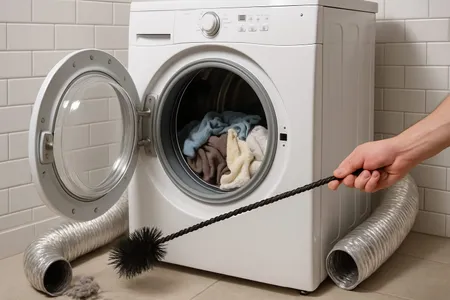
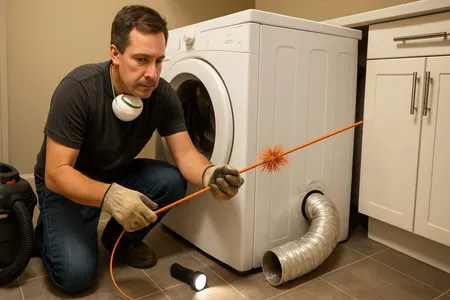
A clogged dryer vent forces the dryer to work harder and run longer to dry clothes. This increases wear on the motor, heating element, and thermostat. Clean your dryer vent at least twice per year. See our complete guide on how to clean a dryer vent.
Warning Signs Your Washer Is Failing
1. Excessive Vibration or Walking
If your washer shakes violently or “walks” across the floor during spin cycles, the suspension springs, shock absorbers, or drum bearings may be worn. While leveling the machine may help initially, persistent vibration on a level surface indicates internal component wear.
2. Water Not Draining Properly
Standing water after a cycle means the drain pump may be failing, the drain hose may be kinked or clogged, or there is a blockage in the pump filter.
3. Leaking Water
Leaks can come from worn hoses, a failing pump seal, a cracked tub, or a deteriorating door gasket on front-loaders. Any water leak should be addressed immediately to prevent floor damage.
4. Moldy Smell (Front-Loaders)
A persistent musty or moldy odor in front-load washers usually indicates mold growth behind the door gasket or inside the outer tub. While regular cleaning can manage this, severe mold contamination may require gasket replacement or professional cleaning.
5. Clothes Not Coming Clean
If clothes emerge still dirty despite proper detergent use and cycle selection, the agitator, wash plate, or pump may be losing effectiveness.
Warning Signs Your Dryer Is Failing
1. Clothes Taking Multiple Cycles to Dry
The most common sign of a failing dryer. This could indicate a clogged vent (check that first), a failing heating element, a worn blower wheel, or a malfunctioning thermostat.
2. Burning Smell
A burning smell during operation could indicate lint buildup near the heating element, a failing belt, or an overheating motor. Stop the dryer immediately and investigate. If lint is the cause, clean the vent system thoroughly.
3. Unusual Noises
Thumping sounds may indicate worn drum rollers or a damaged belt. Squealing or screeching often means a worn belt or failing idler pulley. Grinding suggests bad drum bearings.
4. Dryer Gets Excessively Hot
If the dryer exterior or clothes feel unusually hot, the thermostat or thermal fuse may be failing. This is both an efficiency issue and a fire hazard.
5. Drum Not Spinning
If the motor runs but the drum does not turn, the drive belt is likely broken. This is one of the most common and least expensive dryer repairs.
Maintenance Tips to Extend Washer and Dryer Life
Washer Maintenance
-
Leave the door open after each wash. Especially important for front-loaders, this allows the drum and gasket to dry, preventing mold and mildew growth.
-
Run a cleaning cycle monthly. Use a washer cleaning tablet or two cups of white vinegar with a hot water cycle to remove soap residue, mineral deposits, and bacteria.
-
Clean the door gasket (front-loaders). Wipe down the rubber gasket and its folds after each use to remove moisture and debris.
-
Inspect hoses annually. Replace rubber supply hoses every 3 to 5 years, or upgrade to braided stainless steel hoses that last much longer and are less likely to burst.
-
Level the machine. Check periodically that all four feet are firmly on the ground and the machine is level.
Dryer Maintenance
-
Clean the lint trap before every load. This is the single most important maintenance task for your dryer.
-
Deep clean the dryer vent twice per year. A clean vent improves drying efficiency, reduces energy costs, and prevents fires. Read our full guide on how to clean a dryer vent.
-
Vacuum behind and around the dryer regularly. Lint accumulates around and behind the dryer, which is a fire hazard.
-
Avoid overloading. Overloading forces the dryer to run longer cycles, increasing wear on all components.
-
Use the moisture sensor setting. If your dryer has a moisture sensor, use it instead of timed drying. The dryer stops when clothes are dry, reducing unnecessary heat exposure and energy use.
Use our Maintenance Checklist Tool to stay on top of washer and dryer care.
Repair vs. Replace Decision Guide
Washer Repair Costs
| Repair | Worth It? |
|---|---|
| Pump replacement | Yes, if under 8 years old |
| Control board | Only under 5 years old |
| Drum bearings | Yes, if under 7 years old |
| Door gasket (front-load) | Yes |
| Suspension springs/shocks | Yes, if under 8 years old |
| Motor replacement | Only under 5 years old |
Dryer Repair Costs
| Repair | Worth It? |
|---|---|
| Belt replacement | Almost always yes |
| Heating element | Yes, if under 10 years old |
| Drum rollers | Yes, if under 8 years old |
| Thermostat / thermal fuse | Yes |
| Motor replacement | Only under 7 years old |
| Control board | Only under 5 years old |
General Guidelines
- Under 5 years: Repair almost anything
- 5 to 8 years: Repair if cost is under 50 percent of a new unit
- 8 to 12 years: Only minor, inexpensive repairs
- Over 12 years: Replace unless it is a very simple fix
Should You Replace Both at the Same Time?
If one unit fails and is old enough to warrant replacement, consider whether the matching unit is also approaching the end of its life. Matching washer and dryer sets from the same brand often share compatible features and stack together properly. However, there is no technical reason you must replace both simultaneously.
Use our Repair or Replace Calculator for a personalized recommendation.
Frequently Asked Questions
Are front-load washers worth it despite the shorter lifespan?
Front-load washers clean better, use 40 to 50 percent less water, use less detergent, and are gentler on clothes. The shorter lifespan is partly offset by lower operating costs and superior cleaning performance. If you choose a front-loader, commit to the additional maintenance (leaving the door open, cleaning the gasket) to maximize its life.
How do I find the age of my washer or dryer?
Check the model and serial number plate, usually found inside the door frame, on the back panel, or under the lid. The serial number encodes the manufacture date. Our Appliance Age Decoder can help you find the date for all major brands.
Is Speed Queen worth the premium price?
Speed Queen costs more upfront than most mid-range brands. However, with a 25-year expected lifespan, the cost per year of use is often lower than cheaper alternatives that need replacement in 10 to 12 years. For buyers who prioritize longevity and simplicity over smart features, Speed Queen is an excellent investment.
Why does my front-load washer smell bad?
Front-load washers are susceptible to mold and mildew growth because the door gasket traps moisture. Always leave the door ajar after washing, wipe down the gasket, and run a monthly cleaning cycle to prevent odor buildup.
How many loads per week is too many?
Most residential washers are designed to handle 5 to 8 loads per week without excessive wear. Consistently running more than 10 loads per week accelerates component wear and may justify investing in a commercial-grade model like Speed Queen.
Need help with your washer or dryer? Use our Repair or Replace Calculator to see if repair makes sense. In Central Texas? Texas Temp Masters offers expert appliance repair and can help you decide the best path forward. Call (817) 704-0706 to schedule service.
Next Steps
Keep your laundry appliances running longer and plan for what is next:
- Diagnose dryer problems early — Use our Troubleshooter for guided help identifying what is wrong with your washer or dryer before a small issue becomes a big repair.
- See how much a new unit could save — Our Energy Savings Calculator compares your current appliance’s energy use against modern ENERGY STAR models so you can weigh the long-term cost.
- Dryer not heating? — Our step-by-step dryer not heating guide walks you through every common cause from clogged vents to failed heating elements.
- Compare lifespans across all appliances — Our appliance lifespan chart covers 20+ appliances to help you budget for replacements before they surprise you.
- Ready to talk? — Contact us for a free evaluation.