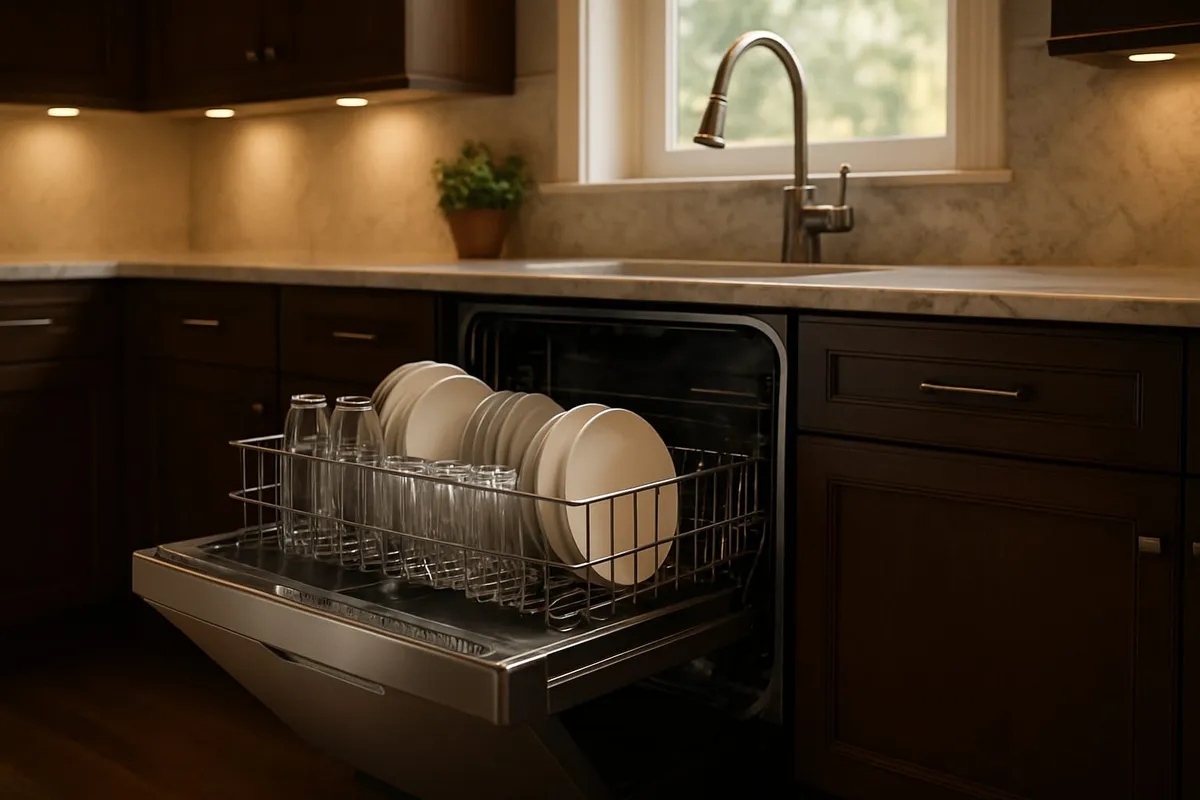
The dishwasher is one of those appliances you rely on every day without giving it much thought, until it stops working properly. Understanding how long your dishwasher should last and recognizing the warning signs of failure can help you avoid the inconvenience of a sudden breakdown and make smart decisions about repair versus replacement.
Quick Answer: How Long Does a Dishwasher Last?
The average dishwasher lasts about 10 years, with most units falling in the 9 to 12 year range. Higher-quality models from premium brands can last 15 years or more, while budget models may start experiencing issues as early as 7 years.
| Usage Level | Expected Lifespan |
|---|---|
| Daily use (7+ loads/week) | 6–8 years |
| Moderate use (3–5 loads/week) | 10–12 years |
| Light use (1–2 loads/week) | 13–16 years |
Usage frequency is one of the most significant factors affecting lifespan. A family of five running the dishwasher twice a day will wear through components much faster than a couple running it a few times per week.
Dishwasher Lifespan by Brand
| Brand | Expected Lifespan | Price Tier |
|---|---|---|
| Miele | 15–20 years | Premium |
| Bosch | 12–16 years | Premium |
| KitchenAid | 10–15 years | Mid-Premium |
| Whirlpool | 10–13 years | Mid-Range |
| Maytag | 10–13 years | Mid-Range |
| GE | 10–12 years | Mid-Range |
| LG | 10–12 years | Mid-Range |
| Samsung | 8–12 years | Mid-Range |
| Frigidaire | 8–11 years | Budget |
| Beko | 7–10 years | Budget |
Miele stands apart with dishwashers tested to last 20 years, equivalent to approximately 7,000 wash cycles. Their premium build quality, stainless steel internal tubs, and commercial-grade components justify the higher price for homeowners who value longevity. Bosch is the most popular premium dishwasher brand in the United States and offers excellent durability with quieter operation.
5 Factors That Affect Dishwasher Lifespan
1. Water Quality
Hard water is one of the biggest threats to dishwasher longevity. Mineral deposits build up on spray arms, heating elements, and internal components, reducing cleaning performance and eventually causing mechanical failures. If your home has hard water (above 120 ppm), consider using a water softener or adding rinse aid to every cycle.
2. Usage Frequency
More cycles mean more wear on the pump motor, spray arms, door latch, and other moving parts. However, running the dishwasher regularly is actually better than letting it sit unused for extended periods, which can cause seals to dry out and gaskets to crack.
3. Loading Practices
Overloading blocks the spray arms and forces the unit to work harder. Placing heavy items on the upper rack can damage the rack mechanism over time. Following the manufacturer’s loading guidelines helps components last longer.
4. Detergent Type and Amount
Using too much detergent creates excess suds that strain the pump and leave residue on internal parts. Using the wrong type of detergent (such as regular dish soap) can cause foam overflow and damage the pump seal. Always use dishwasher-specific detergent in the recommended amount.
5. Maintenance Habits
Regular cleaning of the filter, spray arms, and door gasket prevents food debris from clogging components and creating odors. Units that receive regular maintenance last significantly longer than those that are neglected.
6 Warning Signs Your Dishwasher Is Failing
1. Dishes Come Out Dirty
If your dishes consistently come out with food residue, film, or cloudy spots despite proper loading and detergent use, internal components like the spray arms, pump, or heating element may be deteriorating.
2. Water Remaining After Cycle
Standing water at the bottom of the tub after a complete cycle indicates a drainage problem. This could be a clogged filter, a failing drain pump, or a blocked drain hose.
3. Persistent Odors
A foul smell that persists even after cleaning the filter and interior often indicates hidden mold growth in areas you cannot easily reach, such as inside the pump housing or behind the tub seal.
4. Leaking Water
Water on the floor around your dishwasher can indicate a worn door gasket, a cracked tub, a loose hose connection, or a failing pump seal. Any leak should be addressed promptly to prevent water damage to flooring and cabinets.
5. Unusual Noises
Grinding, humming, or rattling sounds during operation suggest a failing pump motor, a broken wash impeller, or debris caught in the pump. While some operational noise is normal, any change in sound pattern warrants investigation.
6. Dishes Not Hot After Cycle
Your dishes should be hot at the end of a wash cycle. Cool or lukewarm dishes after a heated dry cycle indicate the heating element is failing, which also means the water is not reaching the temperature needed for proper sanitization.
Maintenance Tips to Extend Dishwasher Life
-
Clean the filter monthly. Most modern dishwashers have a removable filter at the bottom of the tub. Remove it, rinse it under running water, and scrub away any food debris with a soft brush. A clogged filter reduces cleaning performance and strains the pump.
-
Run a cleaning cycle monthly. Place a cup of white vinegar in a dishwasher-safe container on the top rack and run an empty hot water cycle. This dissolves mineral deposits, removes grease, and freshens the interior. Alternatively, use a commercial dishwasher cleaner.
-
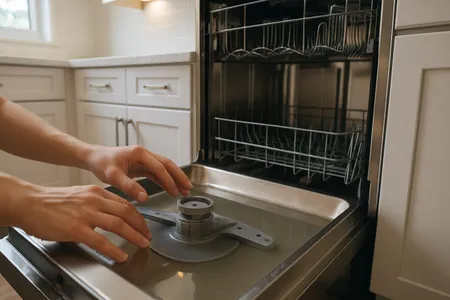
Inspect and clean the spray arms. Remove the spray arms and check each nozzle for clogs. Use a toothpick or thin wire to clear any blocked holes. Clogged nozzles reduce water pressure and cleaning effectiveness.
-
Wipe down the door gasket regularly. The rubber seal around the door traps food particles and moisture, creating conditions for mold and mildew. Wipe it down with a damp cloth weekly.
-
Use rinse aid. Rinse aid helps water sheet off dishes and reduces mineral spotting. It also helps the drying process, reducing moisture inside the unit that can promote mold growth.
-
Run hot water before starting. Turn on the kitchen faucet and let it run until the water is hot before starting the dishwasher. This ensures the first fill cycle uses hot water for better cleaning results and reduces strain on the heating element.
Repair vs. Replace Decision Guide
The Repair Threshold
If the repair costs more than 50 percent of a new comparable dishwasher, replacement is usually the better financial choice. For dishwashers over 8 years old, the threshold drops to about one-third of the replacement cost, since additional failures are likely.
Common Repairs and Whether They’re Worth It
| Repair | Worth Repairing? |
|---|---|
| Door latch / gasket | Yes |
| Control board | Only under 7 years old |
| Drain pump | Yes, under 8 years old |
| Wash motor | Only under 5 years old |
| Heating element | Yes, under 8 years old |
| Rack repair / replacement | Almost always yes |
A technician can quote the exact repair cost once they’ve diagnosed the issue.
Age-Based Recommendations
| Dishwasher Age | Recommendation |
|---|---|
| Under 5 years | Repair most issues |
| 5–8 years | Repair if the cost is reasonable relative to a new unit |
| 8–10 years | Stick to minor repairs only |
| Over 10 years | Replace unless very minor fix |
Energy Savings from Upgrading
ENERGY STAR certified dishwashers use about 12 percent less energy and 30 percent less water than standard models. If your current dishwasher is 10+ years old, a new ENERGY STAR model could save $35 or more per year on utility bills while providing better cleaning performance.
Use our Repair or Replace Calculator to get a personalized recommendation.
Frequently Asked Questions
Is it worth repairing a 7-year-old dishwasher?
At 7 years, your dishwasher is approaching the midpoint of its expected lifespan. Minor, inexpensive repairs are usually worthwhile. However, a major repair like a wash motor replacement may not be cost-effective given the remaining expected life.
How do I know the age of my dishwasher?
Check the rating plate, usually found on the inside edge of the door or on the side panel. The serial number contains the manufacture date. Our Appliance Age Decoder can help you find the date.
Do dishwasher pods damage dishwashers?
No, dishwasher pods and tablets are formulated specifically for dishwashers and are safe for the appliance. In fact, they are often better than liquid or powder detergent because they contain pre-measured amounts, reducing the risk of overuse.
Can I extend my dishwasher’s life by running it less often?
Running your dishwasher less frequently does reduce mechanical wear, but letting it sit unused for extended periods can cause seals and gaskets to dry out. Running it at least once or twice a week, even with a partial load, helps keep seals moist and components lubricated.
Wondering if your dishwasher is worth repairing? Use our Repair or Replace Calculator or check the age with our Appliance Age Decoder. In Central Texas? Texas Temp Masters offers expert appliance diagnostics and repair. Call (817) 704-0706 to schedule a service visit.
Next Steps
Get more out of your dishwasher and plan for what is next:
- Diagnose current problems — Use our Troubleshooter for guided help identifying what is wrong with your dishwasher and whether you can fix it yourself.
- Stay on top of maintenance — Our Maintenance Checklist reminds you to clean filters, run cleaning cycles, and inspect spray arms on schedule.
- Dishwasher not draining? — Our step-by-step dishwasher not draining guide covers every common cause from clogged filters to failed drain pumps.
- Compare lifespans across appliances — Our appliance lifespan chart covers 20+ appliances so you can budget for replacements before they catch you off guard.
- Ready to talk? — Contact us for a free evaluation.