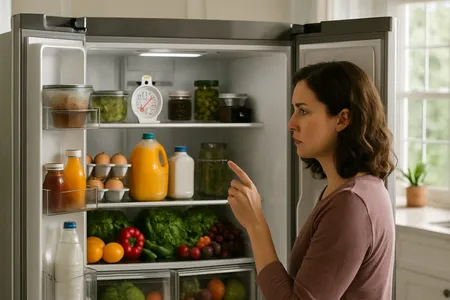
LG and Samsung make the most feature-rich refrigerators on the market, and both have had — and largely addressed — well-publicized reliability problems, per public-record class-action litigation: LG with early linear-compressor failures (which led to a class-action settlement and extended compressor warranties) and Samsung with ice-maker freeze-ups on certain French-door models (also the subject of class-action litigation). From the repair side of the counter, the practical difference in 2026 is small: both are capable machines whose weak point is service infrastructure — parts cost more and arrive slower than for Whirlpool or GE. Here’s the honest comparison, including the history both brands would rather you skim past — confirm specifics against your own model’s documentation, since settlement terms and design revisions vary by model year.
Quick Comparison: LG vs Samsung Refrigerators
| Factor | LG | Samsung |
|---|---|---|
| Compressor | Linear inverter, 10-year parts warranty | Digital inverter, 10-year parts warranty |
| Known trouble history | Early linear-compressor failures (settled class action; design revised) | Ice-maker freeze-ups on certain French-door models (litigated; design revised) |
| Feature direction | InstaView door-in-door, Craft Ice, ThinQ app | Family Hub touchscreen, Bespoke panels, SmartThings |
| Efficiency | Excellent (inverter compressors, many ENERGY STAR models) | Excellent (same class) |
| Typical labor warranty | ~1 year | ~1 year |
| Parts cost & availability | Higher than domestic mainstream brands | Higher than domestic mainstream brands |
| Repair network depth | Thinner than Whirlpool/GE | Thinner than Whirlpool/GE |
| Typical lifespan | 10–15 years with maintenance | 10–15 years with maintenance |
The Compressor Question
Both brands run inverter-driven compressors that modulate speed instead of hard-cycling — quieter, more efficient, and gentler on food temperatures than fixed-speed designs.
- LG’s linear compressor is the storied one. Units from the mid-2010s failed early at a rate that produced a 2020 class-action settlement; LG extended linear-compressor warranties and revised the design. A used or hand-me-down LG from that era carries real risk; a current one is a different machine — confirm your specific model’s compressor generation and warranty status in your owner’s documentation. Either way, the 10-year compressor parts warranty is the safety net — register it, and check your unit’s age via its serial with our Appliance Age Decoder.
- Samsung’s digital inverter compressor has not had an equivalent scandal; Samsung’s headline problem lived elsewhere (see below). It carries the same style of 10-year parts warranty.
Remember what a compressor parts warranty buys: the part. Labor, refrigerant, and the filter-drier on a year-6 compressor job are on you — typically several hundred dollars even with a free part. Full numbers in our refrigerator repair cost guide.
The Ice Maker Question
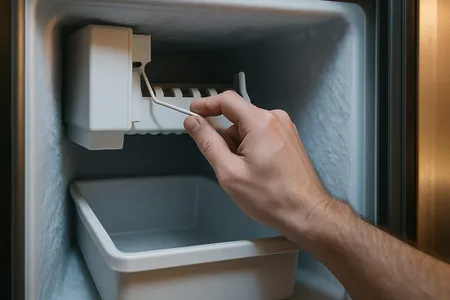
Samsung’s weak chapter: certain French-door models built across the 2010s developed freezing-over ice makers — frost intrusion into the ice compartment leading to jams, drips, and dead ice production. The problem was widespread enough to generate class-action litigation and a cottage industry of DIY fixes. Samsung revised the design in later models — check your specific model and manual to see whether it’s part of the affected range. LG’s ice systems (including Craft Ice spheres) have had ordinary appliance-grade issues rather than a signature failure.
If you own an affected Samsung, our ice maker not working guide covers the triage; persistent freeze-overs on those models respond to a proper seal-and-drain service rather than repeated defrosting.
Features vs. Serviceability: The Real Trade
What you’re actually choosing between with these two brands isn’t LG vs Samsung — it’s the feature-forward Korean brands vs. the service-simple mainstream. Door-in-door compartments, touchscreens, app connectivity, and showpiece ice come with more boards, sensors, and proprietary parts — more things that can fail and cost more when they do. A Family Hub screen failure is a repair category that a basic top-freezer simply doesn’t have.
That’s not a reason to avoid them; it’s a reason to buy them on purpose: because you value the features, with the warranty registered, rather than because the floor model looked impressive.
What We’d Tell a Neighbor
- Buying on features: get the one whose specific features you’ll use — LG’s door-in-door and Craft Ice vs. Samsung’s Family Hub and Bespoke styling. Reliability between current models won’t be your deciding factor.
- Buying on longevity-per-dollar and easy service: consider whether a mainstream Whirlpool- or GE-family unit fits — simpler machines, cheaper parts, deeper repair networks.
- Either way: register the warranty the week it’s installed, keep the condenser coils clean (15 minutes a year), and don’t run it in a Texas garage if you can avoid it — ambient heat is the silent lifespan killer here. See how long refrigerators last.
Already Own One and It’s Acting Up?
- Refrigerator Not Cooling — the diagnostic tree, brand-agnostic
- Error Code Lookup Hub — decode what the display is telling you (LG and Samsung both listed)
- Samsung serial number lookup — date your unit and check the warranty window
- Refrigerator repair cost guide — know a fair quote when you see one
Texas Temp Masters repairs LG, Samsung, and all major refrigerator brands across Central Texas — including the compressor and ice-maker jobs these two brands are famous for.
Call us at (817) 704-0706 for honest diagnosis and repair. Same-day service available for most appointments.