Your dishwasher cleans your dishes every day, but when was the last time you cleaned the dishwasher itself? Over time, food particles, grease, hard water minerals, and even mold accumulate inside your machine. The result is a dishwasher that smells bad, leaves residue on your glasses, and doesn’t clean as well as it used to.
The good news: a deep clean takes about 20 minutes of hands-on work and uses supplies you probably already have. The quick version: remove and scrub the filter, wipe down the gasket and door edges, run a cycle with a cup of white vinegar on the top rack, then follow up with a cup of baking soda on the bottom. That combination eliminates grease, mineral buildup, and odor without any harsh chemicals.
Below is the full step-by-step process, plus how to tackle stubborn problems like hard water stains, mold, and persistent odor.
How Often Should You Clean Your Dishwasher?
Monthly: Run a full deep clean (the 7-step process below). This prevents buildup from becoming a serious problem and keeps your dishwasher smelling fresh.
Weekly: Do a quick maintenance wipe. Pull out the bottom rack, check the filter and drain area for food debris, and wipe the door gasket with a damp cloth. This takes under two minutes and makes a noticeable difference.
After heavy use: If you’ve run several loads of particularly greasy or starchy dishes (holiday cooking, for example), do an extra vinegar rinse cycle to cut through the grease before it hardens.
If you’ve never cleaned your dishwasher or it’s been more than three months, expect the first deep clean to take a little longer. There may be more buildup to scrub, especially around the filter and door gasket. After the first thorough cleaning, monthly maintenance is straightforward.
What You’ll Need
Gather these supplies before you start:
- White distilled vinegar (at least 2 cups)
- Baking soda (1 cup)
- Old toothbrush or soft-bristle brush (for scrubbing the filter and gasket)
- Microfiber cloth or sponge
- Dish soap (a few drops for wiping down surfaces)
- Toothpick or wooden skewer (for clearing spray arm holes)
- Dry towel
Optional but helpful:
- Commercial dishwasher cleaner such as Affresh Dishwasher Cleaner or Finish Dishwasher Cleaner. These are convenient alternatives to the vinegar-and-baking-soda method and work well for heavy buildup.
- Citric acid powder for stubborn hard water deposits.
Step-by-Step Deep Cleaning
Step 1: Empty the Dishwasher Completely
Remove all dishes, utensils, and racks. Take out the bottom rack and the silverware basket so you can access the filter and the floor of the tub. This is also a good time to check for any broken glass, food debris, or foreign objects sitting in the bottom of the machine.
Step 2: Clean the Filter
The filter is the single most important part to clean. A clogged or dirty filter is the number-one cause of dishwasher odor and poor cleaning performance.
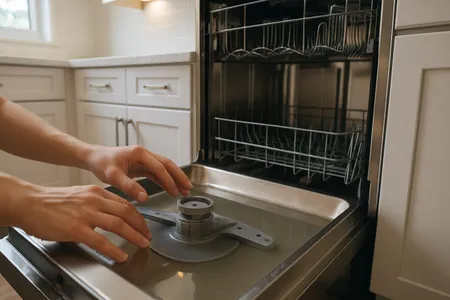
Where to find it: Most modern dishwashers have a cylindrical filter located on the floor of the tub, usually near the base of the bottom spray arm. It typically twists to unlock and pulls straight out. Some models have a secondary flat mesh filter underneath.
How to clean it:
- Twist the filter counterclockwise (or follow your owner’s manual) and lift it out.
- Hold it under hot running water to rinse away loose debris.
- Use your toothbrush or soft brush with a drop of dish soap to scrub away any stuck-on grease or food particles. Pay attention to the mesh screen where buildup collects.
- If the filter is heavily clogged, soak it in warm water with a cup of vinegar for 15 to 20 minutes, then scrub again.
- Rinse thoroughly and set aside. You’ll reinstall it after cleaning the tub.
If your filter has a bad smell even after scrubbing, soak it in a solution of one tablespoon of baking soda per cup of warm water for 30 minutes. This neutralizes odor-causing bacteria.
Step 3: Clean the Spray Arms
The spray arms have small holes that shoot water onto your dishes during the wash cycle. Over time, food particles, mineral deposits, and grease can clog these holes, reducing water pressure and cleaning performance.
- Remove the spray arms if your model allows it. Most slide or unscrew from their mounting posts. Check your owner’s manual if you’re unsure.
- Hold each arm up to the light and look through the holes. Clogged holes will appear blocked or discolored.
- Use a toothpick or wooden skewer to poke through each hole and dislodge any debris. Avoid using metal objects that could enlarge the holes or break off inside.
- Rinse the spray arms under hot running water, shaking gently to flush out loosened debris.
- Reinstall the spray arms and make sure they spin freely.
Step 4: Wipe the Door, Gasket, and Edges
This is where mold and mildew love to hide. The rubber gasket around the door, the edges of the door that don’t get hit by the wash cycle, and the area around the hinges all trap moisture and food particles.
- Dip your microfiber cloth or sponge in warm water with a small squirt of dish soap.
- Wipe the entire rubber gasket that runs around the inside of the door. Pull back the folds of the gasket to reach hidden areas where black mold or pink slime may be growing.
- Wipe the top edge of the door and the area around the door latch. These spots are above the water line during a cycle and never get cleaned automatically.
- Clean around the hinges at the bottom of the door where grime accumulates.
- For stubborn mold or buildup, dip your toothbrush in a paste of baking soda and water and scrub the affected areas.
- Wipe everything with a clean damp cloth to remove soap residue.
Step 5: Run a Vinegar Cycle
Now it’s time to clean the interior surfaces you can’t easily reach by hand: the walls of the tub, the heating element, the water inlet, and the drain system.
- Reinstall the clean filter and the spray arms.
- Place the bottom rack back inside the dishwasher.
- Fill a dishwasher-safe bowl or measuring cup with 1 cup of white distilled vinegar and set it upright on the top rack.
- Close the door and run a full hot water cycle (select the hottest, longest cycle available). Do not add detergent.
- The vinegar will distribute throughout the machine during the wash cycle, dissolving grease, mineral buildup, and soap scum while killing odor-causing bacteria.
Why a bowl on the top rack? Placing the vinegar in a bowl lets it release gradually during the wash cycle rather than being immediately flushed down the drain at the start.
Step 6: Run a Baking Soda Cycle
After the vinegar cycle is complete, open the dishwasher and remove the bowl.
- Sprinkle 1 cup of baking soda evenly across the bottom of the dishwasher tub.
- Close the door and run a short hot water cycle (a quick wash or rinse cycle works fine).
- The baking soda deodorizes, brightens the stainless steel interior, and removes any remaining stains or residue that the vinegar loosened.
When this cycle finishes, open the door and you should notice an immediate difference. The interior will look cleaner, and the musty smell should be gone.
Step 7: Clean the Exterior
Finish by wiping down the outside of the dishwasher.
- Stainless steel exteriors: Wipe with a damp microfiber cloth in the direction of the grain, then dry with a clean towel. For fingerprints and smudges, a small amount of stainless steel cleaner or a few drops of mineral oil on a cloth works well.
- Plastic or painted exteriors: Warm water with a drop of dish soap on a soft cloth is all you need.
- Control panel and handle: Wipe gently with a damp cloth. Avoid spraying cleaner directly on buttons or electronic controls.
How to Remove Dishwasher Odor
If your dishwasher has a persistent bad smell, the deep cleaning process above will solve most cases. But if the odor comes back quickly, here are the common culprits and targeted fixes:
Clogged or dirty filter. This is the cause of dishwasher odor in the majority of cases. Food trapped in the filter decomposes and produces that rotten-egg or sour smell. Clean the filter as described in Step 2 above.
Food stuck in the drain area. Even with a clean filter, food can get lodged in the drain hose connection or garbage disposal connection. Check the drain area at the bottom of the tub and remove any visible debris. If your dishwasher connects to a garbage disposal, run the disposal before starting the dishwasher to clear the shared drain line.
Mold in the door gasket. The rubber seal around the door stays damp between cycles. Pull back the gasket folds and look for black mold or pink mildew. Clean with a baking soda paste or a vinegar-soaked cloth.
Standing water in the bottom. A small amount of water in the sump area is normal, but pooling water is not. This can indicate a drain blockage or pump issue. See the section below on when to call for professional repair.
Quick odor fix between deep cleans: Sprinkle two tablespoons of baking soda on the bottom of the dishwasher and leave the door slightly ajar overnight. The baking soda absorbs odors, and the air circulation helps dry out moisture.
How to Remove Hard Water Buildup
Hard water leaves white, chalky mineral deposits on the interior walls, racks, spray arms, and your dishes. If you live in an area with hard water (most of Texas qualifies), this will be an ongoing battle.
Vinegar method: The vinegar cycle in Step 5 handles mild to moderate hard water buildup. For heavier deposits, run two consecutive vinegar cycles, or place 2 cups of vinegar in the bowl instead of 1.
Citric acid method: Citric acid is more effective than vinegar for heavy mineral buildup. Place 3 to 4 tablespoons of citric acid powder (available in the canning section of most grocery stores or online) in the detergent dispenser. Run a full hot water cycle on an empty dishwasher. Citric acid dissolves calcium and lime deposits without damaging your machine.
Commercial cleaners: Products like Finish Dishwasher Cleaner and Lemi Shine are specifically formulated for hard water buildup. They contain citric acid along with other descaling agents. Follow the package directions, which typically involve placing the product in the machine and running a hot cycle.
Prevention: Using a rinse aid (like Jet-Dry) in every cycle significantly reduces hard water spotting and mineral buildup on dishes and interior surfaces. If your water is extremely hard, consider a whole-house water softener for the best long-term results.
How to Clean Dishwasher Mold
Mold thrives in warm, damp, dark environments, which makes the inside of a dishwasher an ideal breeding ground, especially if the door stays sealed between cycles.
For dishwashers with a plastic or painted tub (bleach method):
- Place 1 cup of household bleach in a dishwasher-safe bowl on the top rack.
- Run a full hot water cycle. Do not add detergent.
- The bleach kills mold and mildew throughout the machine.
Important: Do not use bleach if your dishwasher has a stainless steel interior. Bleach can corrode and discolor stainless steel.
For dishwashers with a stainless steel tub (vinegar method):
- Spray undiluted white vinegar directly on visible mold spots and let it sit for 10 minutes.
- Scrub with a toothbrush or soft brush.
- Run a full vinegar cycle as described in Step 5.
Preventing mold growth:
- Leave the dishwasher door slightly ajar after each cycle to let moisture escape. Even a one-inch gap makes a significant difference.
- Wipe the gasket dry after the last cycle of the day.
- Run your dishwasher at least once a week. Machines that sit unused for long periods are more prone to mold.
- Make sure your kitchen has adequate ventilation. A range hood or exhaust fan helps reduce overall humidity.
Tips to Keep Your Dishwasher Clean Longer
Follow these six habits to reduce how often you need to do a full deep clean:
-
Scrape plates before loading. You don’t need to pre-rinse, but scrape off large food pieces. Bones, fruit pits, toothpicks, and labels should never go in the dishwasher.
-
Run hot water at the kitchen sink before starting the dishwasher. Let the faucet run until the water is hot, then start the cycle. This ensures the dishwasher fills with hot water from the first moment, which improves cleaning performance and helps dissolve grease.
-
Leave the door slightly ajar after each cycle. This lets steam escape and allows the interior to dry, which prevents mold and odor. Even cracking it an inch or two is enough.
-
Use a rinse aid. Rinse aid isn’t just for spotless glasses. It helps water sheet off interior surfaces, reducing mineral deposits and helping the machine dry faster.
-
Clean the filter once a month. Mark it on your calendar. A quick filter rinse takes 60 seconds and prevents the majority of odor and performance issues.
-
Run an empty hot cycle with vinegar once a month. A single maintenance cycle keeps buildup from accumulating between deep cleans.
When Your Dishwasher Needs Professional Repair
Cleaning solves most dishwasher issues, but some problems point to a mechanical or electrical issue that requires professional attention. Call a technician if you notice:
- Persistent odor that doesn’t go away after a thorough deep clean. This can indicate a problem in the drain hose, a cracked sump, or mold in areas you can’t access.
- Water not draining properly. If water pools in the bottom after every cycle, the drain pump, drain hose, or check valve may be failing. See our guide on dishwasher not draining for troubleshooting steps before you call.
- Water leaking from the door or underneath. A worn door gasket, cracked tub, or loose hose connection needs professional diagnosis.
- Error codes on the display. Modern dishwashers display error codes when they detect a problem. Check our error code lookup tool to decode what your machine is telling you.
- Dishes coming out dirty or with grit despite a clean machine. If your dishwasher is clean inside but still not washing well, the wash motor, water inlet valve, or heating element may be failing.
- The machine is more than 10 years old and having multiple issues. At that point, replacement is often more cost-effective than repair.
Frequently Asked Questions
Is vinegar safe for dishwashers?
Yes. White distilled vinegar is safe for all dishwasher types, including those with stainless steel interiors. The acetic acid concentration in household vinegar (typically 5%) is strong enough to dissolve mineral deposits and kill bacteria but mild enough that it won’t damage rubber gaskets, plastic components, or metal parts. Use it once a month without concern.
Can I use bleach in my dishwasher?
Only if your dishwasher has a plastic tub. Bleach effectively kills mold and sanitizes the interior, but it will corrode and discolor stainless steel tubs. Check your owner’s manual if you’re not sure what material your tub is made of. Also, never mix bleach with vinegar or any other cleaner. If you run a bleach cycle, run a plain hot water rinse cycle afterward before using vinegar.
Why does my dishwasher smell even after cleaning?
The most common reason is food trapped in a place you haven’t cleaned, usually deep in the drain hose, the air gap (if your model has one), or where the drain connects to the garbage disposal. Another possibility is a kinked or sagging drain hose that holds standing water. If you’ve done a thorough deep clean and the smell persists within a day or two, the problem is likely in the drain system and may need professional attention.
How do I clean a dishwasher filter?
Twist the filter counterclockwise to unlock it and pull it straight out. Rinse it under hot running water to remove loose debris, then scrub with a soft brush and dish soap. For heavy buildup, soak it in warm water with a cup of white vinegar for 15 to 20 minutes before scrubbing. Rinse thoroughly and reinstall. Detailed instructions are in Step 2 above.
What is the best dishwasher cleaner?
For most households, white vinegar followed by baking soda works just as well as commercial products and costs almost nothing. If you prefer a ready-made product, Affresh Dishwasher Cleaner tablets and Finish Dishwasher Cleaner liquid are the two most effective options based on user reviews and performance. For heavy hard water buildup specifically, Lemi Shine or citric acid powder outperform vinegar.
Can I clean my dishwasher with just baking soda?
Baking soda alone is a good deodorizer and mild abrasive, but it doesn’t dissolve grease or mineral deposits as effectively as vinegar or citric acid. For best results, use baking soda as a follow-up to a vinegar cycle rather than as a standalone cleaner. The combination covers odor, grease, minerals, and stains.
Keep Your Dishwasher Running Its Best
A clean dishwasher is a more efficient dishwasher. Twenty minutes a month is all it takes to prevent odor, improve cleaning performance, and extend the life of your machine.
Dishwasher not cleaning properly even after a deep clean? There may be a mechanical issue that needs professional diagnosis. Call us at (817) 704-0706 to schedule a service call.
More dishwasher resources:
- How Old Is My Dishwasher? Check by Serial Number - Look up your dishwasher’s age to decide if it’s worth repairing
- Dishwasher Not Draining? Causes and Fixes - Troubleshoot drainage issues step by step
- How Long Does a Dishwasher Last? - Average lifespan by brand and when to replace