Get your heating system tested and tuned by the end of October in Central Texas: run a 15-minute test cycle on a mild October day, schedule the professional tune-up in the September–October window, and treat anything more than a brief dusty smell on first fire as a stop sign. Cold snaps here arrive fast — mild autumn one week, a hard front the next — and the first freezing night of the year is the single worst time to discover a heating problem, because everyone else is discovering theirs too.
Here’s the honest timing and the checklist, for both furnaces and heat pumps.
Why prep in September–October when it’s still 95 outside?
Because the failure you’re preventing has a rush hour. Heating systems in Central Texas sit idle for six-plus months, then get switched on by half the region during the same 48-hour front. Parts that quietly failed over the summer — ignitors, flame sensors, thermostat batteries, tripped switches — all announce themselves at once, and schedules fill instantly. Winter emergency calls also typically add $100–$250 over normal repair pricing.
Our month-by-month Central Texas calendar puts heating tune-ups in September–October for exactly this reason — and it’s why the smart shoulder-season move is one combined visit: end-of-summer AC checkup plus heating prep, typically $125–$300 together versus $75–$200 each.
The October test cycle (do this before anything else)
- Switch the thermostat to Heat and set it 3–5°F above room temperature.
- Wait through the startup sequence. Furnaces take a few minutes: inducer fan, ignition, then blower. Heat pumps start like an AC in reverse — that’s normal.
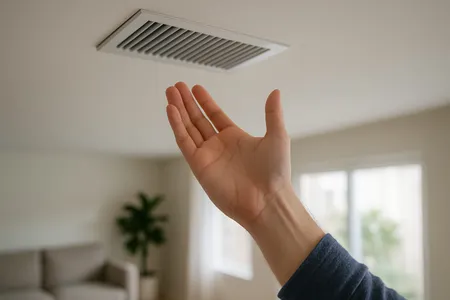
- Let it run 15–20 minutes. Vents should blow clearly warm air, and the system should reach the setpoint and shut off on its own.
- Use your nose. A light dusty burn-off smell that fades within the first cycle: normal. Persistent, electrical, or acrid smells: off switch, then a service call.
- Listen. Booms, screeches, and repeated start-stop cycles are all pre-season warnings worth acting on.
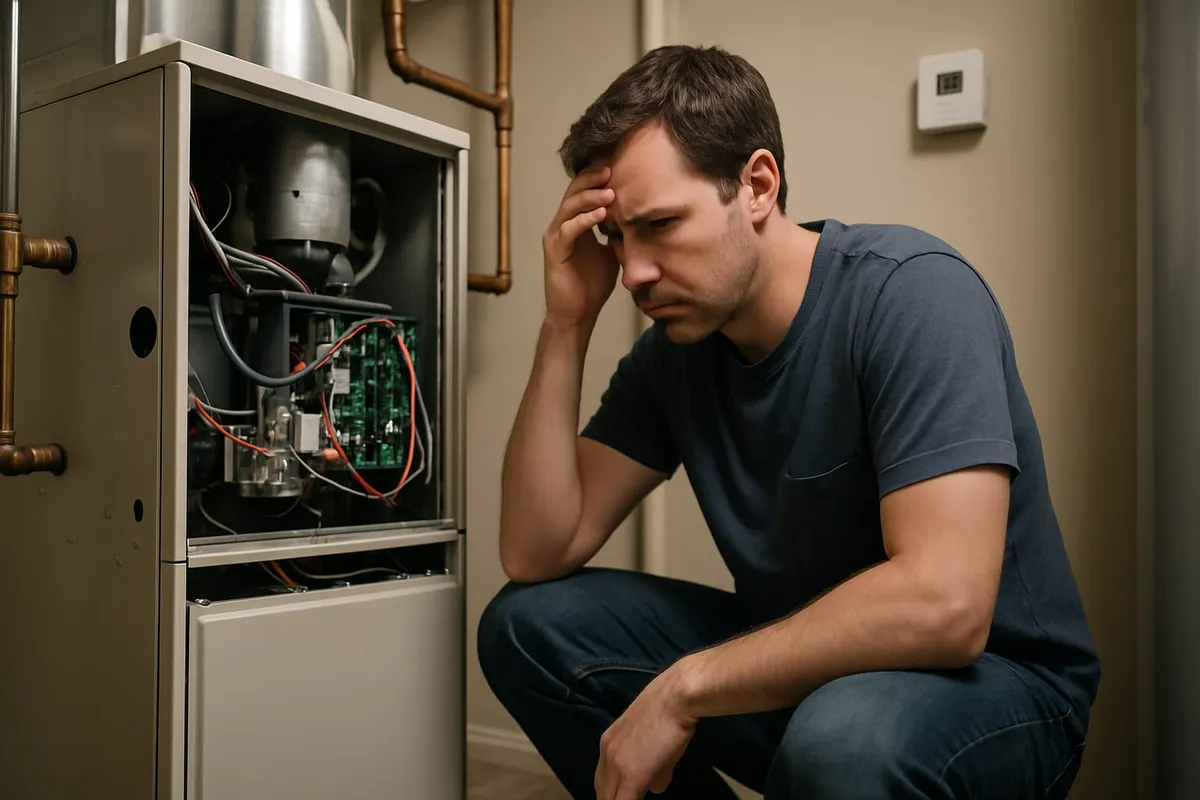
If the test fails, start with the basics — thermostat batteries and mode, breaker, furnace door switch fully seated, gas valve on — then work through our furnace not turning on guide or, if it runs but blows cool air, furnace blowing cold air.
What does fall prep look like for each system?
| Task | Furnace | Heat pump |
|---|---|---|
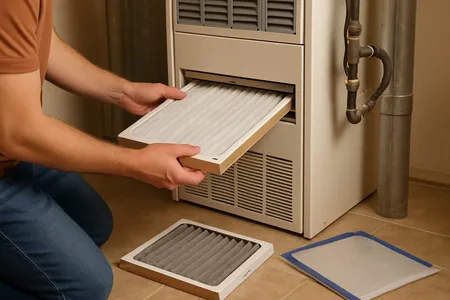
| Fresh filter | Yes — same filter serves heating | Yes |
| Test cycle in October | Yes | Yes — in Heat mode, so the reversing valve actually switches |
| Burner & heat exchanger inspection | Critical — a cracked heat exchanger is a carbon monoxide risk, professional-only | N/A |
| Flame sensor / ignitor check | Yes — the two most common no-heat culprits ($75–$250 / $100–$300 to replace) | N/A |
| Defrost cycle & reversing valve check | N/A | Yes — unexercised since spring |
| Auxiliary heat strips test | N/A | Yes — your backup for the coldest nights |
| CO detector batteries | Yes — non-negotiable with any gas appliance | Recommended anyway |
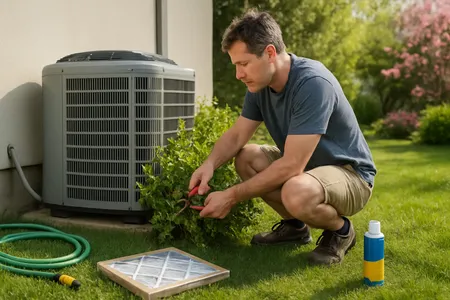
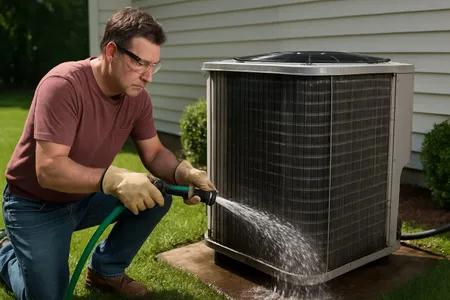
| Outdoor unit clearance | N/A | Yes — clear leaves and growth from the same unit that just fought all summer |
A professional fall tune-up covers the instrumented half: combustion analysis, gas pressure, heat exchanger inspection, amp draws, refrigerant charge (heat pumps), and safety controls. Costs and what’s included: HVAC maintenance cost guide.
Heat pump owners, one honest note: your outdoor unit just worked the hardest stretch of its year. Cooling-season wear shows up as heating-season failure — a marginal capacitor or a slow refrigerant leak that limped through August will not survive a January cold snap. If your system is deciding between a furnace and a heat pump for its next decade, that tradeoff lives in our heat pump vs furnace in Texas guide.
What this is not
This is not a claim that you need a service visit every fall no matter what, or that a tune-up guarantees a breakdown-free winter — nothing does. It’s a bet on timing: the same inspection costs the same money in October as in January, but in October you choose the schedule, and small parts get replaced before they strand you on a 28-degree night. For the whole-house version of cold prep — pipes, seals, insulation — see how to winterize your home and the winter HVAC maintenance checklist.
If you are in Central Texas, Texas Temp Masters offers heating tune-ups and same-day emergency HVAC repair. Call (817) 704-0706 or contact us online to book your fall heating prep.