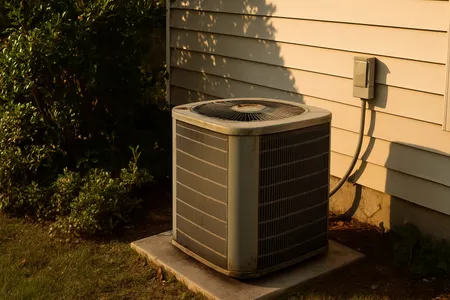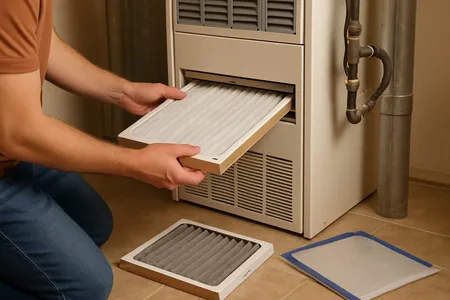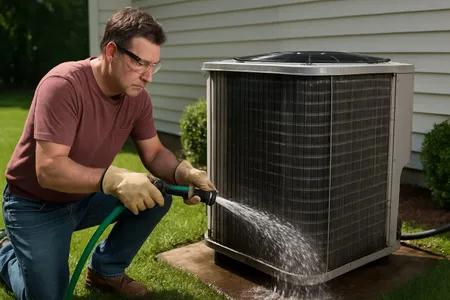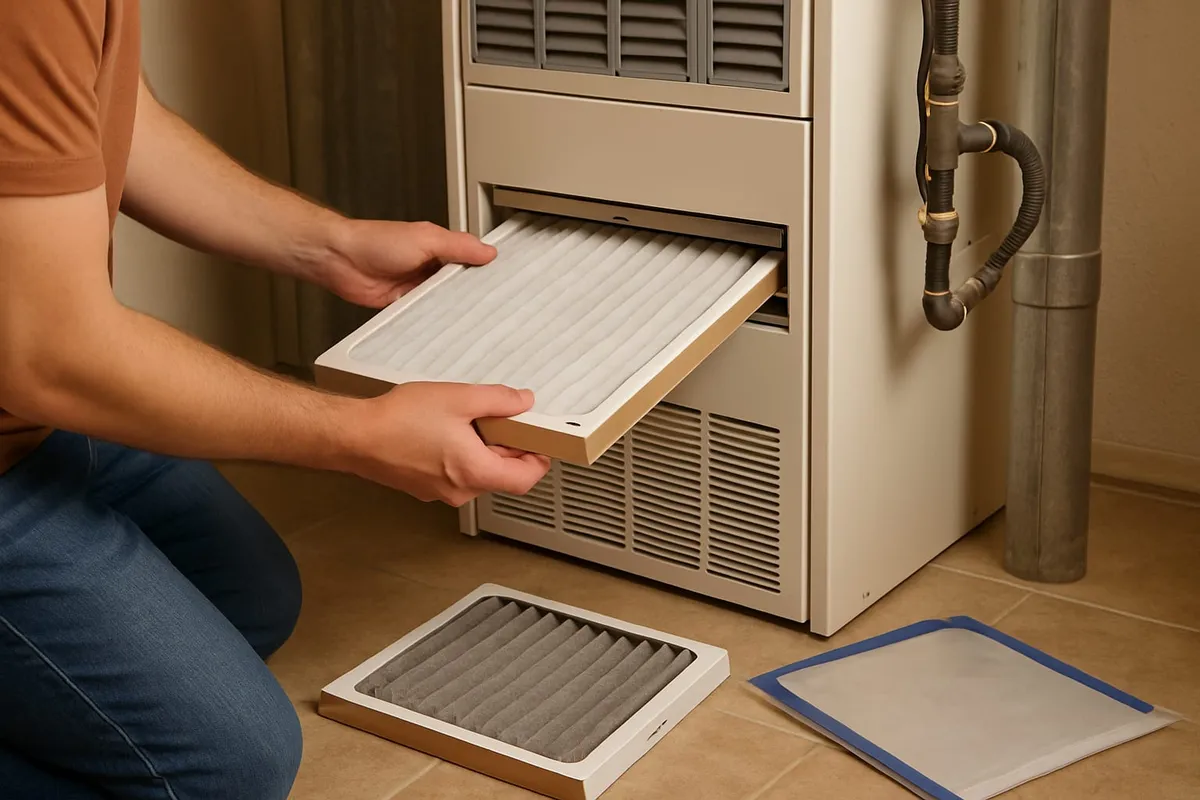
In Texas, change a standard 1-inch AC filter every 30–60 days during cooling season — and every 30 days if you live near active construction, have shedding pets, or anyone in the house has allergies. The “90 days” on the packaging assumes a mild climate where the system runs a few hours a day; a Central Texas AC runs most of the day for most of the year, so the filter earns its 90 days of loading in half the time. The 10-second check beats any schedule: pull the filter and hold it up to a light — if you can’t see light through it, change it.
Why the packaging is wrong for Texas
Filter life is measured in air moved, not days elapsed. Three local multipliers use it up faster:
- Runtime. Cooling season in Central Texas runs April–October, with near-continuous operation June–September. Double the runtime, double the dust loading per calendar day.
- Construction dust. Killeen, Temple, and Harker Heights growth corridors are under constant construction — subdivisions, road work, commercial builds. Homes near active sites clog filters in half the normal time. If you can see dust settle on furniture within a couple of days of cleaning, you are in this category: 30 days.
- The dust-and-pets compounding. Pet hair and dander plus dust load a filter fast — each shedding pet effectively moves your schedule up.
The schedule, by household
| Household | Cooling season (Apr–Oct) | Mild season |
|---|---|---|
| Standard home, no pets | Every 60 days | Every 90 days |
| One pet OR near construction | Every 30–45 days | Every 60 days |
| Multiple pets, allergies, or heavy construction nearby | Every 30 days | Every 45–60 days |
| Thick media filters (4–5 inch) | Every 6–12 months | — |
Set a phone reminder and buy filters several at a time — the whole habit costs $5–$30 per filter and is the single cheapest thing you can do for your AC.
What actually happens when you don’t change it
A clogged filter is the number one root cause behind the most common AC failures:
- Cooling drops, bills rise. The blower strains against the blockage; airflow falls; the system runs longer for less cooling.
- The coil freezes. Starved of warm airflow, the evaporator coil drops below 32°F and ices solid — the classic AC freeze-up, and the most direct filter-to-repair-bill pipeline there is.
- Water shows up indoors. The freeze thaws into an overflowing drain pan — see AC leaking water inside.
- Components die early. Chronic overheat and strain shortens blower motor and compressor life — the difference between the neglected 8–12-year system and the maintained 12–17-year one (lifespan guide).
A $10 filter skipped for a season can genuinely cascade into a $350–$900 blower repair or worse. This is not upsell talk — it is the mechanism by which most “my AC died” stories start.
Which filter should I buy?
- Match the size printed on the old filter’s frame (e.g., 16x25x1). Wrong-size filters leak dust around the edges, defeating the point.
- MERV 8–11 is the sweet spot for most homes. Enough filtration for dust and dander without choking airflow.
- Be careful with MERV 13+ in a 1-inch slot. High-MERV 1-inch filters restrict airflow on many residential systems — the “better” filter can cause the exact freeze-up problems a filter is supposed to prevent. If you want high filtration (allergies, smoke), the right answer is a 4–5-inch media cabinet, which delivers high MERV with low restriction and 6–12-month life. That is an inexpensive professional install worth asking about at maintenance time.
- Cheap fiberglass panels are legal but minimal — they protect the equipment somewhat and your lungs barely. MERV 8 pleated is only slightly more expensive.
Frequently Asked Questions
Can I run my AC without a filter for a few days?
Don’t. Dust goes straight to the evaporator coil, where it becomes an insulating blanket that professional cleaning ($100–$400) has to remove — versus a $10 filter. A day while you buy the right size won’t kill anything; a habit will.
Does a dirty filter really affect cooling?
Yes, directly: the filter is the system’s air intake. Restrict it and less warm air crosses the coil, so less heat leaves your house per hour of runtime — while the runtime (and the bill) grows. It is the first thing to check for almost any cooling complaint (full checklist).
Are washable/reusable filters worth it in Texas?
They exist and they work if you actually wash them monthly and let them dry fully before reinstalling — a damp filter grows mold in a Texas system. Most households are better served by the discipline-free disposable pleated filter.
Where is my AC filter located?
Usually in a return-air grille (large wall or ceiling vent) or a slot at the air handler itself (closet, attic, or garage). Some homes have more than one return filter — if your system has two return grilles, check both.
Filter’s clean and it still isn’t cooling right? Texas Temp Masters serves Killeen, Copperas Cove, Temple, Belton, and Harker Heights with same-day AC service and maintenance plans that include filter checks, coil cleaning, and drain clearing. Call (817) 704-0706 or contact us online.