Your water heater works quietly in the background every day, providing hot water for showers, laundry, dishes, and more. Because it operates out of sight, many homeowners do not think about their water heater until it fails, often at the worst possible time. Understanding your water heater’s expected lifespan and the warning signs of failure can help you plan ahead and avoid a cold surprise.
Quick Answer: How Long Does a Water Heater Last?
Traditional tank water heaters last 8 to 12 years, while tankless water heaters last 15 to 20 years or more. The type of water heater, fuel source, water quality, and maintenance habits all play major roles in determining how long your unit will last.
| Water Heater Type | Average Lifespan |
|---|---|
| Conventional Tank (Gas) | 8–12 years |
| Conventional Tank (Electric) | 10–15 years |
| Tankless (Gas) | 15–20 years |
| Tankless (Electric) | 15–20 years |
| Heat Pump Water Heater | 13–15 years |
| Solar Water Heater | 15–20 years |
| Condensing Tank | 10–15 years |
Electric tank models tend to outlast gas tanks because they do not have a combustion process that creates corrosive byproducts. Tankless models last longer because they avoid the constant sediment accumulation and tank corrosion that shortens the life of storage tank units.
Water Heater Lifespan by Brand
| Brand | Tank Lifespan | Tankless Lifespan | Warranty |
|---|---|---|---|
| Rheem | 8–12 years | 15–20 years | 6–12 years |
| A.O. Smith | 8–13 years | 15–20 years | 6–12 years |
| Bradford White | 10–14 years | 15–20 years | 6–10 years |
| Rinnai | N/A | 20–25 years | 10–15 years |
| Navien | N/A | 18–22 years | 10–15 years |
| Noritz | N/A | 18–22 years | 10–12 years |
| State Water Heaters | 8–12 years | 15–20 years | 6–10 years |
Rinnai, Navien, and Noritz are leaders in the tankless market, with Rinnai units frequently lasting 20 years or more with proper descaling maintenance. Bradford White is known for producing some of the most durable tank-style units, often exceeding the industry average.
Tank vs. Tankless: A Deeper Comparison
Traditional Tank Water Heaters
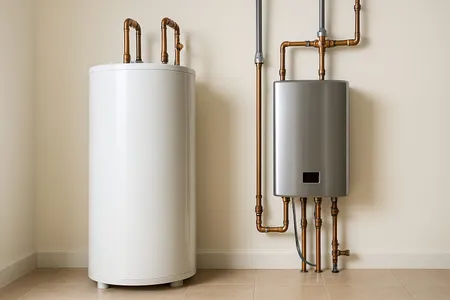
Tank-style heaters store 30 to 80 gallons of water, keeping it heated and ready for use at all times. The constant heating cycle (called standby heat loss) means the burner or element runs even when no one is using hot water. Over time, sediment settles at the bottom of the tank, reducing efficiency, promoting corrosion, and eventually causing leaks.
Pros: Lower upfront cost than tankless, simple maintenance, wide availability. Cons: Higher energy costs, shorter lifespan, risk of flooding if tank fails.
Tankless Water Heaters
Tankless models heat water on demand as it flows through the unit. Because they do not store water, they avoid sediment buildup and internal corrosion. This on-demand approach is the primary reason tankless units last nearly twice as long.
Pros: Longer lifespan, lower energy costs (24 to 34 percent more efficient for average homes per DOE), unlimited hot water, smaller footprint. Cons: Higher upfront cost than tank-style units, may need gas line or electrical upgrades, requires annual descaling.
5 Factors That Affect Water Heater Lifespan
1. Water Quality
Hard water is the number one enemy of water heaters. High mineral content, particularly calcium and magnesium, creates scale buildup on heating elements and the interior of the tank. Homes with hard water (above 120 ppm) may see their water heater’s life cut by 2 to 4 years without proper treatment. A water softener can significantly extend the unit’s life.
2. Maintenance Frequency
Annual flushing to remove sediment, anode rod inspection and replacement, and temperature and pressure relief valve testing all contribute to longer life. A tank water heater that is never flushed may fail in 6 to 8 years, while one that is flushed annually can last 12 to 15 years.
3. Usage Volume
A household of five using 80+ gallons of hot water per day puts more stress on a water heater than a couple using 30 gallons. Higher demand means more heating cycles, which accelerates wear on heating elements, gas valves, and other components.
4. Installation Quality
Improper installation can void warranties and create issues from the start. Factors like incorrect venting (gas models), inadequate electrical supply, improper expansion tank installation, and wrong pipe sizing all affect longevity.
5. Temperature Setting
The factory default is typically 140 degrees Fahrenheit, but the Department of Energy recommends 120 degrees. The higher setting accelerates sediment buildup, increases mineral scaling, and accelerates tank corrosion. Lowering to 120 degrees can also reduce energy costs by 4 to 22 percent.
8 Warning Signs Your Water Heater Is Failing
1. Rusty or Discolored Water
Rust-colored hot water (but not cold water) typically indicates corrosion inside the tank. This means the anode rod has been completely consumed and the tank itself is corroding.
2. Rumbling or Popping Noises
Sediment buildup at the bottom of the tank hardens over time and causes rumbling, popping, or banging sounds as water heats beneath the sediment layer. This reduces efficiency and accelerates tank deterioration.
3. Water Around the Base
Any pooling water around your water heater warrants immediate attention. While it could be a leaky valve or fitting (repairable), it could also indicate a crack in the tank itself (not repairable).
4. Inconsistent Water Temperature
Fluctuating water temperature, or the inability to maintain consistent hot water, suggests a failing heating element (electric) or a deteriorating gas valve and thermocouple (gas).
5. Reduced Hot Water Supply
If you are running out of hot water sooner than you used to, sediment may be displacing water volume inside the tank, or a heating element may be failing.
6. Metallic Taste or Smell
A metallic taste in hot water indicates tank corrosion. A sulfur or rotten egg smell may indicate bacteria growth in the tank, often caused by a deteriorating anode rod.
7. Visible Corrosion
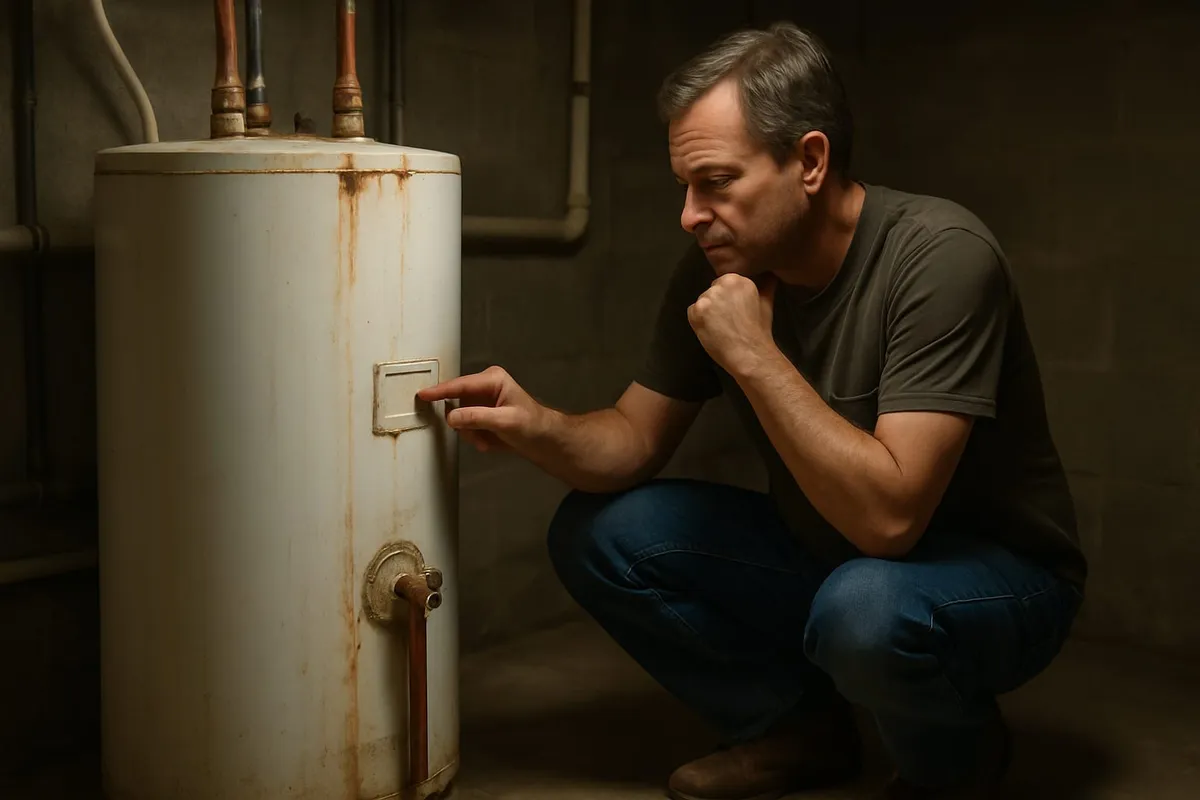
Rust or corrosion on the outside of the tank, on fittings, or around connections is a sign that the unit is deteriorating. External corrosion often indicates internal corrosion is already well advanced.
8. Age Over 10 Years
Even if your tank water heater appears to be working fine, units over 10 years old are at significantly higher risk of sudden failure and flooding. Proactive replacement avoids the water damage risk.
Maintenance Tips to Extend Water Heater Life
-
Flush the tank annually. Draining two to three gallons from the tank removes sediment that reduces efficiency and accelerates corrosion. For detailed instructions, consult your owner’s manual or have a professional handle it during annual service.
-
Inspect and replace the anode rod. The sacrificial anode rod protects the tank from corrosion by corroding itself first. Check it every two to three years and replace it when it is more than 50 percent depleted. This inexpensive part can add years to your tank’s life.
-
Set the temperature to 120 degrees. This reduces energy costs, slows sediment buildup, and reduces the risk of scalding.
-
Test the temperature and pressure relief valve annually. Lift the lever and let it snap back. Water should flow briefly through the discharge pipe and stop. If it does not operate properly, replace it immediately as it is a critical safety device.
-
Insulate the tank and hot water pipes. A water heater blanket can reduce standby heat loss by 25 to 45 percent. Insulating the first six feet of hot and cold water pipes at the heater also improves efficiency.
-
Descale tankless units annually. Tankless water heaters need annual descaling with food-grade white vinegar to remove mineral buildup from the heat exchanger. This is essential for maintaining efficiency and preventing premature failure, especially in areas with hard water.
Repair vs. Replace Decision Guide
For Tank Water Heaters:
| Situation | Recommendation |
|---|---|
| Age under 6 years, minor repair needed | Repair |
| Age 6–10 years, repair quote is modest | Repair |
| Age 6–10 years, repair quote is steep | Consider replacing |
| Age over 10 years, any significant repair | Replace |
| Tank is leaking from the body | Replace immediately |
| Anode rod depleted, tank under 8 years | Replace anode rod |
For Tankless Water Heaters:
| Situation | Recommendation |
|---|---|
| Age under 10 years, minor repair | Repair |
| Age 10–15 years, repair quote is modest | Repair |
| Age over 15 years, major repair | Replace |
| Heat exchanger failure | Replace (repair cost is usually 60%+ of new unit) |
Should You Switch from Tank to Tankless?
If your tank water heater needs replacement, consider upgrading to tankless. While the upfront cost is higher, the longer lifespan (nearly double) and lower energy costs can make tankless the better long-term investment (the federal tax credit for water heaters expired December 31, 2025 — see what’s still available).
Use our Repair or Replace Calculator to get a personalized recommendation.
Frequently Asked Questions
How do I know the age of my water heater?
The manufacture date is encoded in the serial number on the rating plate. Most manufacturers use the first two digits or a letter code to indicate the year and month of production. Our Appliance Age Decoder tool can help interpret the serial number for all major brands.
Can a water heater last 20 years?
Tankless water heaters routinely last 20 years with proper maintenance, and some reach 25 to 30 years. Tank water heaters rarely last 20 years. Even if a tank unit is still functioning at 15+ years, the risk of sudden failure and flooding makes proactive replacement advisable.
How much does a new water heater cost?
A tank-style water heater has the lowest installed cost of the three. Tankless units cost more upfront — and may need gas line or electrical upgrades — but last nearly twice as long and use less energy. Heat pump water heaters sit above tank-style on upfront cost but typically have the lowest operating costs. Ask for a written, itemized quote for your home and fuel type; these prices may vary case by case. The IRS Section 25C federal tax credit for these expired December 31, 2025 and no longer applies to 2026 installations.
Is hard water really that damaging?
Yes. Hard water with high mineral content is the leading cause of premature water heater failure. It creates scale buildup that insulates the heating element (reducing efficiency), clogs pipes and valves, and accelerates tank corrosion. A water softener is one of the best investments for extending the life of your water heater and other water-using appliances.
Should I drain my water heater completely?
Full drainage is only necessary for winterization or replacement. For routine maintenance, draining two to three gallons through the drain valve is sufficient to flush out accumulated sediment.
Next Steps
Now that you know your water heater’s expected lifespan, plan your next move:
- Estimate your hot water energy costs — Our Energy Cost Calculator shows how much you are spending to heat water each month and how much you could save with a more efficient unit.
- See what a new water heater costs — Our Water Heater Cost guide breaks down pricing by type, fuel source, and installation requirements.
- Compare tank vs. tankless in detail — If you are considering a switch, our Tankless vs. Tank Water Heater guide covers upfront costs, long-term savings, and which setup fits your household.
- Check what’s still available — The IRS Section 25C federal tax credit of up to $2,000 for qualifying heat pump water heaters expired December 31, 2025. See our HVAC Tax Credits and Rebates in 2026 guide for what remains.
- Ready to talk? — Contact us for a free evaluation and upfront pricing.
Need help deciding? Use our Repair or Replace Calculator or check your unit’s age with the Appliance Age Decoder to help guide your decision.