Your furnace is the backbone of your home’s heating system, and knowing its expected lifespan helps you plan for the future, budget accordingly, and avoid an unexpected breakdown during a cold snap. Whether you have a gas, electric, or oil furnace, this guide covers everything you need to know about how long your furnace should last and what you can do to maximize its life.
Quick Answer: How Long Does a Furnace Last?
The average gas furnace lasts 15 to 20 years, while electric furnaces can last 20 to 30 years. Oil furnaces typically fall in the 15 to 25 year range. However, these numbers depend heavily on maintenance, usage, climate, and installation quality.
| Furnace Type | Average Lifespan |
|---|---|
| Gas Furnace (standard efficiency) | 15–20 years |
| Gas Furnace (high efficiency 90%+ AFUE) | 15–20 years |
| Electric Furnace | 20–30 years |
| Oil Furnace | 15–25 years |
| Dual Fuel / Hybrid System | 15–20 years |
High-efficiency furnaces with 90% or higher AFUE ratings tend to have similar lifespans to standard models, though they deliver significantly lower operating costs over their lifetime. Electric furnaces generally last longer because they have fewer mechanical components and no combustion-related wear.
Furnace Lifespan by Brand
| Brand | Expected Lifespan | Notable Features |
|---|---|---|
| Trane | 18–25 years | Heavy-duty heat exchangers |
| Carrier | 15–25 years | Extensive dealer network |
| Lennox | 15–20 years | High-efficiency models |
| Rheem | 15–20 years | Good value for cost |
| Goodman | 12–18 years | Budget-friendly option |
| York | 15–20 years | Reliable mid-range |
| Bryant | 15–20 years | Carrier sister brand |
| Amana | 15–20 years | Lifetime heat exchanger warranty |
| American Standard | 18–25 years | Trane sister brand |
Amana stands out by offering a lifetime warranty on its heat exchangers, which is the most expensive component in a furnace. Trane and American Standard, which share the same parent company, are widely recognized for producing some of the longest-lasting furnaces on the market.
7 Factors That Affect Furnace Lifespan
1. Annual Maintenance
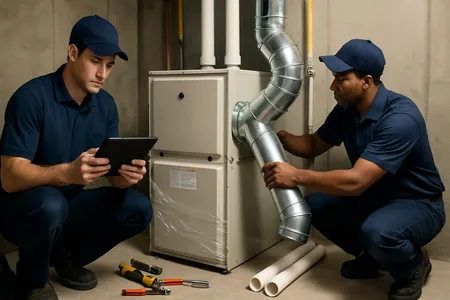
Regular professional maintenance is the single most important factor in extending your furnace’s life. An annual tune-up includes cleaning the burner assembly, inspecting the heat exchanger for cracks, testing safety controls, and checking the gas valve and ignition system. Furnaces that receive annual maintenance routinely last 20 years or longer.
2. Air Filter Maintenance
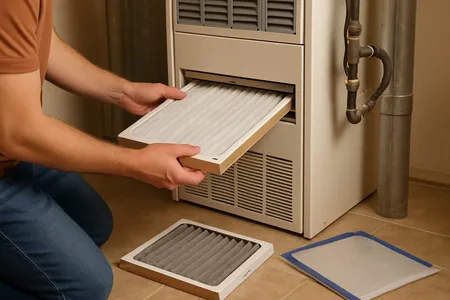
A dirty filter restricts airflow and forces the blower motor to work harder, leading to overheating and premature component failure. Change your furnace filter every one to three months during the heating season. This is a simple task you can learn in our guide on how to change a furnace filter.
3. System Sizing
An oversized furnace short cycles, turning on and off frequently. This puts excessive stress on the heat exchanger, ignitor, and blower motor. An undersized furnace runs constantly, wearing out components faster. Proper sizing by a qualified HVAC contractor during installation is essential.
4. Installation Quality
Poor installation leads to problems from day one. Issues like incorrect gas line sizing, improper venting, bad ductwork connections, and wrong thermostat wiring can all reduce your furnace’s lifespan. Always hire a licensed, experienced contractor.
5. Usage and Climate
Furnaces in cold climates that run for six or more months per year will accumulate more wear than those in mild climates. In Central Texas, furnaces see relatively light use compared to northern states, which can actually extend their lifespan.
6. Thermostat Settings
Maintaining a consistent, reasonable temperature reduces the number of on-off cycles your furnace goes through each day. Frequent large temperature swings (like turning the heat off when you leave and cranking it up when you return) put extra stress on the system.
7. Home Insulation
A well-insulated home retains heat better, reducing the demand on your furnace. Poor insulation means your furnace runs longer and harder to maintain the same temperature, accelerating wear on all components.
6 Warning Signs Your Furnace Is Failing
1. Age Over 15 Years
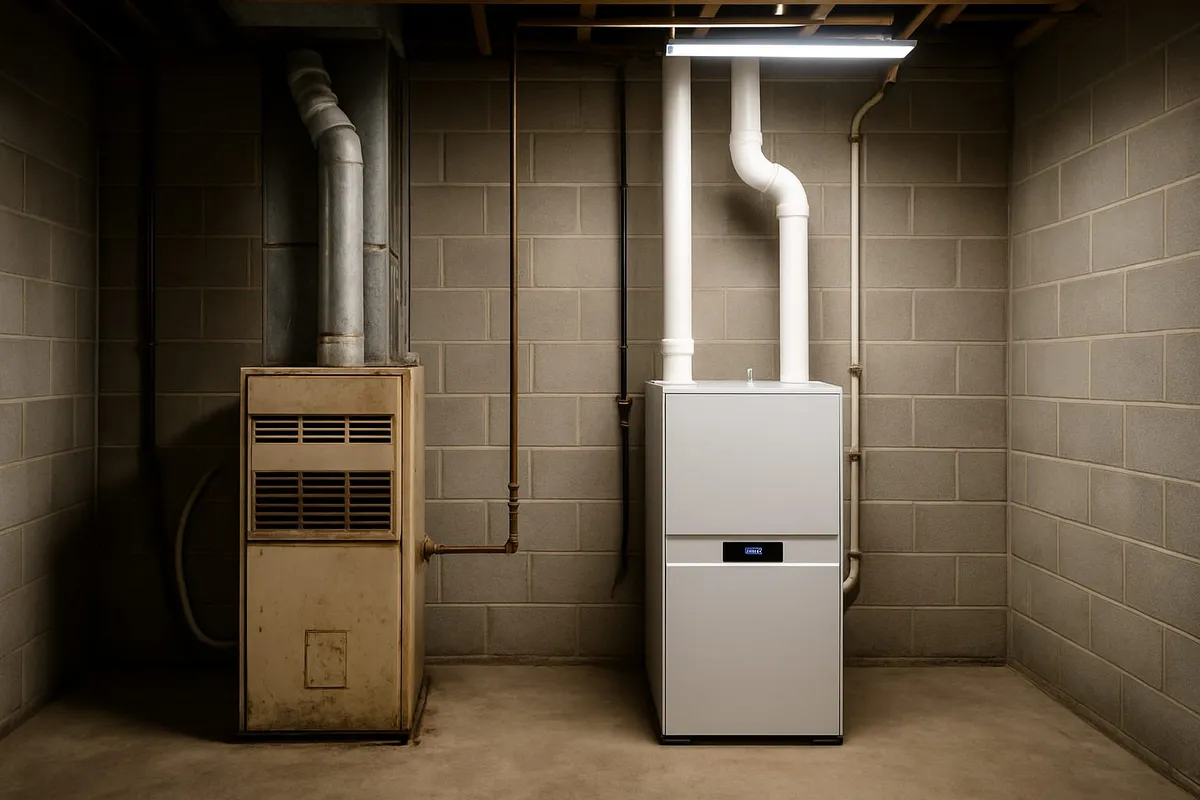
If your furnace is 15 years or older, start planning for replacement even if it seems to be running fine. Older furnaces lose efficiency gradually, and a sudden failure is increasingly likely.
2. Rising Heating Bills
A steady increase in heating costs despite similar usage patterns indicates your furnace is losing efficiency. Components wear down over time, requiring more energy to produce the same heat output.
3. Frequent Repairs
Needing repairs more than once every one to two years is a strong indicator of a system nearing the end of its useful life. Component failures tend to cascade as the system ages.
4. Cracked Heat Exchanger
A cracked heat exchanger is the most serious warning sign. It can allow carbon monoxide to leak into your home, creating a potentially lethal hazard. If a technician discovers a cracked heat exchanger, replacement of the furnace is almost always recommended over repair.
5. Yellow or Flickering Burner Flame
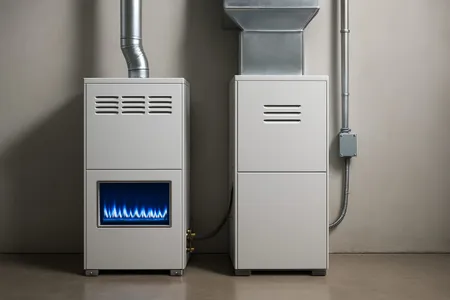
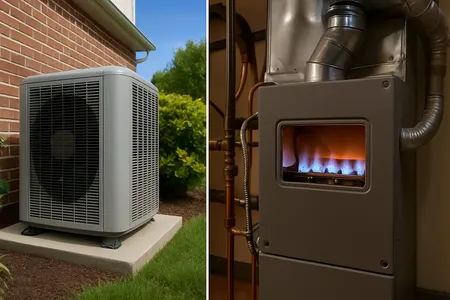
A healthy gas furnace produces a steady blue flame. A yellow, orange, or flickering flame indicates incomplete combustion, which can produce dangerous levels of carbon monoxide and signals a problem with the burner assembly or gas valve.
6. Strange Noises
Banging, popping, rattling, or squealing sounds are common signs of age-related wear. Banging often indicates a delayed ignition (gas buildup before igniting), which can damage the heat exchanger. Squealing typically points to a failing blower motor bearing.
Maintenance Tips to Extend Your Furnace’s Life
-
Schedule annual professional maintenance. Have a licensed technician inspect and tune up your furnace before each heating season. This catches problems early and keeps the system running efficiently.
-
Change your air filter regularly. Replace the filter every one to three months, depending on type and household conditions. A clean filter protects the blower motor and maintains proper airflow.
-
Keep vents and registers open and unblocked. Closed or blocked vents create pressure imbalances that stress the blower motor and can cause the heat exchanger to overheat.
-
Install carbon monoxide detectors. Place CO detectors near bedrooms and on every level of your home. Test them monthly and replace batteries annually. This is a safety essential for any home with a gas furnace.
-
Maintain proper clearance around the furnace. Keep the area around your furnace clear of stored items, chemicals, and flammable materials. The furnace needs adequate airflow for combustion and ventilation.
-
Upgrade your thermostat. A programmable or smart thermostat reduces unnecessary cycling and keeps temperature swings to a minimum, which reduces wear on your furnace. Use our thermostat savings calculator to estimate your savings.
Use our Maintenance Checklist Tool to stay on top of seasonal furnace care.
Repair vs. Replace Decision Guide
When to Repair
- The furnace is less than 10 years old
- The repair cost is less than one-third the price of a new furnace
- This is the first significant repair
- The heat exchanger is intact
- Energy bills have remained relatively stable
When to Replace
- The furnace is 15 years or older
- The repair cost exceeds 50 percent of a new furnace price
- The heat exchanger is cracked
- Repairs are needed more than twice per year
- Your energy bills have steadily increased
- The furnace uses a pilot light instead of electronic ignition (very old model)
Cost Comparison
| Repair | Replace | |
|---|---|---|
| New efficiency gains | None | 15–30% savings |
| Warranty | Parts only, limited | 5–10 year full coverage |
| Peace of mind | Temporary | Long-term |
A repair is almost always the smaller expense up front, but a new high-efficiency furnace (95%+ AFUE) can meaningfully lower your ongoing heating costs compared to an older 80% AFUE model — ask a technician to walk through the expected savings for your specific furnace and usage.
Use our Repair or Replace Calculator for a personalized recommendation based on your furnace’s age, repair history, and condition.
Frequently Asked Questions
Can a furnace last 30 years?
Electric furnaces can potentially last 30 years due to having fewer mechanical parts. Gas furnaces occasionally reach 30 years but will be significantly less efficient than modern models. Safety concerns also increase with age, particularly the risk of heat exchanger cracks.
How do I find out how old my furnace is?
Check the rating plate on your furnace for the serial number. The manufacturing date is usually encoded in the serial number. Our Appliance Age Decoder can help you interpret the serial number for most major brands.
Is a high-efficiency furnace worth the extra cost?
In most cases, yes. A 95% AFUE furnace uses about 15 to 20 percent less gas than an 80% AFUE model, which adds up significantly over the furnace’s lifetime for most Texas households. Ask your technician for the expected savings based on your current gas usage.
How often should I have my furnace serviced?
You should schedule professional maintenance once per year, ideally in early fall before the heating season begins. In addition, you should check and change your filter every one to three months throughout the year.
What AFUE rating should I look for?
AFUE stands for Annual Fuel Utilization Efficiency. Look for a furnace with at least 90% AFUE for moderate climates and 95% or higher for cold climates. In Texas, a 90 to 95% AFUE furnace offers an excellent balance of cost and efficiency.
Wondering if your furnace needs repair or replacement? Use our Repair or Replace Calculator or check your system’s age with our Appliance Age Decoder. In Central Texas? Texas Temp Masters provides expert furnace service with upfront pricing. Call (817) 704-0706 to schedule a consultation.
Next Steps
Use these resources to make the most of your furnace’s remaining lifespan or plan a smart replacement:
- Calculate your potential energy savings — Our Energy Savings Calculator shows how much a newer, higher-efficiency furnace could save you each year compared to your current system.
- Budget for replacement — If your furnace is nearing end of life, our furnace replacement cost guide breaks down every cost factor so there are no surprises.
- Compare fuel types before you buy — Read our gas vs electric furnace comparison to understand which option delivers the best value for your home and climate.
- Ready to talk? — Contact us for a free evaluation of your furnace’s condition and remaining lifespan.