Choosing between a heat pump and a furnace is one of the most important HVAC decisions you will make. Both systems heat your home effectively, but they work in fundamentally different ways and excel in different situations. This guide breaks down everything you need to know to make the right choice.
Quick Comparison: Heat Pump vs Furnace
| Feature | Heat Pump | Gas Furnace |
|---|---|---|
| How it heats | Transfers outdoor heat inside | Burns natural gas |
| Also provides cooling? | Yes (built-in) | No (separate AC needed) |
| Energy efficiency | 200% - 400% (COP 2-4) | 80% - 98.5% AFUE |
| Lifespan | 12 - 15 years | 15 - 20 years |
| Best climate | Mild to moderate | Cold winters |
| Carbon emissions | Lower (no combustion) | Higher (burns fossil fuel) |
| Maintenance | 2 tune-ups/year | 1-2 tune-ups/year |
| Federal tax credits | Expired 12/31/2025 | Expired 12/31/2025 |
How Each System Works
Heat Pumps
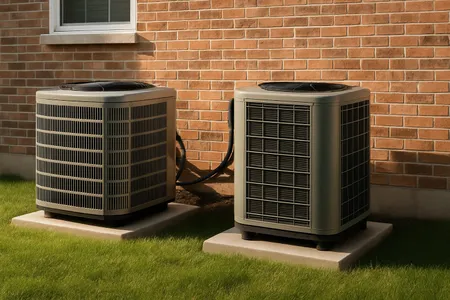
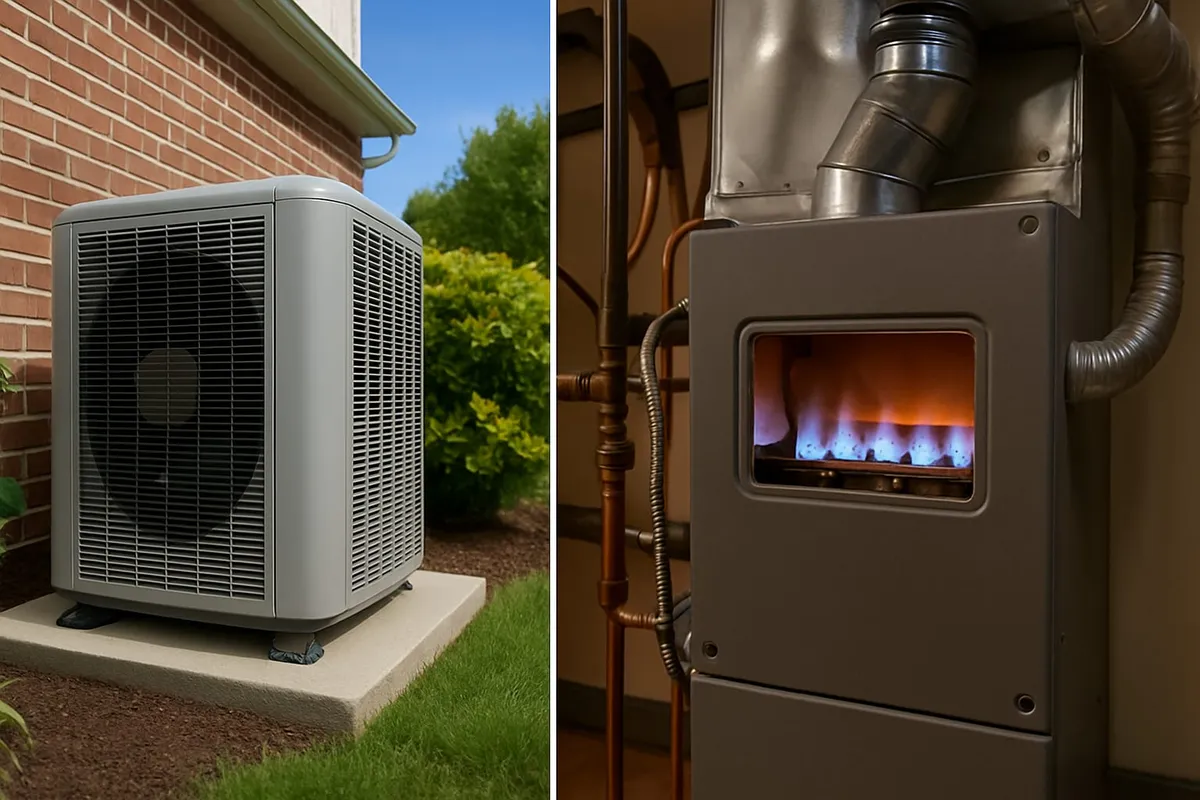
A heat pump does not create heat. It moves it. Using a refrigerant cycle, the system extracts heat energy from outdoor air (even in cold temperatures) and transfers it inside your home. In summer, it reverses the process to cool your home, functioning identically to an air conditioner.
The key advantage is efficiency. Because a heat pump moves heat rather than generating it, it can deliver 2 to 4 units of heating energy for every 1 unit of electricity consumed. This makes heat pumps 200% to 400% efficient.
Gas Furnaces
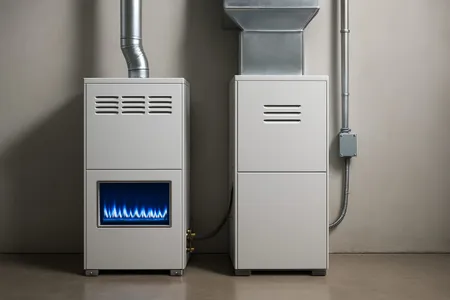
A gas furnace generates heat through combustion. It burns natural gas in a combustion chamber, heats a metal heat exchanger, and blows air across that exchanger into your ductwork. Modern high-efficiency furnaces convert up to 98.5% of the fuel’s energy into usable heat.
Gas furnaces provide intense, consistent heat regardless of outdoor temperatures and require a separate air conditioning system for cooling.
Pros and Cons
Heat Pump Pros
- Dual function: Heats and cools with one system, eliminating the need for a separate AC
- Higher efficiency: 2 to 4 times more efficient than combustion heating
- Lower operating costs: Often costs less per year to run than a gas furnace + AC combo, depending on local energy prices
- No combustion: No risk of carbon monoxide leaks, no gas line required
- Tax credits no longer available: The federal 25C credit of up to $2,000 for qualifying systems expired December 31, 2025 (see our 2026 tax credits guide for what’s still on offer)
- Better humidity control: More consistent dehumidification during cooling season
- Lower carbon footprint: Especially when powered by renewable electricity
Heat Pump Cons
- Higher upfront cost: Costs more to install than a furnace alone — a technician can quote both for your home
- Reduced efficiency in extreme cold: Standard models lose efficiency below 25-30 degrees Fahrenheit (cold-climate models perform down to -15 to -20 degrees Fahrenheit)
- Shorter lifespan: 12 to 15 years vs. 15 to 20 for furnaces (because they run year-round)
- Higher electricity use: Significantly increases electric bill (though reduces or eliminates gas bill)
- Slower heat delivery: Air from a heat pump is warm but not as intensely hot as furnace-heated air
- May need backup heat: In cold climates, supplemental electric or gas heat may be needed
Gas Furnace Pros
- Lower upfront cost: Costs less to install than a heat pump, since it only has to handle heating
- Powerful heating: Delivers hot air (120 to 140 degrees Fahrenheit) quickly
- Reliable in extreme cold: Performance is not affected by outdoor temperatures
- Longer lifespan: 15 to 20 years with proper maintenance
- Lower natural gas costs: Gas is typically cheaper per BTU than electricity in many regions
- Familiar technology: Widely understood by technicians, abundant parts supply
Gas Furnace Cons
- Cooling requires separate AC: Adding central air brings the total installed cost above a furnace alone — a technician can quote the combined job for your home
- Higher total operating costs: When you add AC operating costs, total heating + cooling costs are often higher than a heat pump
- Combustion risks: Carbon monoxide potential (mitigated by proper maintenance and detectors)
- Requires gas line: Not available in all areas; propane conversion adds cost
- Lower efficiency ceiling: Maximum 98.5% AFUE vs. 200-400% for a heat pump
- Higher carbon footprint: Burns fossil fuel directly
Cost Comparison
Upfront Costs
A furnace alone typically costs less to install than a heat pump, since a heat pump takes on both heating and cooling in one system. Adding central air to a furnace-only setup, or choosing a dual-fuel system that pairs a heat pump with a gas furnace backup, raises the number further. None of these figures are one-size-fits-all — a technician can quote the exact installed cost once they’ve seen your home, equipment choice, and ductwork.
Annual Operating Costs
Running costs depend heavily on your local electricity and gas rates, your climate, and how efficient your system is. In general, a heat pump’s higher efficiency can offset some or all of its higher electricity use, while a gas furnace’s cheaper per-BTU fuel cost can offset its lower efficiency — which one comes out ahead depends on your area’s energy prices. Our Energy Savings Calculator can run the comparison for your home.
Long-Term Cost of Ownership
Looking at the full picture — upfront cost, running costs, maintenance, and eventual replacement — is more useful than comparing sticker prices alone. A heat pump’s lower operating costs can narrow or erase its higher upfront price over time, especially in mild climates, but the exact break-even point depends on local energy prices and your specific equipment. Your actual costs will depend heavily on local energy prices, climate, and system efficiency — a technician can quote your specific installed cost and a projected operating cost after seeing your home. The federal tax credit mentioned above expired December 31, 2025 and does not apply to 2026 installations — see our 2026 tax credits guide for what’s still available. Use our Energy Savings Calculator for a personalized comparison.
Which Is Better for Your Situation?
Choose a Heat Pump If:
- You live in a mild to moderate climate (average winter lows above 25-30 degrees Fahrenheit)
- You are replacing both your AC and furnace at the same time
- You want to reduce your carbon footprint and move away from fossil fuels
- You do not have natural gas service or prefer all-electric
- You want to weigh total cost of ownership, not just the sticker price — a heat pump’s efficiency can close some of the upfront gap over time, especially in mild climates, even without the now-expired federal tax credit
- Your area has low electricity rates relative to natural gas prices
Choose a Gas Furnace If:
- You live in a cold climate with frequent temperatures below 10 degrees Fahrenheit
- You already have a working AC and only need to replace the furnace
- Natural gas is significantly cheaper than electricity in your area
- You prefer intense, fast heat delivery
- Your budget is limited and you need the lowest upfront cost for heating
Consider a Dual-Fuel System If:
- You live in a climate with occasional extreme cold but mostly moderate winters
- You want maximum efficiency year-round
- You have natural gas available and want a backup for the coldest days
- Budget allows for the higher upfront investment of installing two systems together
A dual-fuel system uses the heat pump for heating when it is efficient (typically above 30 to 40 degrees Fahrenheit) and automatically switches to the gas furnace when temperatures drop below the heat pump’s efficient range.
Expert Recommendation
For most of the United States, particularly in climate zones 3 through 7, a heat pump is the smarter long-term investment for new installations. Modern cold-climate heat pumps have largely eliminated the efficiency concerns that once limited heat pumps to warm climates.
However, if you are only replacing a furnace and your AC is relatively new, a gas furnace replacement is more cost-effective than converting your entire system to a heat pump.
The decision ultimately comes down to three factors:
- Your climate: How cold does it get, and for how long?
- Your energy prices: What do natural gas and electricity cost in your area?
- Your replacement scope: Are you replacing just the furnace, or the entire HVAC system?
Use our Cost Estimator to compare options for your specific situation.
Frequently Asked Questions
Can a heat pump replace a furnace?
Yes. A heat pump can fully replace a furnace and an air conditioner, providing both heating and cooling from a single system. In very cold climates, a dual-fuel setup (heat pump with gas furnace backup) provides added security.
At what temperature is a furnace more efficient than a heat pump?
Standard heat pumps become less efficient than a high-efficiency gas furnace when outdoor temperatures drop below 25 to 35 degrees Fahrenheit, depending on the model and local energy prices. Cold-climate heat pumps extend this range to -15 to -20 degrees Fahrenheit.
Which lasts longer, a heat pump or a furnace?
Gas furnaces typically last 15 to 20 years, while heat pumps last 12 to 15 years. The shorter heat pump lifespan is because it runs year-round (both heating and cooling), whereas a furnace only operates during the heating season. Regular maintenance extends the life of either system.
Is it cheaper to heat with gas or a heat pump?
It depends on your local energy prices. In areas where natural gas is cheap and electricity is expensive, gas furnaces cost less to operate. In areas with moderate electricity rates, heat pumps are often cheaper because of their superior efficiency. Check our Energy Savings Calculator for your area.
Do I need emergency heat with a heat pump?
Most heat pumps include electric resistance backup heat strips for extremely cold conditions. This “emergency heat” mode is less efficient but ensures your home stays warm even when the heat pump cannot keep up. In dual-fuel systems, the gas furnace serves as the backup.
In Central Texas? The mild Central Texas climate makes heat pumps an excellent choice for year-round comfort. Texas Temp Masters can help you evaluate whether a heat pump, furnace, or dual-fuel system is right for your home. Call (817) 704-0706 for a free consultation, or explore our Heat Pumps and Furnaces pages.
Next Steps
Ready to narrow down the right heating system for your home? Start here:
- Size your system properly — Run a quick BTU Calculator estimate to make sure any system you consider is matched to your home’s heating load.
- See how this plays out in Texas — Our Heat Pump vs Furnace in Texas guide dials in the comparison for Central Texas climate and energy prices.
- Understand the full cost picture — Read our Heat Pump Cost guide for detailed installation, operating, and incentive information.
- Ready to talk? — Contact us for a free evaluation.